
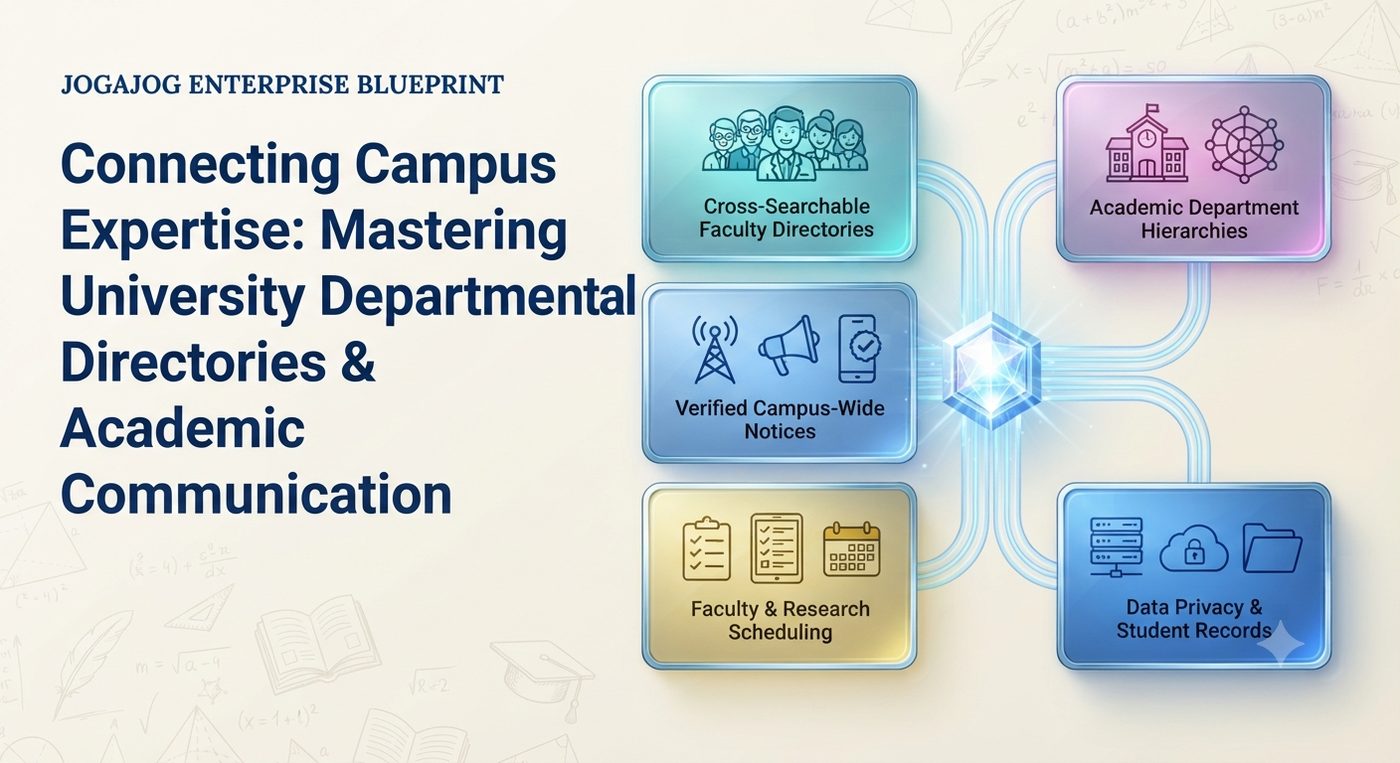
In the complex and sprawling environment of modern colleges and universities, organizing cross-searchable departmental directories, managing multi-tier faculty listings, and ensuring secure communication across academic departments, research labs, and administrative offices are essential for operational efficiency and academic collaboration. From coordinating multi-faculty research teams to distributing urgent campus-wide notices, modern higher education institutions require a communication infrastructure that is instantaneous, reliable, and capable of real-time operational integration.
The Challenge
How can university deans, department chairs, and administrative heads effectively structure and synchronize their vast academic workforce—across diverse faculties, research centers, and student service units—to ensure immediate access to verified contact details, strict data privacy, and rapid cross-departmental collaboration?
The Problem with Traditional University Directories
Higher education institutions frequently face severe operational friction and administrative bottlenecks due to outdated directory methods:
* Fragmented and Static Faculty Lists: Relying on outdated PDF directories or isolated department websites leads to constant communication breakdowns when professors, researchers, or lab assistants change offices or office hours.
* Lack of Cross-Departmental Visibility: Without a centralized, searchable digital directory, faculty members and administrative staff struggle to locate specialized researchers or coordinate inter-disciplinary academic projects efficiently.
* Vulnerabilities in Public Communication Tools: Utilizing consumer messaging apps or unverified public networks for institutional coordination creates severe administrative blind spots and exposes sensitive academic data to privacy risks.
The Solution: Centralized, Secure Academic Command Centers
Transitioning to a private, enterprise-grade communication platform—like Jogajog—creates a centralized “digital nerve center” for university directory management and campus operations. By digitizing directory systems and academic workflows, educational institutions ensure:
* Comprehensive Cross-Searchable Directories: Building dynamic, searchable directories for faculty members, researchers, and lab assistants categorized by department, faculty, and research specialization.
* Enhanced Inter-Departmental Collaboration: Providing a unified environment where academic leaders can manage department hierarchies, coordinate joint research initiatives, and streamline administrative workflows effortlessly.
* Secure and Direct Institutional Messaging: Streamlining internal team communication allows universities to maintain strict data privacy standards, protect faculty contact details, and ensure rapid responsiveness across every campus tier.
Frequently Asked Questions
Q: Can this platform be used to build cross-searchable directories for university faculty members, researchers, and lab assistants?
A: Yes. The platform provides advanced directory structuring and filtering tools, enabling universities to create centralized, searchable databases for all academic departments and research personnel.
Q: Does this replace existing University Information Systems (UIS) or Student Information Systems (SIS)?
A: No. It acts as the essential human-to-human and team-to-team communication layer that complements your existing academic databases, ensuring that your faculty, staff, and administration remain aligned on daily operational execution.