
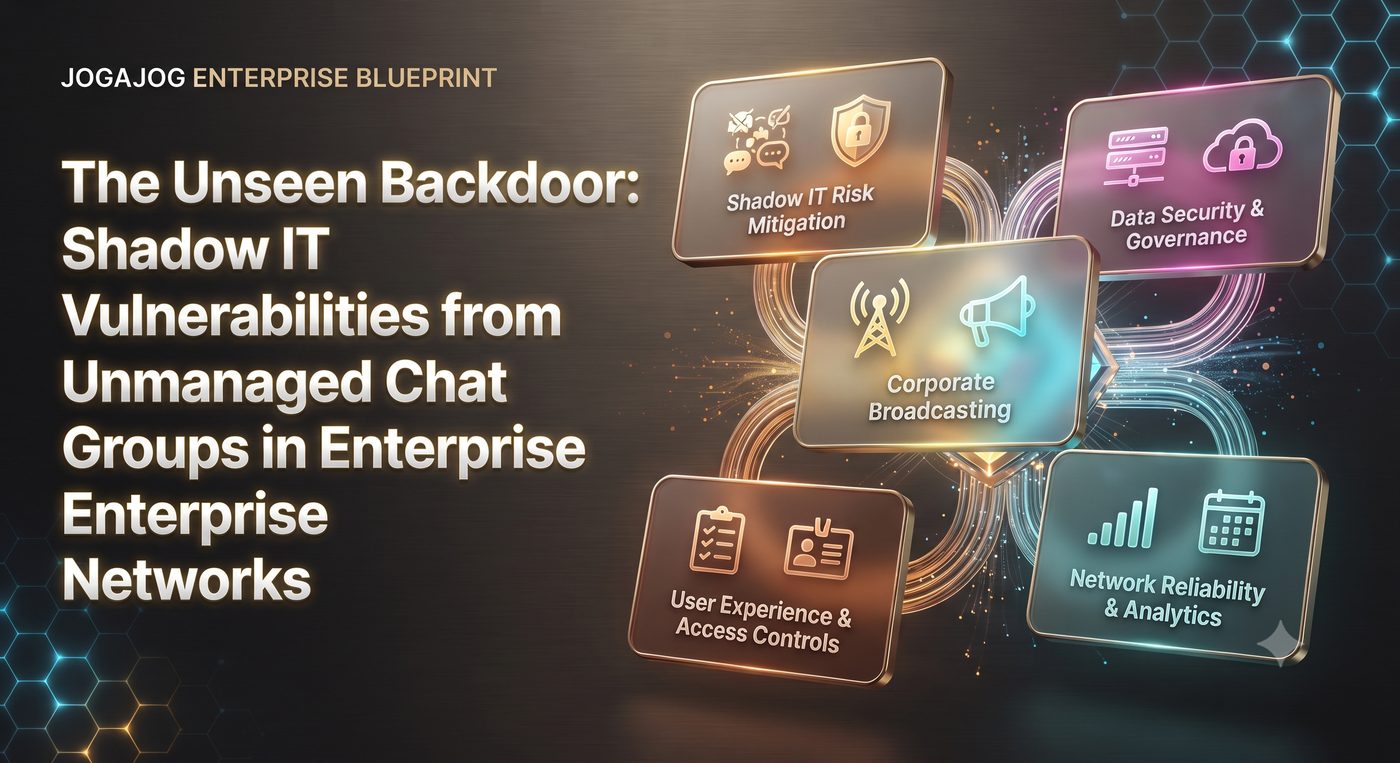
In the modern, hyper-connected enterprise, professional association, or multi-tiered institution, seamless communication is the engine of productivity. Employees, contractors, and members need to collaborate instantly, share ideas, and make rapid decisions. However, the proliferation of consumer-grade messaging apps has created a catastrophic security blind spot: Shadow IT vulnerabilities born from unmanaged chat groups. When employees bypass secure corporate platforms to use unsanctioned tools (like WhatsApp, Signal, or personal Telegram groups) for sensitive business discussions, organizations lose all control over their critical data, intellectual property, and compliance governance.
The Challenge
How can enterprise IT directors, security officers, and compliance managers identify, secure, and eliminate the critical Shadow IT risks posed by unmanaged external and internal chat groups without hindering workforce collaboration?
The Problem with Unmanaged Consumer Chat Apps
Relying on unsanctioned messaging platforms for corporate communication introduces severe operational and security vulnerabilities:
* Uncontrolled Data Leakage: Sensitive financial data, client information, and proprietary strategies are shared freely in chat groups with zero encryption oversight. If a device is lost or an employee leaves, this critical data remains accessible to unauthorized individuals.
* Zero Compliance and Audit Trail: Consumer apps lack the necessary governance controls for regulatory compliance (GDPR, HIPAA, SOX). When internal investigations or legal e-discovery are required, corporate IT has zero visibility or access to these communication archives.
* The “Ghost User” Security Gap: When a contractor or employee leaves the organization, they often remain in these private chat groups indefinitely. This “ghost user” continues to have access to ongoing confidential discussions, creating an open backdoor for malicious insiders.
The Solution: Centralized, Secure Enterprise Communication Architecture
Transitioning to an advanced, enterprise-grade communication platform—like Jogajog—replaces the chaos of Shadow IT with a secure, governed ecosystem. By mastering centralized communication, institutions ensure:
* Unified Security and Encryption: All communication occurs within a platform fully managed by IT, featuring end-to-end encryption, two-factor authentication, and granular access controls. Data ownership remains with the organization.
* Granular Governance and Compliance Archiving: The platform provides a complete, searchable audit trail of all messages and file transfers. This ensures full regulatory compliance and simplifies legal e-discovery processes, giving IT total oversight.
* Automated Offboarding and Access Revocation: When an employee or contractor leaves the organization, their access to all centralized chat groups is revoked instantly. This eliminates the “Ghost User” vulnerability and secures the corporate perimeter.
Frequently Asked Questions
Q: How do we stop employees from using consumer apps when they feel enterprise tools are “too slow” or “clunky”?
A: The solution is to provide an enterprise platform that is as fast, intuitive, and mobile-friendly as consumer apps, but built with corporate security. Adoption increases naturally when the secure tool offers a superior user experience with integrated directory and broadcast features.
Q: Does centralized management mean IT can read everyone’s personal messages?
A: Enterprise governance is about protecting organizational data, not prying into personal communications. Governance controls can be configured based on corporate policy, balancing employee privacy with the absolute necessity to secure sensitive intellectual property and maintain compliance.