
In the modern enterprise, professional association, or multi-tiered institution operating across diverse geographical regions, linguistic diversity is both a tremendous asset and an operational hurdle. Whether managing multinational corporations with offices in Dhaka and London, regional government agencies serving multiple linguistic communities, or national organizations bridging Bengali and English, clear communication depends on language accessibility. When employee directories, department lists, and contact rosters are locked into a single language, non-native speakers experience severe search friction, communication delays, and operational isolation. Implementing robust localization strategies for dual-language directories is essential for enterprise inclusivity and efficiency.
The Challenge
How can enterprise IT directors, communications managers, and operations leaders design and implement dual-language directory localization strategies that ensure seamless navigation, accurate search indexing, and equal access for all users across diverse linguistic networks?
The Problem with Single-Language Directory Silos
Relying on monolingual directories in multilingual environments introduces severe operational bottlenecks:
* Search Friction and Miscommunication: When an employee searches for a colleague or department using their preferred language but the directory only recognizes an alternate script or spelling, the search fails entirely, halting collaboration.
* Exclusion of Regional Workforce Segments: Monolingual systems alienate regional staff or non-native corporate personnel, limiting their ability to engage with company-wide broadcasts, leadership updates, and cross-functional teams.
* Administrative Translation Chaos: Relying on uncoordinated manual translations or fragmented local spreadsheets leads to conflicting naming conventions, outdated titles, and inconsistent organizational data.
The Solution: Centralized Bilingual Architecture and Smart Localization
Transitioning to an advanced, enterprise-grade communication platform—like Jogajog—replaces linguistic silos with an integrated, bilingual ecosystem. By standardizing localization, institutions ensure:
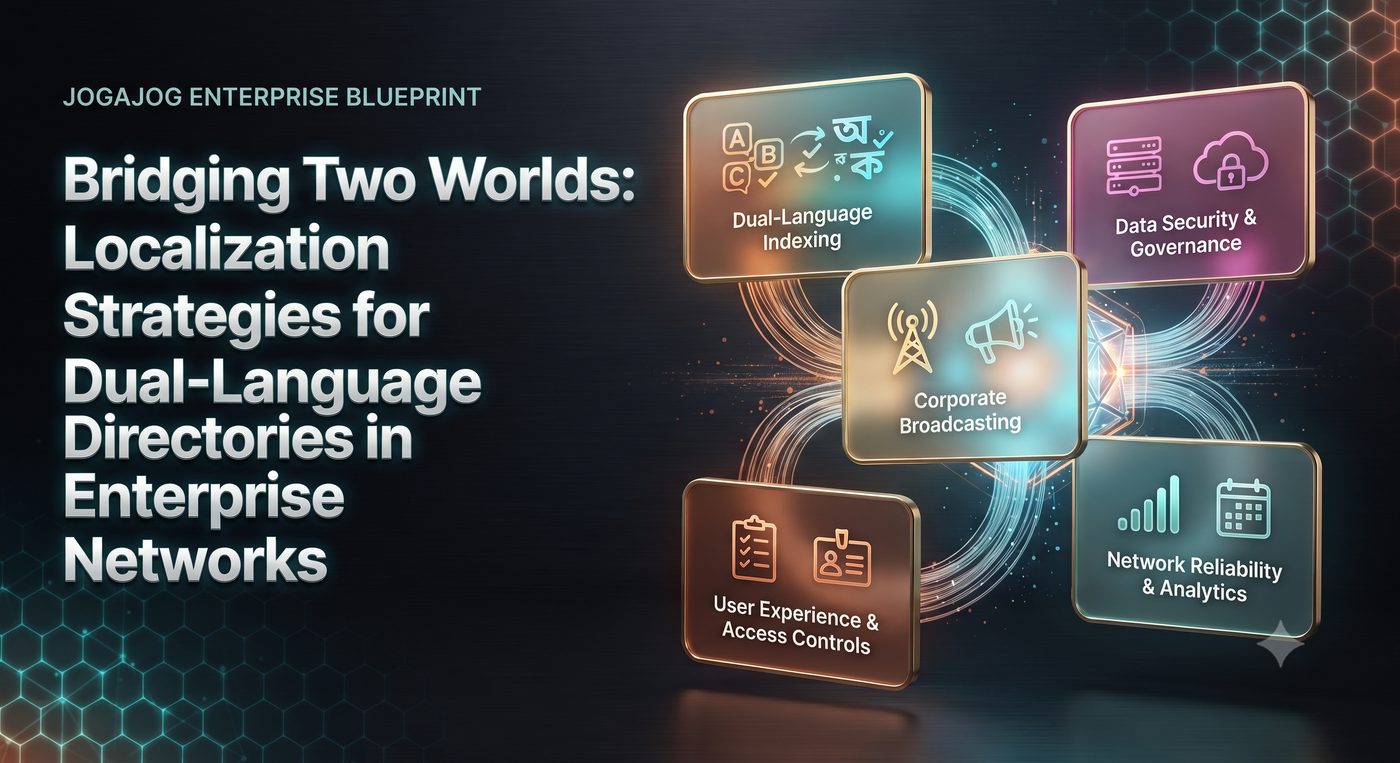
* Dual-Language Profile Indexing: Enable employees and members to view and search directories in their preferred language (such as Bengali and English) with real-time script toggling and cross-lingual phonetic search matching.
* Unified Master Database with Localized Overlays: Maintain a single, secure master organizational database while allowing localized display names, department tags, and role descriptions to render accurately according to user preferences.
* Equitable Corporate Broadcasting: Ensure company-wide announcements, safety protocols, and leadership notices reach every tier of the workforce by broadcasting messages with built-in dual-language support, maximizing comprehension and engagement.
Frequently Asked Questions
Q: How does cross-lingual search handling work in a dual-language directory?
A: Advanced enterprise platforms utilize intelligent indexing that maps phonetic spellings, localized script entries (such as Bengali alphabet inputs), and English terms to the same underlying user profile, ensuring successful search results regardless of which language the user types in.
Q: Does managing a bilingual directory increase the administrative workload for IT or HR teams?
A: No. Core profile data is managed centrally once, and automated localization rules or standardized translation fields handle the dual-language rendering across user interfaces, eliminating duplicate data entry.