
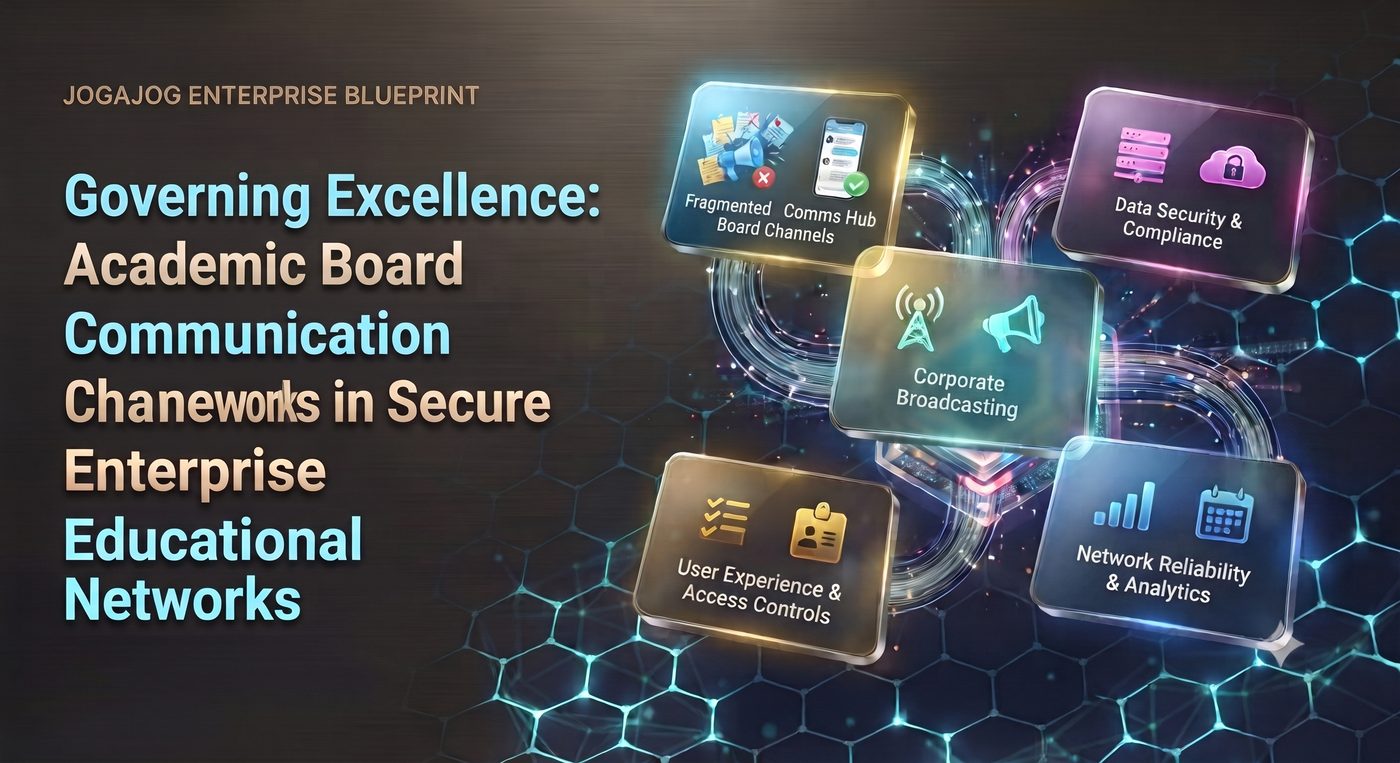
In the high-stakes governance environment of modern universities, school districts, and educational boards—such as managing board resolutions, policy updates, and executive committee reviews across Dhaka, Chittagong, and regional academic networks—maintaining secure, rapid communication is vital for institutional leadership. When governing boards rely on unencrypted consumer messaging apps, scattered email threads, or unsecured cloud storage to discuss sensitive policy changes and confidential votes, it exposes the institution to severe compliance failures, leaks, and administrative deadlock. The definitive key to ensuring robust institutional governance and data integrity is establishing dedicated academic board communication channels within a unified enterprise educational network.
The Challenge
How can university chancellors, school board presidents, and institutional secretaries design and deploy a centralized, highly secure communication framework that allows board members to review confidential resolutions, vote on policies, and coordinate governance strategies instantly without risking data breaches or privacy violations?
The Problem with Fragmented Board Communication and Public Channels
Attempting to manage high-level academic governance using consumer messaging tools or legacy systems introduces critical vulnerabilities:
* Data Leaks and Confidentiality Breaches: Discussing sensitive budget allocations, faculty tenure decisions, or policy reforms on consumer-grade chat apps leaves board communications vulnerable to unauthorized interception.
* Decision-Making Delays and Lost Documents: When crucial board resolutions and supporting documents are buried in long email threads, executive committees struggle to reach timely consensus, delaying institutional milestones.
* Lack of Governance Oversight and Audit Trails: Unsecured communication channels fail to provide the structured audit trails and role-based permissions required for regulatory compliance and transparent board accountability.
The Solution: Centralized Governance Hubs and Encrypted Board Channels
Transitioning to an advanced, enterprise-grade communication and directory platform—like Jogajog—replaces administrative vulnerability with a secure, highly structured educational ecosystem. By centralizing academic board communication channels, institutions ensure:
* Encrypted Executive Collaboration Spaces: Establish isolated, end-to-end encrypted channels where board members and committee chairs can discuss sensitive policy drafts and review confidential documents safely.
* Verified Institutional Broadcasts: Empower board leadership to distribute official resolutions, meeting agendas, and policy updates directly to authenticated administrative devices via secure push alerts.
* Granular Role-Based Access Controls (RBAC): Ensure that board archives, voting records, and strategic documents are accessible only to verified governing members through strict institutional directory controls.
Frequently Asked Questions
Q: How do secure enterprise platforms protect confidential board resolutions and voting records?
A: Modern enterprise platforms utilize end-to-end encryption, multi-factor authentication, and strict data partitioning, ensuring that all executive discussions and governance records remain strictly confidential and protected from external access.
Q: Can external legal advisors or guest consultants be granted temporary access to specific board channels?
A: Yes. Administrators can provision sandboxed, temporary guest accounts with restricted permissions, allowing external experts to participate in specific committee discussions while maintaining the absolute isolation of core governance databases.