
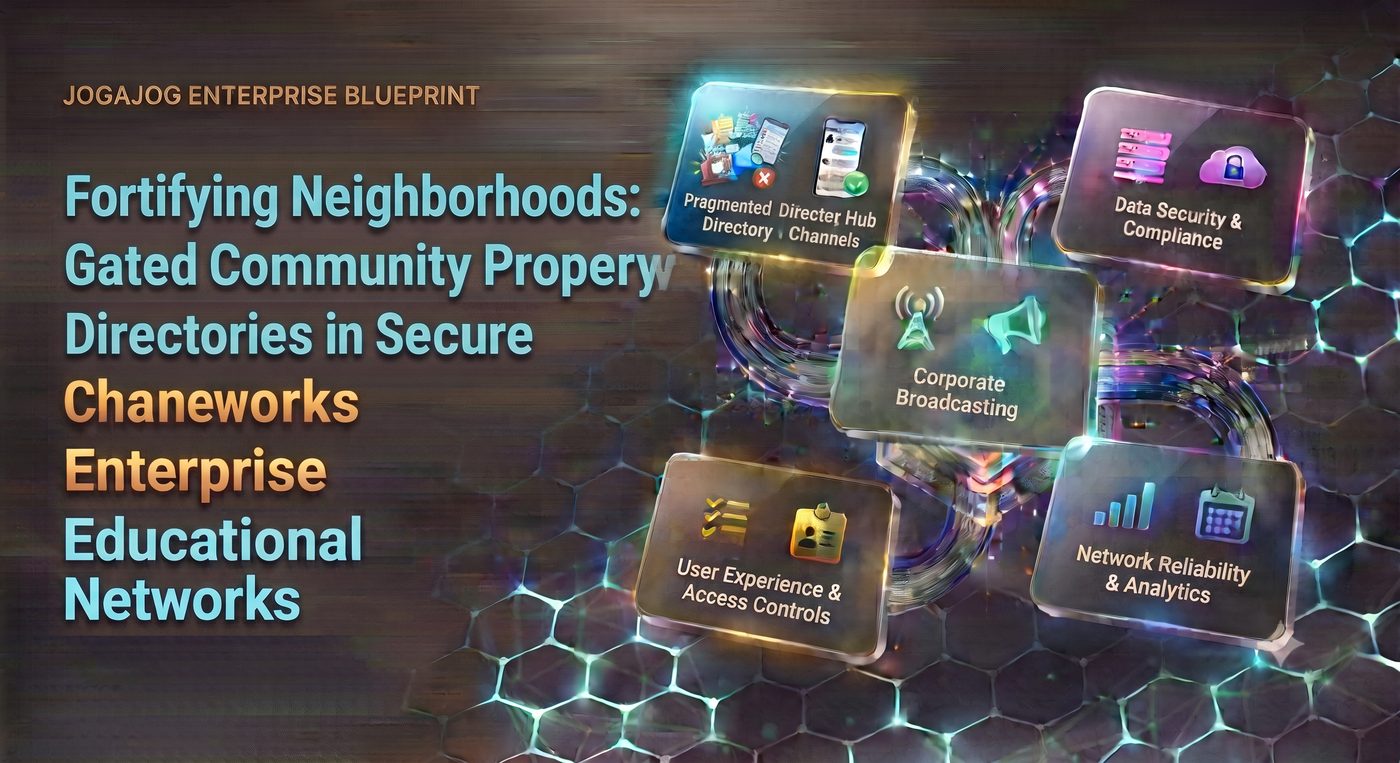
In the modern residential landscape of high-rise condominiums, sprawling suburban estates, and exclusive residential developments—such as managing secure access for residents, property managers, HOA board members, and authorized service vendors across Dhaka, Chittagong, and regional hubs—maintaining organized and secure resident information is vital for community safety. When property management relies on fragmented spreadsheets, unmonitored physical logs, or unsecured cloud drives to manage resident directories, it creates severe data privacy risks, exposes communities to security breaches, and causes operational friction. The definitive key to elevating community security and administrative efficiency is establishing centralized gated community property directories within a unified enterprise communication network.
The Challenge
How can HOA presidents, property managers, and security directors design and deploy a centralized, mobile-accessible directory and communication framework that organizes resident contact details, manages authorized guest access, and streamlines facility management requests instantly without compromising personal data privacy or institutional security?
The Problem with Fragmented Directories and Unmanaged Messaging Tools
Attempting to manage complex residential communities using consumer tools or legacy systems introduces critical vulnerabilities:
* Data Privacy Violations and Security Risks: Storing sensitive resident contact information, unit numbers, and vehicle details on unsecured public platforms leads to severe data breaches and privacy lawsuits.
* Communication Silos and Operational Delays: When residents, security staff, and management use disconnected channels, important amenity bookings, maintenance updates, and emergency alerts fail to reach the right parties instantly.
* Lack of Centralized Administrative Oversight: Without unified control over community communication channels, property managers cannot audit access logs, verify resident credentials, or manage vendor compliance effectively.
The Solution: Centralized Property Directories and Role-Based Access Controls
Transitioning to an advanced, enterprise-grade communication and directory platform—like Jogajog—replaces administrative chaos with a secure, highly structured community ecosystem. By centralizing gated community property directories, enterprises ensure:
* Searchable Multi-Tiered Resident Directories: Enable verified property managers and security personnel to search and connect with residents, unit owners, and board members instantly via a secure mobile directory.
* Encrypted Property Communication Channels: Establish isolated, end-to-end encrypted communication spaces for specific residential blocks, HOA committees, and security teams, ensuring all sensitive discussions remain private.
* Granular Role-Based Access Controls (RBAC): Grant residents, management staff, and service vendors access only to the directory listings, community documents, and communication channels relevant to their specific role and authorization level.
Frequently Asked Questions
Q: How do secure enterprise platforms protect resident privacy while maintaining accessible community directories?
A: Modern enterprise platforms utilize built-in directory masking and role-based permissions, allowing property managers to view critical contact information and communicate with residents through the platform interface without exposing private phone numbers or personal email details to unauthorized personnel or vendors.
Q: Can property managers grant temporary directory access to third-party service vendors or contractors?
A: Yes. Administrators can provision sandboxed, temporary guest accounts with restricted permissions, allowing vendors to communicate with specific residents or access relevant facility locations while keeping the core resident directory completely secure.