
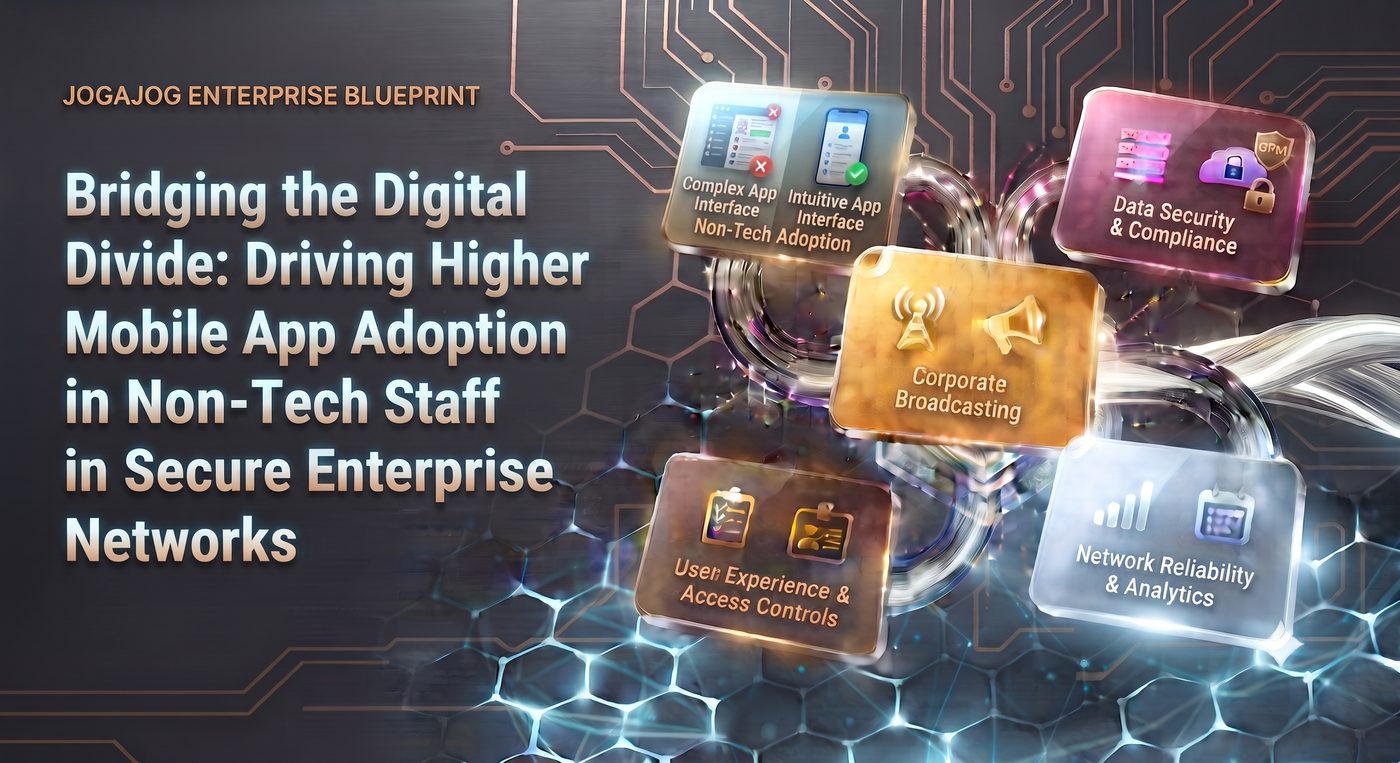
In the evolving and operations-driven environment of modern corporations, logistics enterprises, and multi-branch institutions—such as coordinating chief operations officers, human resources directors, IT enablement leads, and administrative heads across regional headquarters in Dhaka, commercial centers, and international branches—maximizing workforce technology participation is vital for operational continuity. When organizations deploy mobile directories, scheduling tools, or enterprise communication platforms without considering the digital literacy or workflow habits of frontline and non-tech personnel, it results in critical adoption resistance, low engagement, and severe operational fragmentation. The definitive key to elevating digital transformation and workforce alignment is driving higher mobile app adoption in non-tech staff within a unified enterprise communication network.
The Challenge
How can enterprise IT directors, HR leads, and operational architects design and deploy a centralized, mobile-accessible directory and communication framework that provides an intuitive, friction-free user experience, overcoming digital hesitation and ensuring 100% active adoption among non-technical and frontline employees?
The Problem with Complex Enterprise Interfaces and Low Digital Literacy Barriers
Attempting to introduce mobile enterprise tools without addressing user-accessibility challenges introduces critical operational hurdles:
* Adoption Resistance and Low User Engagement: Complex, cluttered user interfaces alienate non-tech staff, causing them to abandon enterprise apps and revert to insecure, informal communication methods.
* Operational Silos and Frontline Disconnect: Low adoption among field or floor workers leaves major segments of the workforce isolated from critical corporate announcements, directories, and management updates.
* Increased Support Burden and Training Friction: Steep learning curves for basic mobile navigation drain IT and HR resources through constant troubleshooting and redundant orientation sessions.
The Solution: Intuitive Consumer-Grade UX and Encrypted Collaboration Hubs
Transitioning to an advanced, enterprise-grade communication and directory platform—like Jogajog—replaces technological barriers with an accessible, high-adoption, and secure ecosystem. By prioritizing non-tech staff adoption, enterprises ensure:
* Consumer-Grade Intuitive Interface Design: Enable simplified navigation, clear visual hierarchies, and one-tap access to employee directories and messaging channels that require zero technical training.
* Encrypted Enterprise Accessibility and Guided Onboarding: Establish secure, mobile-first environments equipped with automated walkthroughs and contextual support to guide non-tech personnel seamlessly into daily workflows.
* Granular Role-Based Access Controls (RBAC): Grant staff and frontline operators access only to the streamlined tools, essential directory views, and communication channels relevant to their specific corporate roles, preventing cognitive overload.
Frequently Asked Questions
Q: Why do non-tech and frontline staff often resist adopting enterprise mobile applications?
A: Non-tech staff frequently encounter complex user interfaces, dense navigation menus, and a lack of intuitive design. Without a consumer-grade experience, employees experience onboarding fatigue and choose to bypass official tools in favor of familiar, informal channels.
Q: How do secure enterprise platforms ensure high mobile app adoption across diverse, non-technical workforces?
A: Modern enterprise platforms combine simplified, consumer-friendly user experience design with guided onboarding workflows, making it effortless for any employee to look up contacts, receive broadcasts, and communicate securely without requiring prior technical training.