Securing Communities: Internal IT Infrastructure & Access Controls for NGOs and Associations
July 28, 2026 · Jogajog team · 2 min read

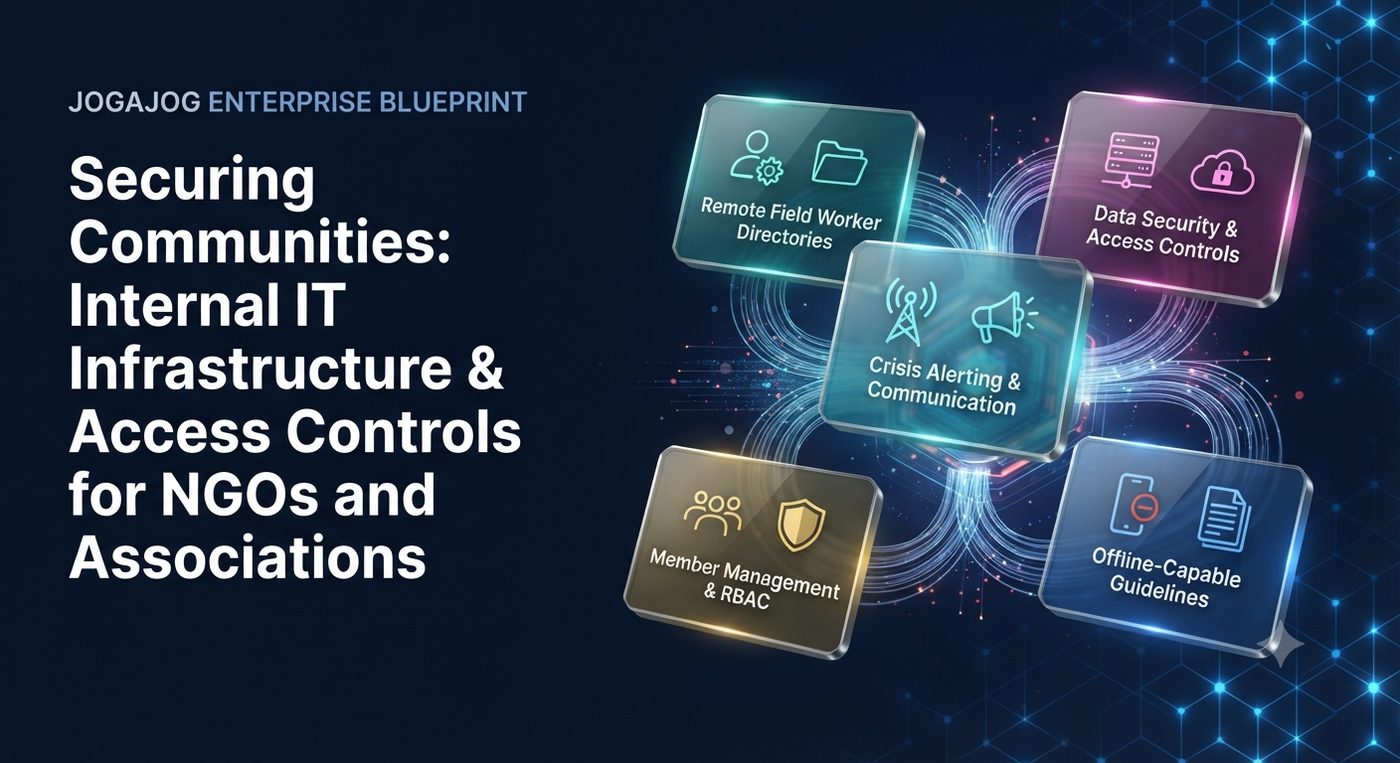
In the non-profit, association, and civic community sectors, operational integrity relies heavily on secure data handling, rapid volunteer coordination, and robust internal IT infrastructure. Whether managing remote field workers in rural areas, organizing nationwide volunteer networks during crises, or maintaining structured member databases, modern organizations require communication frameworks that balance accessibility with rigorous security controls.
The Challenge
How can non-governmental organizations, trade associations, and civic groups synchronize their dispersed members, secure sensitive contact rosters, and maintain administrative oversight without incurring excessive operational costs or data vulnerabilities?
The Problem with Traditional Community Management
Non-profit organizations often face critical operational hurdles due to outdated, disconnected tools:
* Risks of Printed and Static Rosters: Traditional printed rosters or unsecured spreadsheets become instantly outdated, lack search capabilities, and present serious privacy risks if misplaced.
* Fragmented Volunteer Communication: Relying on generic messaging apps or standard SMS gateways for mass emergency alerts leads to communication chaos and exorbitant recurring carrier costs.
* Administrative Blind Spots: Generic community tools fail when managing complex hierarchical committees, multi-tier organizational structures, and high volunteer turnover rates, resulting in lost control over institutional directories.
The Solution: Centralized, Secure Command Frameworks
Transitioning to a private, enterprise-grade communication and directory platform—like Jogajog—creates a secure digital foundation for NGOs and associations. By digitizing directory management and access permissions, organizations ensure:
* Safe Remote Field Worker Directories: Providing encrypted, lightweight digital access that supports offline capabilities for aid workers operating in low-connectivity or rural environments.
* Instant Crisis and Emergency Broadcasting: Establishing secure, high-priority notification channels to mobilize nationwide volunteer networks rapidly during disasters without massive SMS expenditures.
* Full Administrative Control and RBAC: Utilizing role-based access controls to easily sort members by custom attributes (such as batch, blood group, or district) while retaining full ownership when volunteers or staff rotate out.
Frequently Asked Questions
Q: Can this platform be used to maintain offline-capable directories for remote field workers?
A: Yes. The platform supports local data caching architectures, ensuring critical operational guidelines and emergency directories remain accessible even in low-connectivity regions.
Q: Does this replace existing membership management databases or CRM software?
A: No. It acts as the secure human-to-human communication and directory layer that complements your existing organizational software, ensuring members and volunteers remain aligned and securely connected.
See this feature with your own data.
Free branded demo, built from your spreadsheet, this week.
Get your free demo