Mapping the Mission: Location Sharing Protocols for Field Teams in Enterprise Networks
July 28, 2026 · Jogajog team · 3 min read

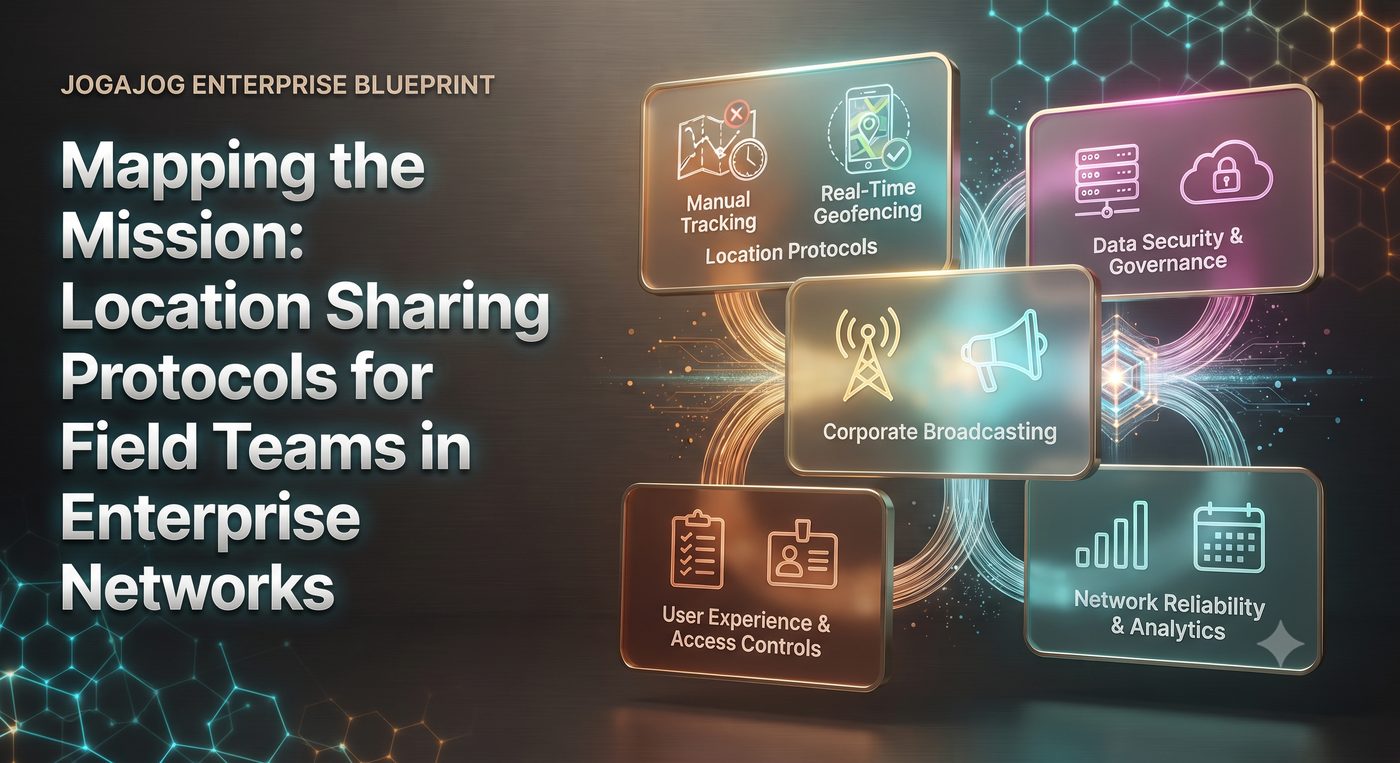
In the modern enterprise, professional association, and multi-tiered institution, success often hinges on the agility and coordination of distributed personnel. Whether managing a fleet of logistics drivers across Dhaka, directing field technicians responding to service calls in Chittagong, supervising construction crews on remote sites, or deploying medical personnel during a crisis, knowing the precise location of your workforce is critical for safety, efficiency, and effective decision-making. Yet, many organizations still rely on archaic “check-in” phone calls, uncoordinated WhatsApp messages, or consumer tracking apps that compromise data privacy. This lack of visibility leads to dispatch delays, compromised team safety, and operational chaos. Implementing secure, structured location sharing protocols for field teams is essential for the connected enterprise.
The Challenge
How can enterprise operations managers, fleet supervisors, and safety directors design and deploy secure, real-time location sharing protocols that provide accurate operational intelligence while respecting employee privacy and adhering to data security regulations?
The Problem with Uncoordinated Field Location Tracking
Managing distributed teams using manual check-ins or consumer-grade tools introduces severe operational and safety risks:
* Operational Blind Spots and Dispatch Inefficiency: When supervisors cannot visualize the real-time location of their field staff, they cannot assign the closest technician to an urgent job, leading to wasted fuel, longer response times, and frustrated clients.
* Severe Field Team Safety Risks: In the event of an accident, medical emergency, or security threat in a remote location, precious minutes are wasted trying to locate the affected employee. Without active tracking, lone workers are vulnerable.
* Privacy Violations and Data Security Loopholes: Using uncoordinated consumer apps—like personal WhatsApp or Google Maps sharing—mixes personal and professional data, creating severe GDPR or regional privacy compliance violations and exposing sensitive corporate routes to third-party data mining.
The Solution: Secure, Permission-Based Location Protocols and Geofencing
Transitioning to an advanced, enterprise-grade communication platform—like Jogajog—replaces tracking friction with a transparent, secure ecosystem. By implementing robust location sharing protocols, institutions ensure:
* Real-Time Operational Visibility: Provide dispatchers and supervisors with a secure, lightning-fast digital map dashboard displaying the real-time location of all field personnel, enabling instant, data-driven decisions and optimized resource allocation.
* Enhanced Lone Worker and Team Safety: Utilize active location monitoring and integrated SOS/duress signals within the enterprise app. In an emergency, the exact coordinates of the field team member are instantly visible to safety officers.
* Privacy-Centric Control and Geofencing: Implement protocols where location sharing is active only during designated work hours or on specific shifts. Leverage geofencing to trigger automatic check-ins or alerts when field staff enter or leave defined operational zones.
Frequently Asked Questions
Q: How do we ensure location sharing protocols respect field employee privacy?
A: Modern enterprise platforms feature granular control. Location sharing can be configured to activate only when the employee clocks in or enters a specific geofenced project zone, ensuring privacy during off-hours and full transparency regarding active tracking.
Q: Can location data be integrated directly into our existing dispatch or CRM software?
A: Yes. Enterprise communication platforms offer robust APIs and webhooks that allow for seamless integration of real-time location data into your existing workflow management systems, ensuring a fully connected operational loop.
See this feature with your own data.
Free branded demo, built from your spreadsheet, this week.
Get your free demo