Visualizing the Chain: Corporate Hierarchy Visualization in Enterprise Networks
July 28, 2026 · Jogajog team · 3 min read

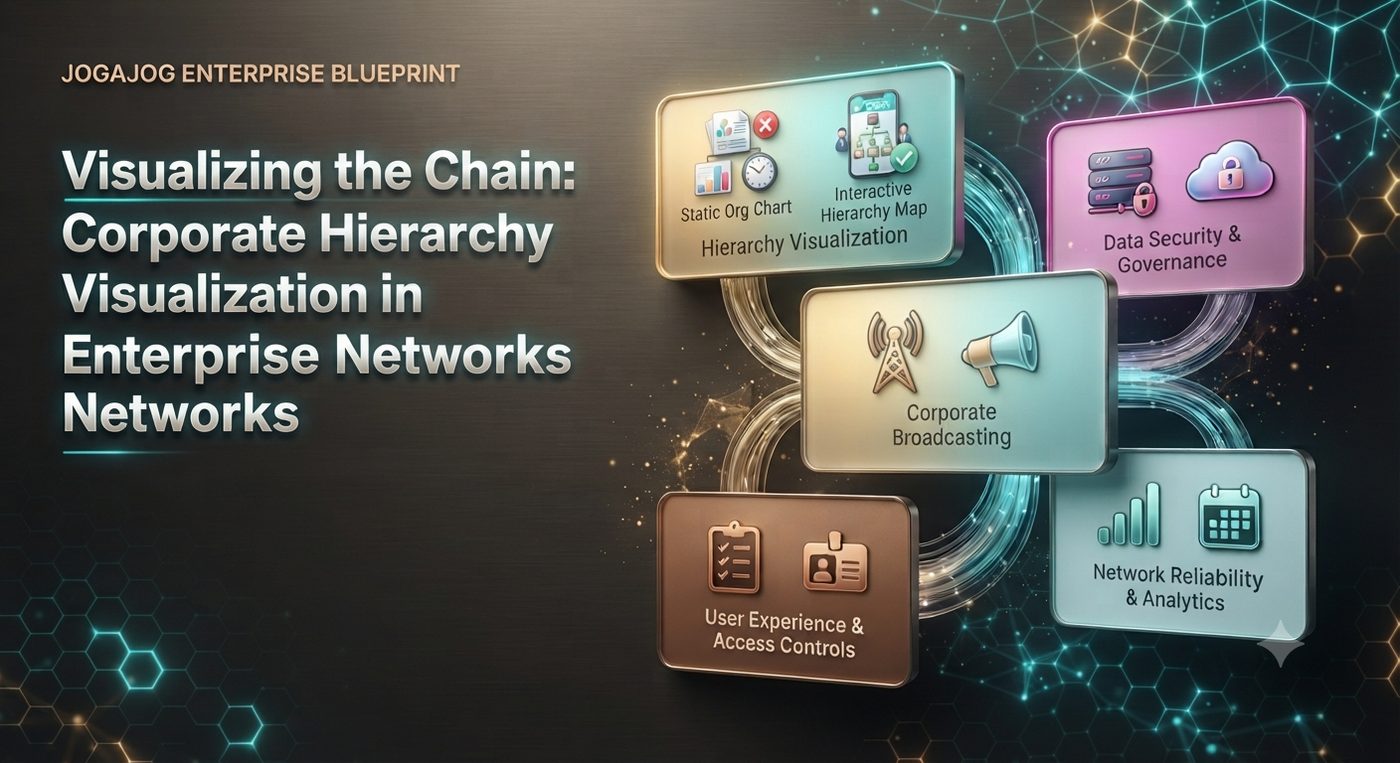
In the modern enterprise, professional association, and multi-tiered institution, understanding who reports to whom, how departments interconnect, and where leadership nodes reside is critical for operational alignment. As organizations scale across multiple regions—such as coordinating teams between Dhaka, Chittagong, and international offices—traditional static organizational charts stored in scattered PDFs or outdated HR portals quickly become obsolete. When employees, managers, and board members cannot visualize the corporate hierarchy in real time, decision-making stalls, cross-functional approvals face bottleneck delays, and accountability blurs. The definitive key to establishing crystal-clear organizational transparency is implementing dynamic, real-time corporate hierarchy visualization within a secure enterprise network.
The Challenge
How can enterprise HR leaders, executive management, and operations directors design and deploy an interactive, real-time corporate hierarchy visualization tool that maps complex reporting structures, departmental lines, and leadership chains securely without risking sensitive personnel data?
The Problem with Static Org Charts and Fragmented HR Data
Relying on legacy organizational charts or uncoordinated department lists introduces severe operational friction:
* Outdated Information and Confusion: Traditional charts are out of date the moment a promotion, transfer, or restructuring occurs. Employees end up contacting the wrong supervisors or routing approvals through defunct reporting lines.
* Lack of Cross-Departmental Visibility: In large institutions, siloed teams have zero visibility into how their work intersects with adjacent departments, leading to duplicated efforts and communication breakdowns.
* Security and Compliance Vulnerabilities: Exposing sensitive reporting structures and personal details through unencrypted, public-facing tools or unstructured spreadsheets violates internal data governance and creates compliance risks.
The Solution: Real-Time Dynamic Directories and Interactive Visualization
Transitioning to an advanced, enterprise-grade communication platform—like Jogajog—replaces static friction with a dynamic, self-updating visualization ecosystem. By centralizing directory architecture, institutions ensure:
* Real-Time Interactive Hierarchy Mapping: Provide every member of the organization with a lightning-fast, auto-syncing digital directory that visualizes the exact reporting chain, department leads, and team structures instantly on their devices.
* Secure Role-Based Access Controls: Protect sensitive administrative data while granting appropriate visibility. Granular access controls ensure that staff see relevant operational hierarchies while executive structures remain securely managed.
* Seamless Integration with Corporate Broadcasting: Instantly align the entire organization by combining visual hierarchy nodes with targeted broadcast channels, ensuring leadership directives flow effortlessly down the precise chain of command.
Frequently Asked Questions
Q: How does a dynamic corporate hierarchy tool stay updated with frequent staff changes?
A: Modern enterprise platforms integrate directly with core HR systems via APIs, meaning that when an employee is promoted or transferred, the hierarchy visualization updates automatically across the entire network in real time.
Q: Can external partners or contractors be integrated into the corporate hierarchy view securely?
A: Yes. Advanced platforms allow administrators to create segmented directory containers where external stakeholders, contractors, or regional partners are visible only to authorized teams, preserving overall network security.
See this feature with your own data.
Free branded demo, built from your spreadsheet, this week.
Get your free demo