Bridging the Silos: Overcoming Cross-Departmental Collaboration Hurdles in Secure Enterprise Networks
July 28, 2026 · Jogajog team · 3 min read

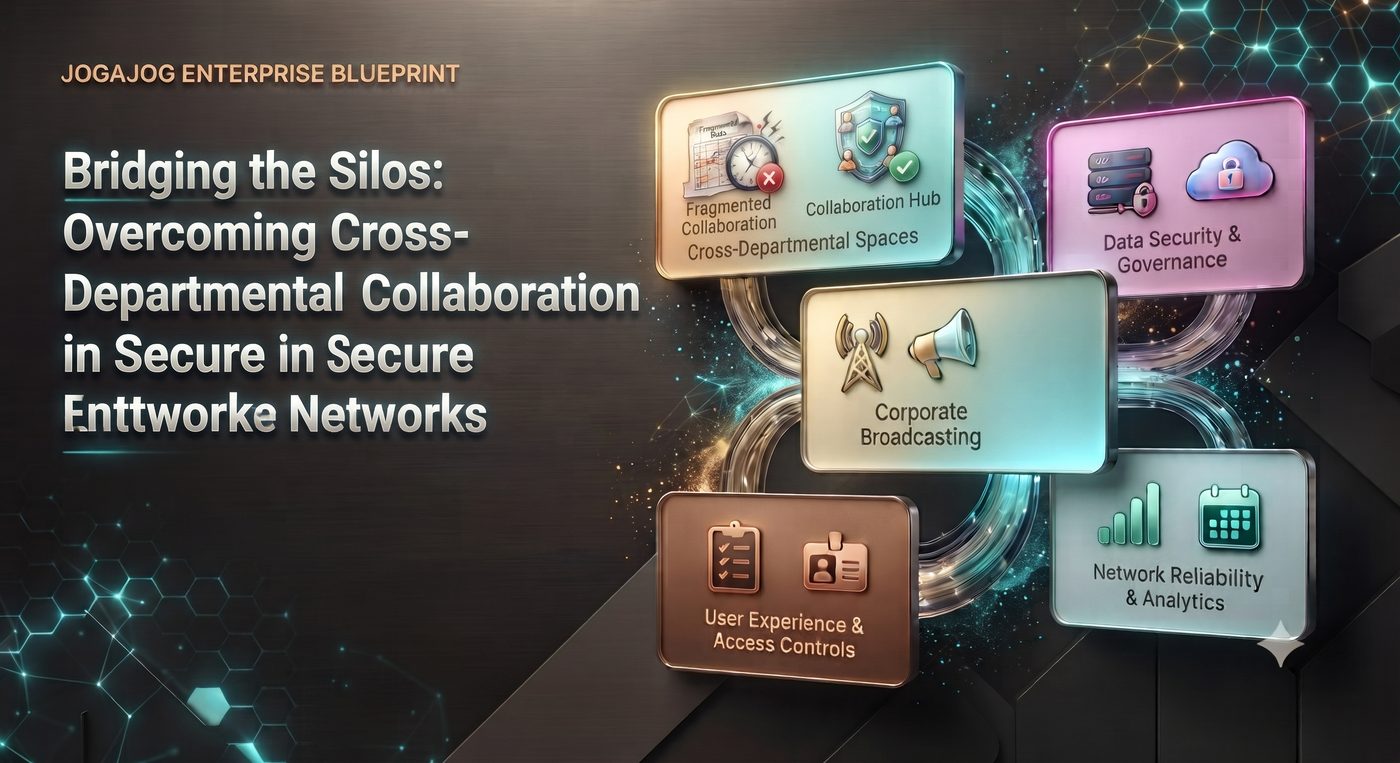
In the modern enterprise, professional association, and multi-tiered institution, organizational success relies heavily on fluid teamwork between specialized units—such as coordinating between finance, operations, sales, and logistics across Dhaka, Chittagong, and remote corporate hubs. Yet, organizations frequently struggle with deep-seated silos where departments operate in isolation, hoarding information and failing to align on strategic goals. When teams rely on disconnected tools, disjointed communication channels, and unstructured file-sharing, cross-departmental projects grind to a halt, leading to duplicated efforts and missed market opportunities. The definitive key to unlocking peak organizational efficiency is establishing centralized cross-departmental collaboration tools within a secure enterprise network.
The Challenge
How can enterprise operations directors, department heads, and executive leadership design and deploy a centralized, secure collaboration architecture that breaks down departmental silos and enables real-time cross-functional teamwork without compromising data security or administrative control?
The Problem with Departmental Silos and Fragmented Tools
Attempting to drive cross-functional projects with legacy, uncoordinated systems creates severe operational vulnerabilities:
* Information Hoarding and Visibility Gaps: When critical data and project updates are locked within department-specific applications or localized spreadsheets, other teams remain completely blind to critical dependencies.
* Communication Friction and Misalignment: Disconnected teams rely on ad-hoc emails or conflicting messaging apps to coordinate projects, resulting in crossed wires, delayed deliverables, and finger-pointing when mistakes occur.
* Security Risks in Inter-Departmental Sharing: Allowing open, unmanaged file sharing or guest access across disparate departments creates massive compliance vulnerabilities and exposes confidential institutional data.
The Solution: Centralized Enterprise Hubs and Secure Cross-Functional Spaces
Transitioning to an advanced, enterprise-grade communication and directory platform—like Jogajog—replaces organizational friction with an integrated, highly transparent collaborative ecosystem. By centralizing inter-departmental workflows, institutions ensure:
* Unified Cross-Departmental Directories: Provide every employee with a comprehensive, searchable enterprise directory that maps out roles, departments, and regional branches, making it effortless to identify and connect with the right cross-functional partners instantly.
* Secure Project-Specific Channels: Establish segmented, role-based collaborative channels where multidisciplinary teams can share files, discuss strategies, and execute complex workflows without exposing sensitive internal data to unauthorized users.
* Centralized Oversight and Leadership Visibility: Empower management with clear visibility into cross-departmental communications and project velocity, ensuring complete alignment across regional offices and business units.
Frequently Asked Questions
Q: How do secure enterprise platforms prevent sensitive data leaks when multiple departments collaborate on shared projects?
A: Modern enterprise platforms feature granular, role-based access controls and encrypted channels. Administrators can restrict file access and channel participation strictly to approved personnel, ensuring inter-departmental collaboration remains fully secure.
Q: Can cross-departmental collaboration tools integrate with existing project management and enterprise resource systems?
A: Yes. Advanced platforms provide robust APIs that allow organizations to synchronize their existing project management software and internal databases, ensuring unified visibility and seamless communication across all operational departments.
See this feature with your own data.
Free branded demo, built from your spreadsheet, this week.
Get your free demo