Seamless Care: Private Clinic Nurse Coordination in Secure Enterprise Healthcare Networks
July 28, 2026 · Jogajog team · 3 min read

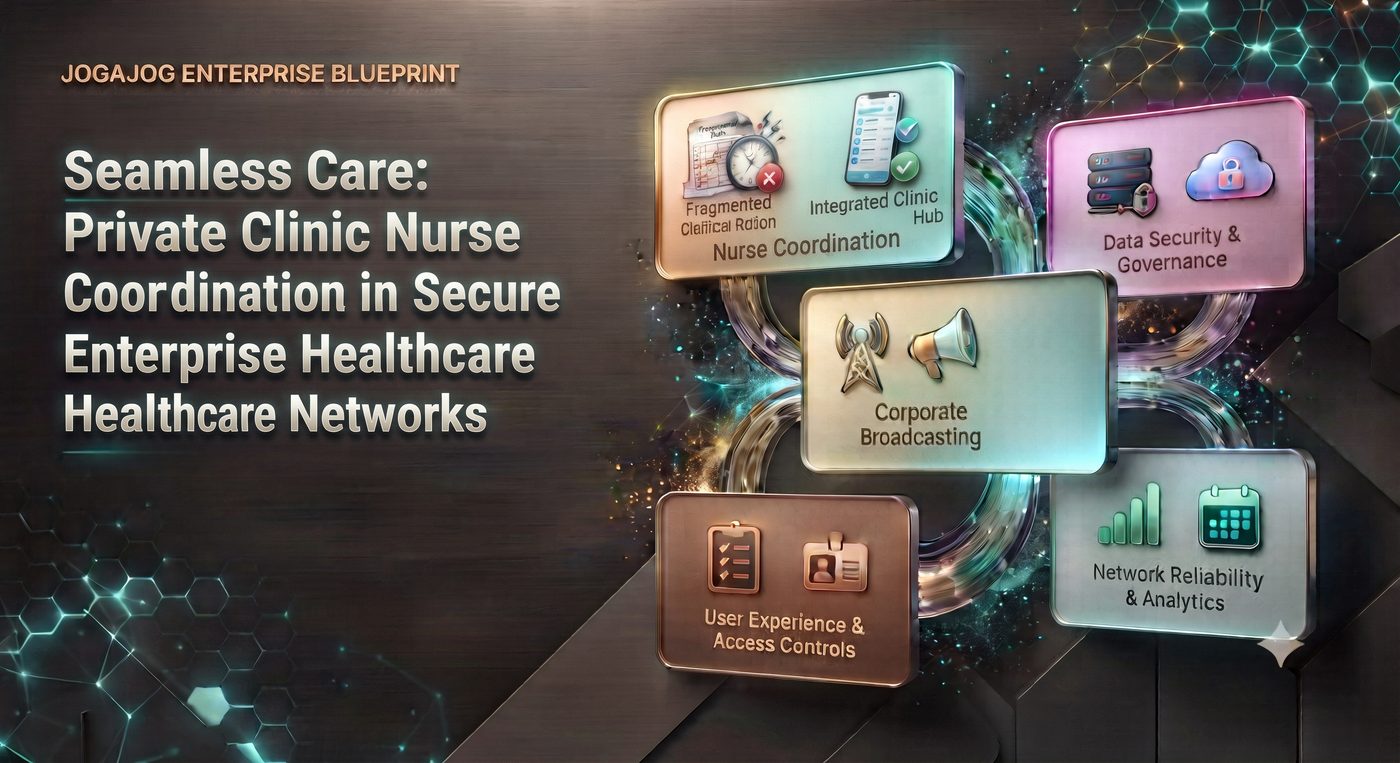
In the dynamic environment of private medical clinics, outpatient care centers, and multi-specialty healthcare hubs—such as coordinating daily patient flow between reception desks, consultation rooms, and treatment wards across Dhaka, Chittagong, and regional medical facilities—effective nurse coordination is the backbone of operational excellence. When clinical nursing teams rely on uncoordinated messaging apps, static paper notes, or fragmented verbal handoffs, it leads to communication breakdowns, delayed patient prep, medication errors, and increased administrative stress. The definitive key to optimizing clinic workflows and elevating patient care standards is establishing centralized nurse coordination and secure communication tools within a unified enterprise healthcare network.
The Challenge
How can clinic managers, head nurses, and healthcare administrators design and deploy a centralized, mobile-accessible coordination framework that streamlines nursing rotas, accelerates inter-departmental handoffs, and protects patient confidentiality without compromising response speed or security?
The Problem with Fragmented Clinic Communication
Relying on legacy or consumer-grade communication tools for nursing and clinical coordination creates severe operational vulnerabilities:
* Information Bottlenecks and Delays: When shift instructions, patient status updates, and doctor instructions are passed through informal channels, nursing staff experience costly delays in preparing patients for procedures.
* Lack of Real-Time Ward Visibility: Supervisors struggle to track active nursing assignments, break rotations, and ward coverage accurately in real time, leading to uneven workloads and understaffed treatment areas.
* Compliance and Privacy Risks: Using unencrypted public messaging applications to discuss patient care details or share shift rosters violates strict healthcare privacy regulations and exposes sensitive data to external breaches.
The Solution: Centralized Nursing Directories and Secure Handoff Channels
Transitioning to an advanced, enterprise-grade communication and directory platform—like Jogajog—replaces clinical coordination friction with a secure, highly structured digital ecosystem. By centralizing private clinic nurse coordination, healthcare institutions ensure:
* Real-Time Nursing Rota and Task Broadcasting: Instantly update and distribute shift schedules, ward assignments, and daily task lists directly to the mobile devices of all nursing personnel.
* Secure Shift-to-Shift Handoff Logs: Implement encrypted, structured messaging channels dedicated to nurse handoffs, ensuring patient status notes, treatment updates, and urgent care requirements transfer smoothly between rotating shifts.
* Granular Ward and Departmental Segmentation: Organize clinic staff into searchable directories structured by medical specialty, treatment wards, and operational shifts, enabling instant communication between doctors, nurses, and administrative desks.
Frequently Asked Questions
Q: How do secure enterprise platforms protect patient privacy during nurse-to-nurse communications?
A: Modern enterprise platforms utilize end-to-end encryption, secure data governance, and role-based access controls, ensuring that internal discussions and operational logs remain completely confidential and compliant with medical data standards.
Q: Can nursing staff quickly locate doctors or specialists on duty from the mobile app?
A: Yes. Centralized digital directories allow nursing teams to look up the primary physician or on-call specialist currently assigned to a ward and contact them instantly through secure in-app channels without needing personal phone numbers.
See this feature with your own data.
Free branded demo, built from your spreadsheet, this week.
Get your free demo