Streamlining Legal Practice: Law Firm Chamber Roster Solutions in Secure Enterprise Networks
July 28, 2026 · Jogajog team · 3 min read

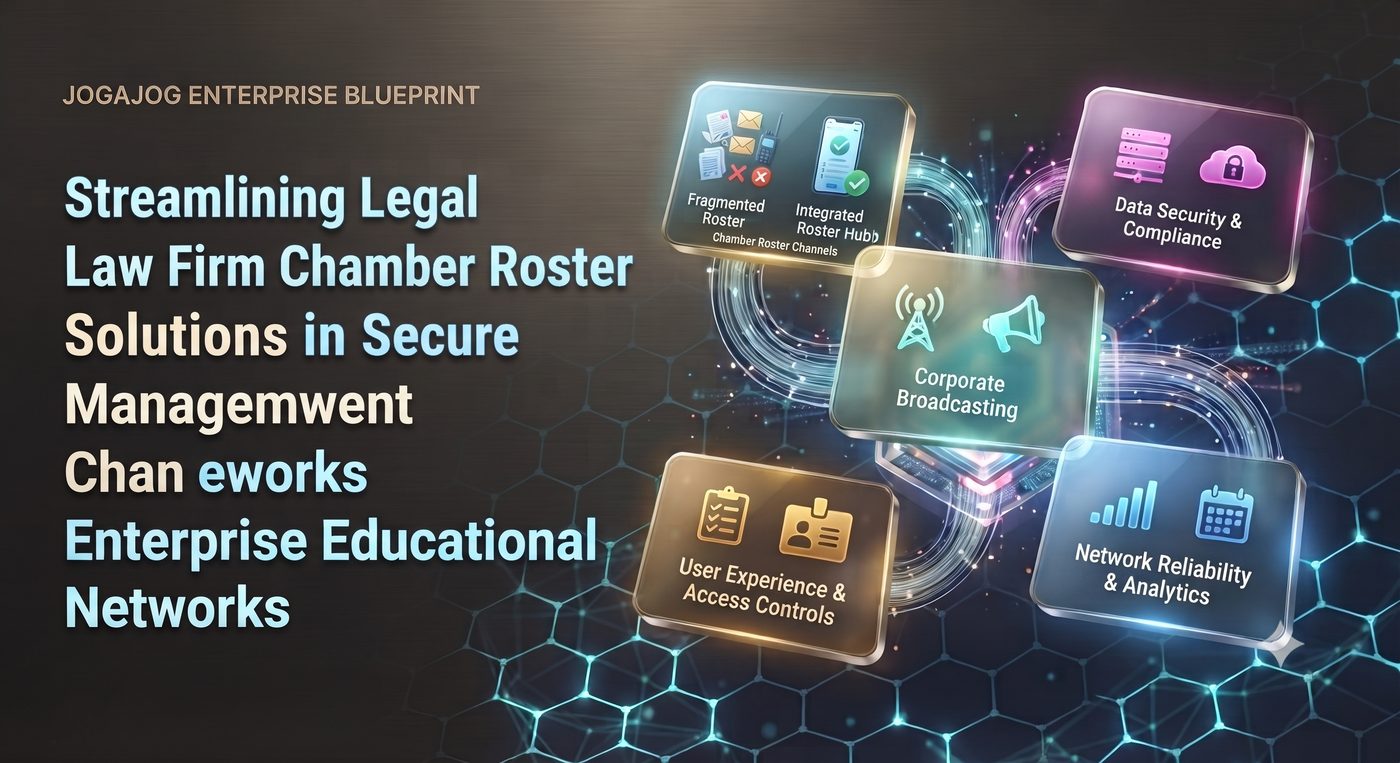
In the high-stakes, confidential environment of modern legal practices, corporate law firms, and barristers’ chambers—such as coordinating senior partners, junior advocates, legal consultants, and administrative support staff across Dhaka, Chittagong, and regional hubs—maintaining an accurate and secure chamber roster is vital for daily practice management. When legal teams rely on fragmented consumer chat apps, unverified personal contact lists, or unencrypted local spreadsheets to manage sensitive roster details and client assignments, it creates severe compliance risks, communication bottlenecks, and confidentiality breaches. The definitive key to elevating legal practice efficiency and data security is implementing centralized law firm chamber roster solutions within a unified enterprise communication network.
The Challenge
How can managing partners, senior advocates, and chamber administrators design and deploy a centralized, mobile-accessible directory and communication framework that organizes legal personnel, manages client-to-advocate assignments, and streamlines chamber operations instantly without violating attorney-client privilege or data privacy laws?
The Problem with Fragmented Roster Management and Public Messaging Apps
Attempting to manage complex legal chambers using consumer messaging tools or legacy legacy spreadsheets introduces critical vulnerabilities:
* Confidentiality Breaches and Compliance Risks: Storing sensitive advocate contact lists, client assignment notes, and case schedules on unsecured public platforms leads to severe data leaks, violating professional privilege and regulatory frameworks.
* Communication Silos and Delayed Consultations: When partners, junior associates, and clerks use disconnected communication channels, urgent hearing updates, case document handoffs, and client scheduling notices fail to reach the right legal minds instantly.
* Lack of Centralized Administrative Oversight: Without unified control over chamber communication channels, managing partners cannot audit data access, verify personnel credentials, or revoke system access when staff transition out of the firm.
The Solution: Centralized Chamber Directories and Role-Based Access Controls
Transitioning to an advanced, enterprise-grade communication and directory platform—like Jogajog—replaces administrative uncertainty with a secure, highly organized legal ecosystem. By centralizing law firm chamber roster solutions, enterprises ensure:
* Searchable Multi-Tiered Legal Directories: Enable managing partners and administrators to search, verify, and connect with specific advocates, legal researchers, and administrative clerks instantly via a secure mobile directory.
* Encrypted Practice Collaboration Channels: Establish isolated, end-to-end encrypted communication spaces for specific case files, litigation teams, and chamber committees, ensuring that confidential case strategies remain completely protected.
* Granular Role-Based Access Controls (RBAC): Grant advocates, junior associates, and external legal consultants access only to the roster listings, document repositories, and communication channels relevant to their specific case assignments.
Frequently Asked Questions
Q: How do secure enterprise platforms protect sensitive advocate contact lists and client scheduling data?
A: Modern enterprise platforms utilize end-to-end encryption, built-in directory masking, and strict role-based access controls (RBAC), allowing chamber administrators to maintain comprehensive roster logs and facilitate communication without exposing private phone numbers or confidential case notes to unauthorized personnel.
Q: Can managing partners grant temporary directory access to external co-counsel or expert witnesses?
A: Yes. Administrators can provision sandboxed, temporary guest accounts with restricted permissions, allowing external legal experts to collaborate on specific litigation channels while keeping the core chamber roster database completely secure.
See this feature with your own data.
Free branded demo, built from your spreadsheet, this week.
Get your free demo