Brand Supremacy: Dedicated White-Label Google Play Deployments in Secure Enterprise Networks
July 28, 2026 · Jogajog team · 3 min read

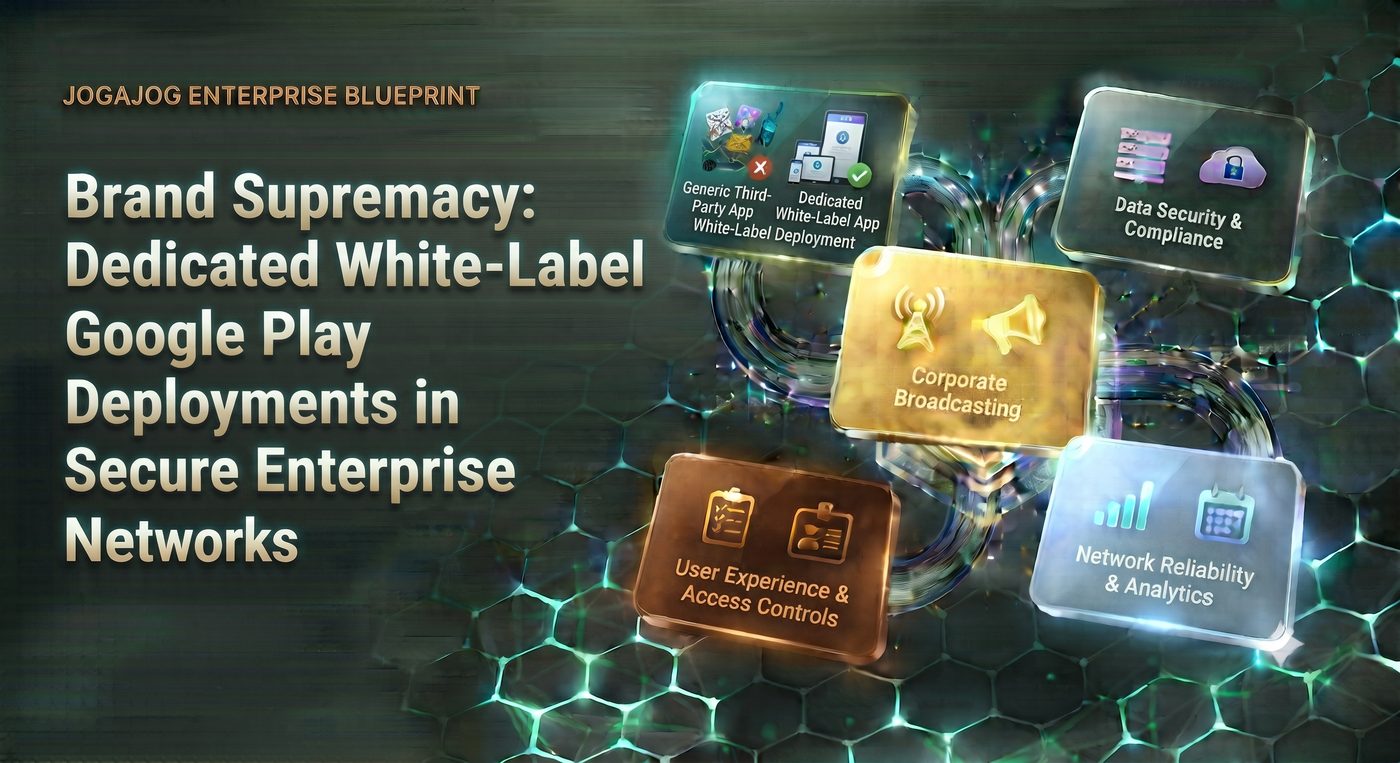
In the high-stakes and brand-conscious environment of modern corporations, financial institutions, and large-scale enterprises—such as coordinating chief marketing officers, IT directors, product managers, and operations leads across regional headquarters in Dhaka, commercial hubs, and international branches—maintaining a distinct and trusted corporate identity is vital for user adoption and security. When organizations rely on generic third-party app listings, unbranded communication tools, or public app store downloads that lack corporate branding, it results in critical employee confusion, brand dilution, and severe security vulnerabilities. The definitive key to elevating brand authority and mobile distribution security is implementing structured dedicated white-label Google Play deployments within a unified enterprise communication network.
The Challenge
How can enterprise IT directors, brand managers, and mobile deployment specialists design and deploy a centralized, secure directory and communication framework that publishes fully branded Android applications directly to the Google Play Store under the organization’s unique name and logo, while protecting internal communications and data from unauthorized exposure?
The Problem with Generic App Listings and Unbranded Mobile Tools
Attempting to manage enterprise mobile distribution using generic app stores or unbranded platforms introduces critical vulnerabilities:
* Brand Confusion and Low Adoption: Forcing employees to download generic, third-party communication apps creates mistrust and slows down enterprise-wide platform adoption.
* Security Risks and Impostor Apps: Relying on unverified or public distribution methods exposes organizations to malicious lookalike apps and compromised data channels.
* Lack of Centralized Control Over Updates: Without a dedicated white-label deployment pipeline, IT leadership cannot seamlessly push brand updates, security patches, or custom directory configurations.
The Solution: Centralized White-Label Publishing and Encrypted Collaboration Hubs
Transitioning to an advanced, enterprise-grade communication and directory platform—like Jogajog—replaces distribution friction with a fully branded, secure, and professional mobile ecosystem. By centralizing dedicated white-label Google Play deployments, enterprises ensure:
* Fully Branded Google Play Store Presence: Enable enterprises to publish their dedicated communication and directory app on the Google Play Store featuring custom logos, color schemes, and corporate app titles.
* Encrypted Enterprise Communication Channels: Establish isolated, end-to-end encrypted messaging and collaboration spaces tailored specifically to the organization’s operational workflows and security requirements.
* Granular Role-Based Access Controls (RBAC): Grant staff, managers, and external partners access only to the directory listings and communication tools relevant to their specific corporate clearance level and organizational role.
Frequently Asked Questions
Q: How do secure enterprise platforms manage the white-label publishing process on the Google Play Store?
A: Modern enterprise platforms handle the end-to-end packaging, configuration, and compliance submission process, ensuring that the organization’s custom-branded app is successfully deployed to the Google Play Store under their own developer account or managed publishing profile.
Q: Can enterprise administrators update branding elements, such as logos or splash screens, after the white-label app is live on Google Play?
A: Yes. Administrators can push updates and new visual branding assets through the centralized enterprise management console, allowing seamless over-the-air updates without disrupting active user communication or security protocols.
See this feature with your own data.
Free branded demo, built from your spreadsheet, this week.
Get your free demo