Synchronized Schedules: Event Management Roster Synchronization in Secure Enterprise Networks
July 28, 2026 · Jogajog team · 3 min read

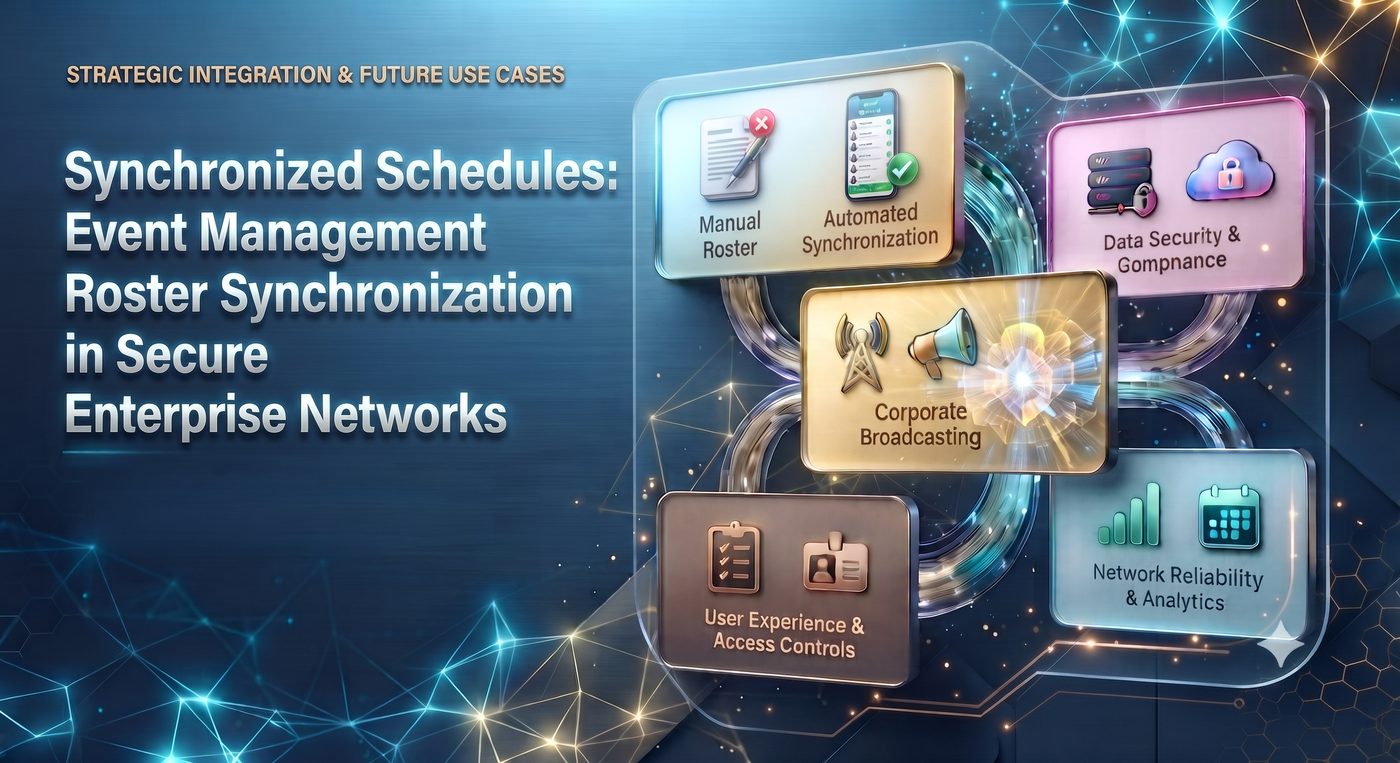
In the fast-paced and logistically complex environment of modern corporations, global enterprises, and large-scale institutions—such as coordinating chief operating officers, event directors, IT logistics leads, and administrative heads across regional headquarters in Dhaka, commercial centers, and international branches—maintaining real-time scheduling alignment is vital for operational efficiency. When organizations rely on manual event rosters, fragmented calendar invites, or disconnected participant lists to manage corporate conferences, product launches, and internal summits, it results in critical scheduling conflicts, communication gaps, and severe administrative overhead. The definitive key to elevating enterprise event coordination and workforce agility is implementing automated event management roster synchronization within a unified enterprise communication network.
The Challenge
How can enterprise event planners, IT architects, and administrative directors design and deploy a centralized, mobile-accessible directory and communication framework that automatically synchronizes participant rosters, guest speakers, and staff schedules for large-scale corporate events without compromising data security or operational stability?
The Problem with Manual Event Rosters and Disconnected Scheduling Silos
Attempting to manage corporate events and participant directories using outdated, manual methods introduces critical vulnerabilities:
* Scheduling Conflicts and Latency: Relying on static spreadsheets or manual email updates leads to outdated attendee lists and overlapping schedules for key personnel.
* High Administrative Friction: Managing hundreds of cross-departmental participants and VIP guests manually drains human resources and increases the likelihood of coordination errors.
* Security Risks with Unsecured Guest Lists: Sharing sensitive participant data and event rosters through ad-hoc messaging channels exposes organizational metadata to unauthorized access and compliance breaches.
The Solution: Automated Roster Pipelines and Encrypted Collaboration Hubs
Transitioning to an advanced, enterprise-grade communication and directory platform—like Jogajog—replaces manual scheduling friction with an automated, synchronized, and secure ecosystem. By integrating event management roster synchronization, enterprises ensure:
* Real-Time Automated Event Roster Updates: Enable instant, API-driven synchronization that updates participant lists, speaker profiles, and attendee directories dynamically across all mobile enterprise devices.
* Encrypted Enterprise Event Vaults: Establish secure, end-to-end encrypted communication perimeters and document repositories for event organizers, participants, and management teams.
* Granular Role-Based Access Controls (RBAC): Grant staff, event coordinators, and VIP guests access only to the schedule views, directory fields, and communication channels relevant to their specific event roles.
Frequently Asked Questions
Q: Why do traditional manual event rosters cause operational bottlenecks for corporate enterprises?
A: Manual rosters rely on static documents and fragmented updates, leading to scheduling conflicts, outdated attendee lists, and a high risk of administrative errors during large-scale corporate events.
Q: How do secure enterprise platforms streamline event management and participant synchronization?
A: Modern enterprise platforms utilize secure, automated API pipelines to synchronize event participant lists and directories in real time. This ensures all attendees have accurate, up-to-date schedules while keeping sensitive organizational data fully protected within secure communication channels.
See this feature with your own data.
Free branded demo, built from your spreadsheet, this week.
Get your free demo