
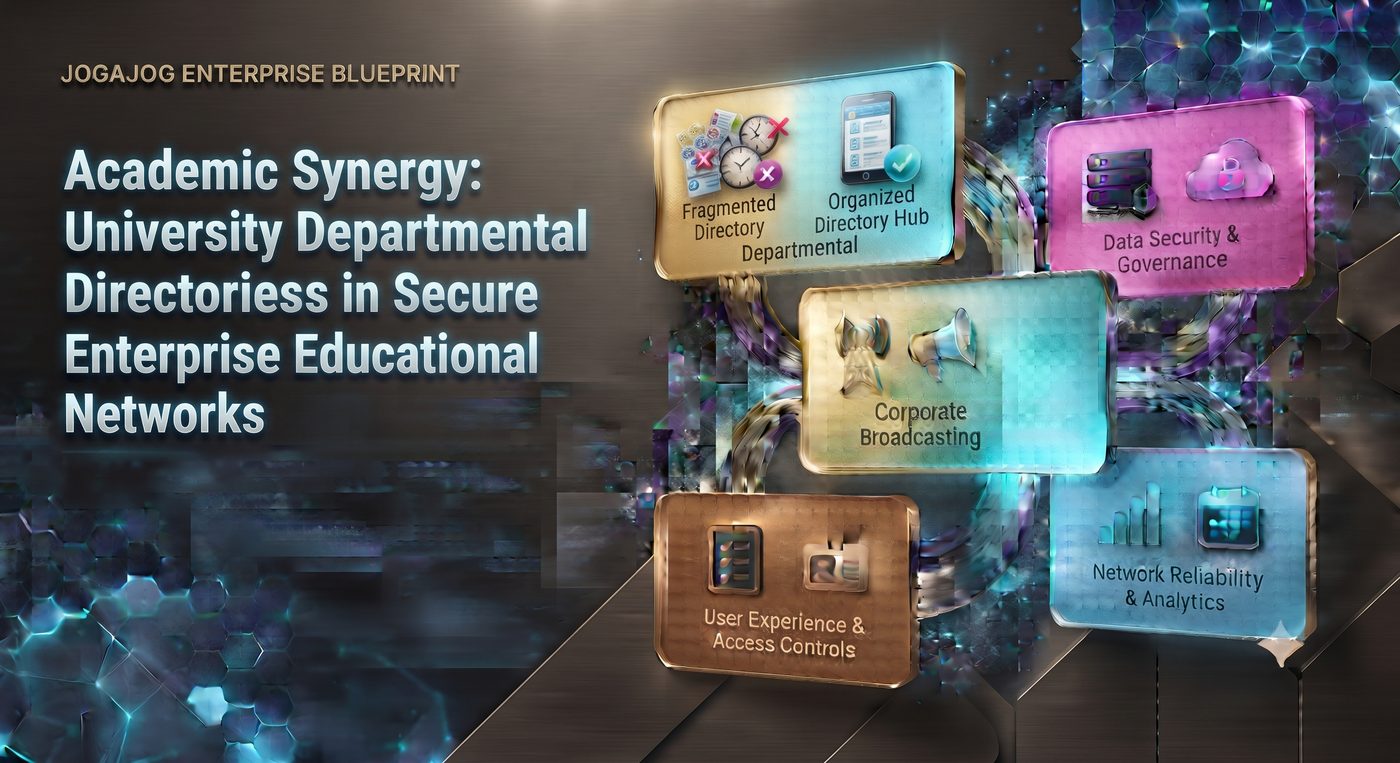
In the sprawling, multi-faceted environment of modern universities, large colleges, and comprehensive educational institutions—such as coordinating faculty, researchers, and lab staff across sprawling campuses in Dhaka, Chittagong, and regional academic hubs—maintaining institutional coherence is a daily operational challenge. When individual university departments operate as isolated silos, relying on outdated printed directories, fragmented email lists, or unmonitored consumer chat apps to find colleagues, it creates severe communication bottlenecks, slows down interdisciplinary research, and frustrates students seeking guidance. The definitive key to fostering academic synergy and administrative efficiency is establishing centralized, cross-searchable university departmental directories within a secure enterprise educational network.
The Challenge
How can university CIOs, registrars, and academic department heads design and deploy a centralized, mobile-accessible directory system that accurately maps out every faculty member, researcher, and lab assistant, while ensuring strict data privacy, role-based access, and effortless integration with existing institutional data?
The Problem with Disconnected Academic Silos and Legacy Directories
Attempting to manage the complex personnel of a modern university using outdated or fragmented tools introduces critical operational vulnerabilities:
* Communication Fragmentation and Delays: When departments use disparate, non-integrated contact lists, inter-departmental collaboration becomes a slow, cumbersome process, hindering joint research projects and administrative responsiveness.
* Lack of Unified Visibility: Without a single, cross-searchable directory, new faculty members, visiting scholars, and students struggle to identify and locate the correct specialists or academic advisors across different university wings.
* Data Security Risks and Privacy Concerns: Utilizing unsecured consumer platforms or spreadsheets to store and share sensitive staff contact information violates data privacy regulations and compromises institutional data security.
The Solution: Centralized Directory Hubs and Secure Faculty Networks
Transitioning to an advanced, enterprise-grade communication and directory platform—like Jogajog—replaces academic fragmentation with a highly structured, transparent, and secure digital ecosystem. By centralizing university departmental directories, educational institutions ensure:
* Comprehensive, Cross-Searchable Staff Directories: Empower every member of the university community to search and locate faculty, researchers, and administrative staff instantly by department, research focus, or specific expertise.
* Encrypted, Role-Based Directory Access: Ensure that directory visibility and administrative permissions align perfectly with institutional roles, safeguarding sensitive staff data while providing necessary access to students and colleagues.
* Streamlined Interdisciplinary and Lab Coordination: Facilitate seamless communication between disparate departments, research centers, and auxiliary staff, accelerating academic collaboration and administrative workflows.
Frequently Asked Questions
Q: How does a secure directory platform handle dynamic updates for faculty appointments and lab staff?
A: Centralized enterprise directory platforms feature dynamic administration panels that allow authorized HR personnel or department heads to update staff listings in real time, ensuring that all departmental directories are instantly current across the entire institution.
Q: Can university directories be segmented to protect the privacy of senior researchers while remaining accessible to students?
A: Yes. Advanced enterprise directory solutions utilize granular role-based access controls (RBAC), allowing administrators to define different visibility levels for different user groups, ensuring researchers’ direct contact details remain restricted while general office information is available to students.