
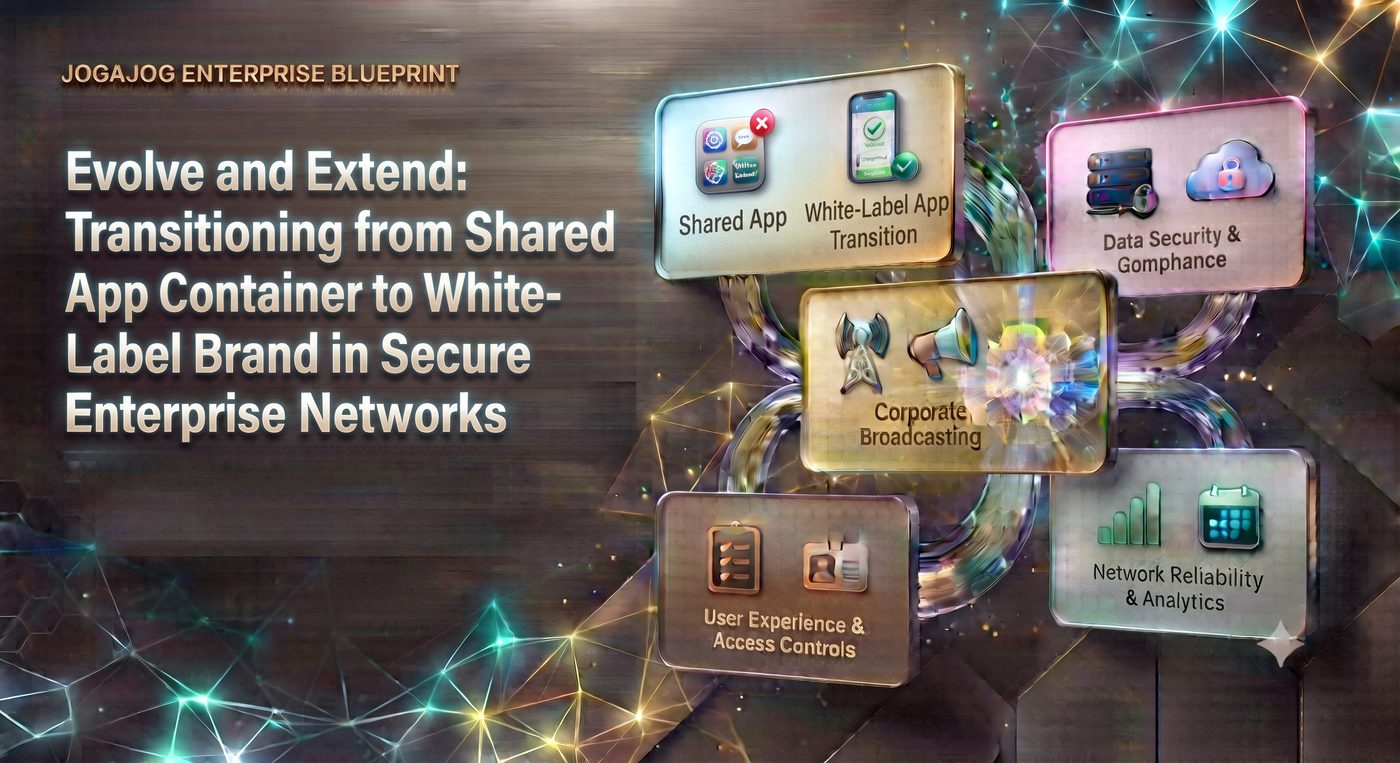
In the rapidly expanding ecosystem of modern corporations, financial institutions, and multi-brand enterprises—such as coordinating chief technology officers, digital transformation leads, brand managers, and administrative heads across regional headquarters in Dhaka, commercial centers, and international branches—establishing a distinct and professional digital presence is vital for market authority. When organizations rely on a single, shared, multi-tenant application container or a common “super-app” to deliver services across diverse business units or external partners, it results in critical brand dilution, restricted user experience customization, and severe compliance challenges. The definitive key to elevating digital governance and scalability is transitioning from a shared app container to a dedicated white-label brand architecture within a unified enterprise communication network.
The Challenge
How can enterprise digital leaders, marketing directors, and IT architects design and deploy a centralized, mobile-accessible directory and communication framework that allows for infinite branding possibilities, separate compliance perimeters, and customized user experiences while leveraging the underlying security and infrastructure of the parent enterprise network?
The Problem with Shared App Containers and Generic “Super-Apps”
Attempting to manage multiple brands, distinct business units, or external client experiences using a single, shared application container introduces critical vulnerabilities:
* Brand Dilution and User Confusion: Presenting diverse business units or partner services within a generic, shared container fails to establish individual brand identity, leading to poor user perception and engagement.
* Restricted User Experience (UX) and Feature Set: Shared containers require a one-size-fits-all UX, making it impossible to tailor workflows, compliance controls, or feature sets to the specific needs of different user groups or brands.
* Compliance and Data Segregation Risks: Mixing user data, branding assets, and compliance protocols within a single tenant creates massive administrative overhead and severe risks of data leakage between business units.
The Solution: Dedicated White-Label Containers and Encrypted Collaboration Hubs
Transitioning to an advanced, enterprise-grade communication and directory platform—like Jogajog—replaces container limitations with a flexible, scalable, and secure ecosystem. By centralizing the transition from shared app containers to white-label brands, enterprises ensure:
* Dedicated White-Label Containers: Enable the deployment of multiple, distinct mobile applications, each with its own unique branding (logos, color schemes, splash screens), while remaining centrally managed and secured by the parent enterprise infrastructure.
* Customized UX and Granular Access Controls (RBAC): Grant each white-label brand its own customized user interface, feature permissions, and communication channels tailored specifically to its audience (e.g., employees vs. external clients).
* Encrypted Enterprise Compliance Perimeters: Establish isolated, end-to-end encrypted data vaults and communication perimeters for each white-label brand, ensuring full regulatory compliance and data sovereignty between different business units.
Frequently Asked Questions
Q: Why does a shared multi-tenant application container hinder brand identity and enterprise scalability?
A: A single shared container forces a generic user experience on all users, failing to distinguish between different business units or external partners. This dilutes individual brand value and prevents the customization necessary for effective scaling across diverse markets.
Q: How do secure enterprise platforms facilitate the transition to dedicated white-label applications without increasing security risks?
A: Modern enterprise platforms provide a master administrative console that allows IT and brand leaders to deploy individually branded, secured app containers. Each container inherits the parent platform’s robust security, encryption, and compliance frameworks while operating as a distinct entity.