
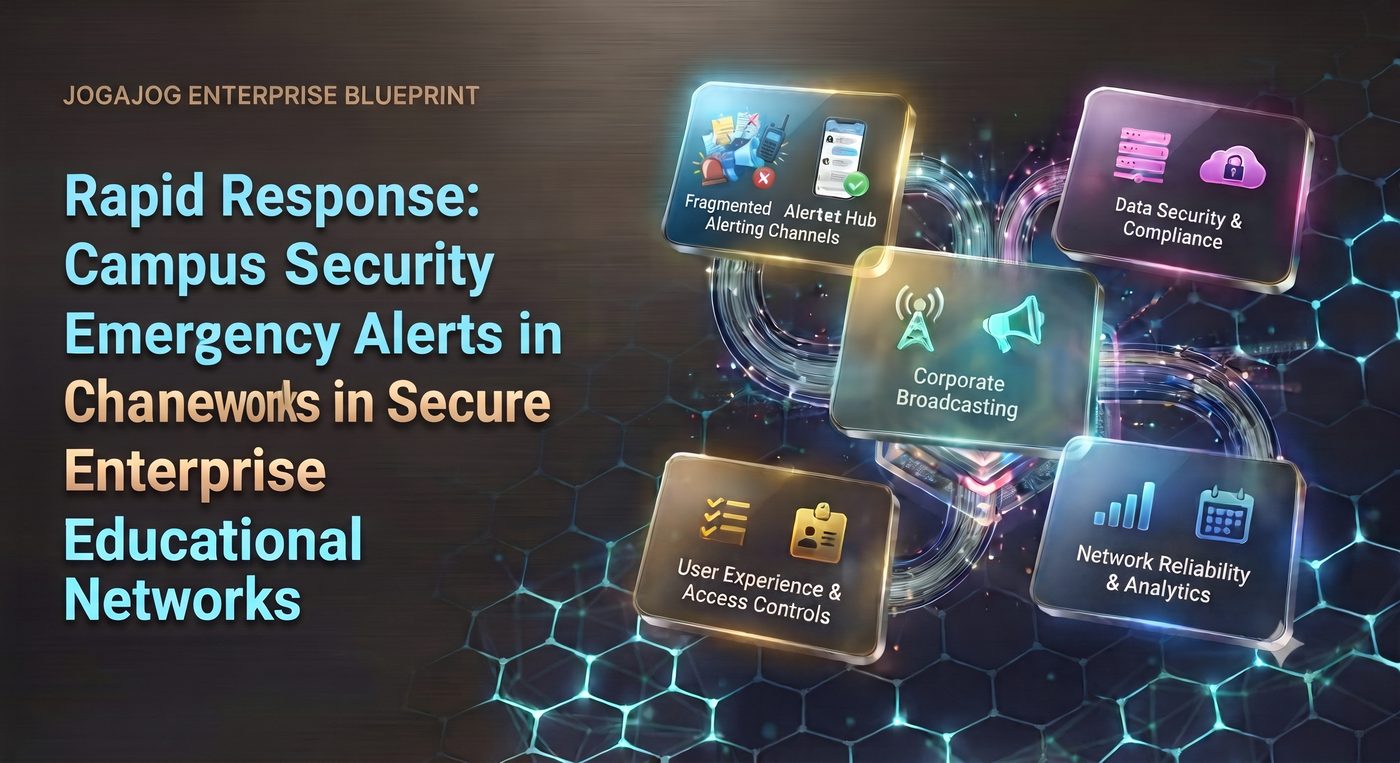
In the high-security environment of modern schools, universities, and sprawling educational campuses—such as coordinating emergency protocols across Dhaka, Chittagong, and regional academic institutions—ensuring the physical safety of students and staff relies on immediate, fail-safe communication. When campus security teams rely on uncoordinated radio channels, delayed email broadcasts, or fragmented consumer apps to report critical incidents or weather emergencies, response times plummet and institutional risk skyrockets. The definitive key to elevating campus safety and emergency preparedness is implementing centralized campus security emergency alerts within a secure enterprise educational network.
The Challenge
How can university safety directors, campus security chiefs, and school administrators design and deploy an instant, high-priority emergency broadcast framework that bypasses daily clutter to deliver life-saving alerts across all connected campus devices instantly?
The Problem with Fragmented Communication During Campus Emergencies
Relying on legacy tools or consumer messaging channels during high-stress campus situations creates severe vulnerabilities:
* Critical Transmission Delays: When emergency updates are trapped in slow email chains or unmonitored chat groups, vital safety instructions fail to reach students and staff in time.
* Lack of Priority Broadcasting: Consumer communication tools treat all messages equally, making it impossible to override normal chatter with urgent safety directives during a crisis.
* Systemic Information Silos: Security personnel, local medical responders, and campus administration struggling to communicate on disjointed channels experience dangerous coordination breakdowns.
The Solution: Centralized Emergency Hubs and Instant Push Alerts
Transitioning to an advanced, enterprise-grade communication and directory platform—like Jogajog—replaces emergency uncertainty with a secure, highly structured institutional safety network. By centralizing campus security emergency alerts, educational institutions ensure:
* High-Priority Push Notifications: Instantly override standard app activity to broadcast urgent safety warnings, lockdown orders, or weather advisories directly to all authenticated user devices.
* Direct Security-to-Administration Channels: Establish secure, encrypted communication links between campus security officers, medical staff, and institutional leadership for rapid incident management.
* Verified Broadcast Accountability: Provide administrators with complete audit logs and delivery confirmations to verify that every student and staff member has received critical safety instructions.
Frequently Asked Questions
Q: How do secure enterprise platforms ensure emergency alerts are seen immediately by students and staff?
A: Emergency broadcast features utilize high-priority push notification protocols that bypass standard quiet hours and app notifications to display critical safety warnings on mobile screens instantly.
Q: Can campus security segment emergency alerts to specific buildings or departments during an isolated incident?
A: Yes. Advanced enterprise directory architectures allow administrators to target emergency broadcasts to specific zones, academic wings, or boarding houses, ensuring precise communication without causing unnecessary panic across the entire campus.