Beyond the Basics: Mastering Custom Metadata Schema Development for Enterprise Directories
July 28, 2026 · Jogajog team · 3 min read

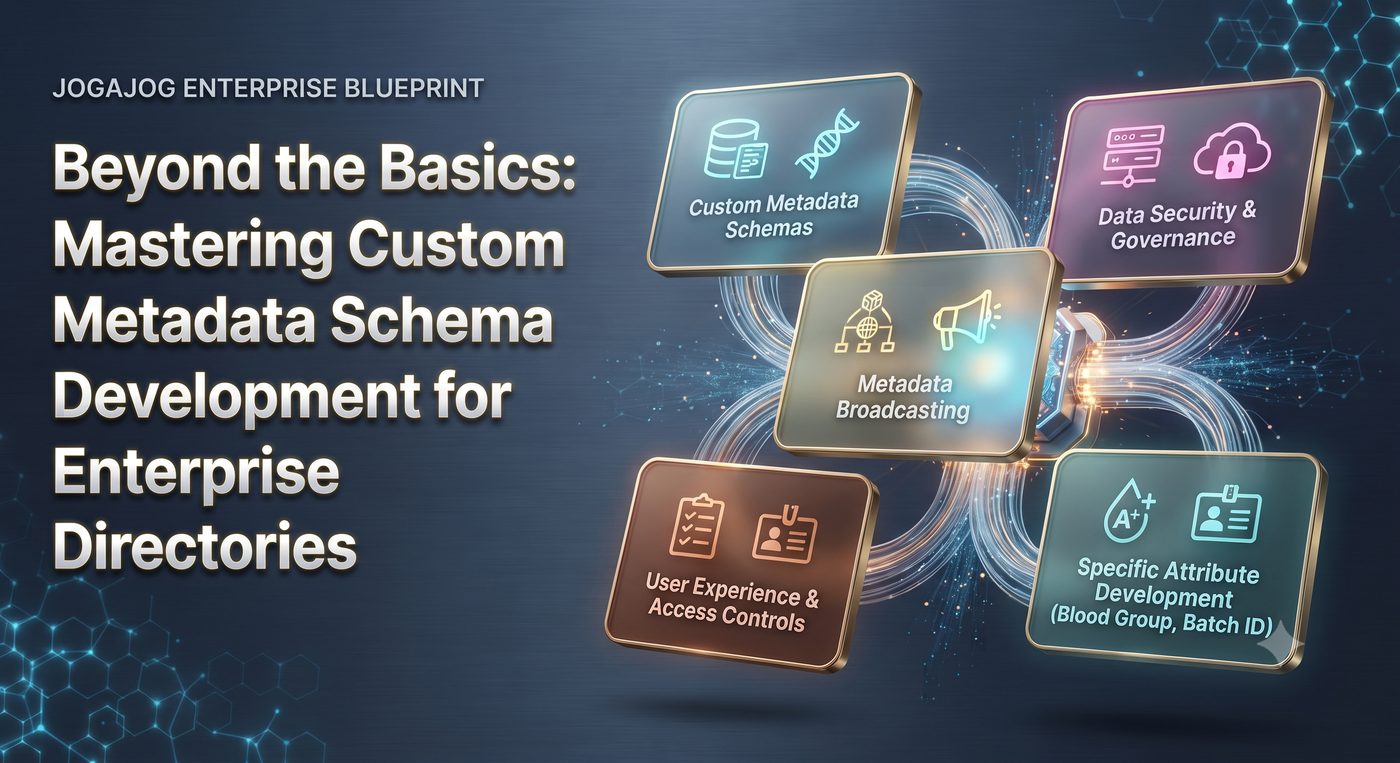
In the structured environment of modern enterprises, professional associations, and alumni networks, a standard directory containing only names and phone numbers is no longer sufficient. Operational efficiency and emergency readiness require deep, context-specific insights—such as employee identification numbers, academic batch years, professional certifications, or vital health information like blood groups. Relying on rigid, one-size-fits-all directory software limits organizational capability. Modern institutions require the flexibility to build custom metadata schemas tailored precisely to their unique operational needs.
The Challenge
How can enterprise IT administrators, association directors, and HR leaders design, implement, and manage custom data attributes within a centralized directory without compromising system performance, data integrity, or user privacy?
The Problem with Rigid, Static Directories
Using legacy directories or unmanaged spreadsheet rosters introduces severe operational hurdles:
* Inability to Capture Critical Context: Standard tools lack custom fields, forcing organizations to track vital data points—like blood groups for emergency response or batch IDs for alumni tracking—in separate, unsecured spreadsheets.
* Data Fragmentation and Inconsistency: Without a centralized schema, different departments collect different metrics using varied formats, making organization-wide reporting and filtering impossible.
* Security and Privacy Vulnerabilities: Storing sensitive custom attributes (such as medical or identification data) in unencrypted, ad-hoc files exposes the organization to massive compliance risks and data breaches.
The Solution: Centralized Custom Metadata Schema Development
Transitioning to an advanced enterprise directory platform—like Jogajog—empowers organizations to design bespoke data architectures. By leveraging flexible metadata schema development, organizations ensure:
* Tailored Attribute Mapping: Easily configure custom fields—such as Blood Group for emergency medical readiness or Batch ID for alumni associations—ensuring every relevant data point has a dedicated, standardized home within the profile.
* Granular Visibility and Access Control: Combine custom metadata schemas with role-based privacy rules. Ensure that sensitive custom fields (like medical details) are restricted to authorized administrators while general directory attributes remain accessible.
* Powerful Filtering and Advanced Search: Utilize custom metadata to instantly filter, sort, and segment your network. Locate specific blood groups for emergency donations or filter alumni by exact batch IDs in seconds.
Frequently Asked Questions
Q: Can custom metadata fields be made visible only to specific administrative roles?
A: Yes. Administrators can configure granular field-level privacy settings for any custom metadata attribute, ensuring sensitive information is protected and only viewable by authorized personnel.
Q: Are custom metadata fields included in the platform’s advanced search and filtering tools?
A: Yes. All custom attributes become fully searchable and indexable, allowing users and administrators to filter the directory based on custom parameters like Batch ID, department codes, or specialized skills.
See this feature with your own data.
Free branded demo, built from your spreadsheet, this week.
Get your free demo