Beyond the Wrapper: Mastering the Transition from Shared App Containers to a White-Label Brand in Enterprise Networks
July 28, 2026 · Jogajog team · 3 min read

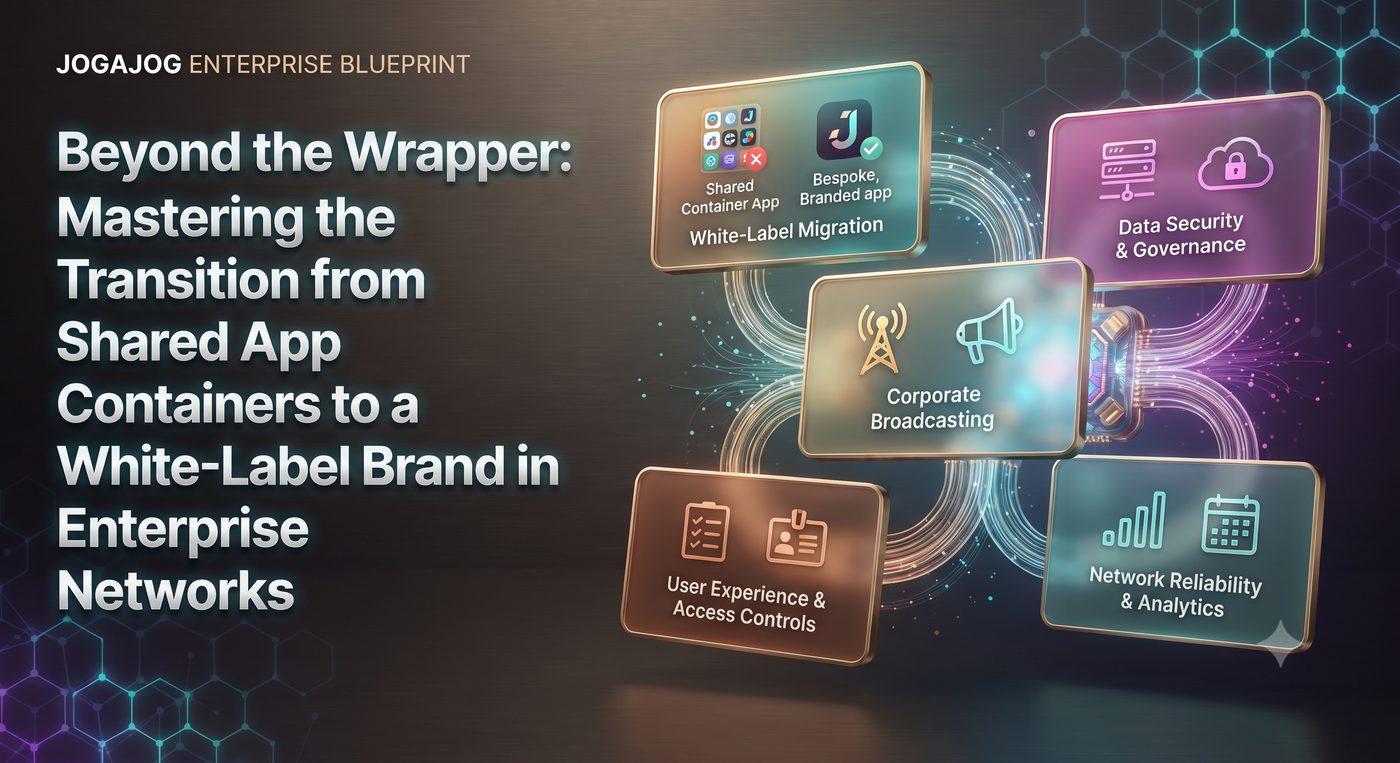
In the evolving ecosystem of modern enterprises, professional associations, and multi-tiered institutions, digital identity is everything. When organizations first embrace mobile and web communication platforms, they often start by deploying their teams within a shared app container—relying on a common, third-party wrapper to handle connectivity, directories, and messaging. While this approach offers a fast entry point, it comes with a severe ceiling. A shared container means sharing brand visibility, navigating external UI clutter, and lacking true proprietary ownership over your digital infrastructure. For growing organizations aiming to scale, mature, and project absolute authority, transitioning to a dedicated, white-label brand is no longer just a luxury—it is a strategic necessity.
The Challenge
How can enterprise leaders, marketing directors, and IT executives navigate the complex transition from a shared application container to a fully customized, white-label brand without disrupting active user workflows or compromising system security?
The Problem with Staying in a Shared App Container
Relying indefinitely on a shared container environment introduces significant brand, operational, and structural limitations:
* Diluted Brand Identity and Authority: When members or employees must log into a generic, third-party container app to access your organization’s internal network, your institutional brand takes a back seat. This diminishes organizational pride and professional prestige.
* User Confusion and Friction: Shared containers often host multiple unrelated communities or networks, leading to a cluttered user experience, constant notification noise, and heightened risks of cross-contamination or misdirected messages.
* Lack of Long-Term Customization and Control: Organizations locked into a shared wrapper cannot tailor the UI/UX, feature sets, or deep domain integrations to match their exact institutional workflows and branding guidelines.
The Solution: Seamless White-Label Migration Architecture
Transitioning to an independent, white-label enterprise platform—like Jogajog—replaces third-party dependency with complete brand sovereignty. By deploying a dedicated white-label application, institutions ensure:
* Total Brand Ownership and Customization: Launch your own dedicated app featuring your organization’s name, logo, custom color palettes, and bespoke iconographies across iOS, Android, and desktop ecosystems. Every touchpoint reinforces your brand.
* Isolated, Secure Ecosystems: Provide your members, staff, or partners with a distraction-free, dedicated environment completely cordoned off from external noise, third-party ads, or competing communities.
* Uninterrupted Data Migration and Continuity: Modern white-label architecture allows seamless data migration—transferring existing directories, historical communication logs, and role-based permissions directly into your new branded app with zero downtime.
Frequently Asked Questions
Q: How long does it typically take to transition from a shared container to a fully branded white-label app?
A: With a robust enterprise platform, the technical migration process is streamlined. Once branding assets, app store developer accounts, and configuration parameters are established, deployment can be achieved rapidly without interrupting ongoing daily communications.
Q: Will our users need to create new accounts when we transition to the white-label app?
A: No. Backend user directories, credential mappings, and authentication tokens are seamlessly migrated, allowing users to log into the new white-label app using their existing credentials or through integrated enterprise SSO protocols.
See this feature with your own data.
Free branded demo, built from your spreadsheet, this week.
Get your free demo