Coordinated Care: Patient Care Team Coordination Channels in Secure Enterprise Healthcare Networks
July 28, 2026 · Jogajog team · 3 min read

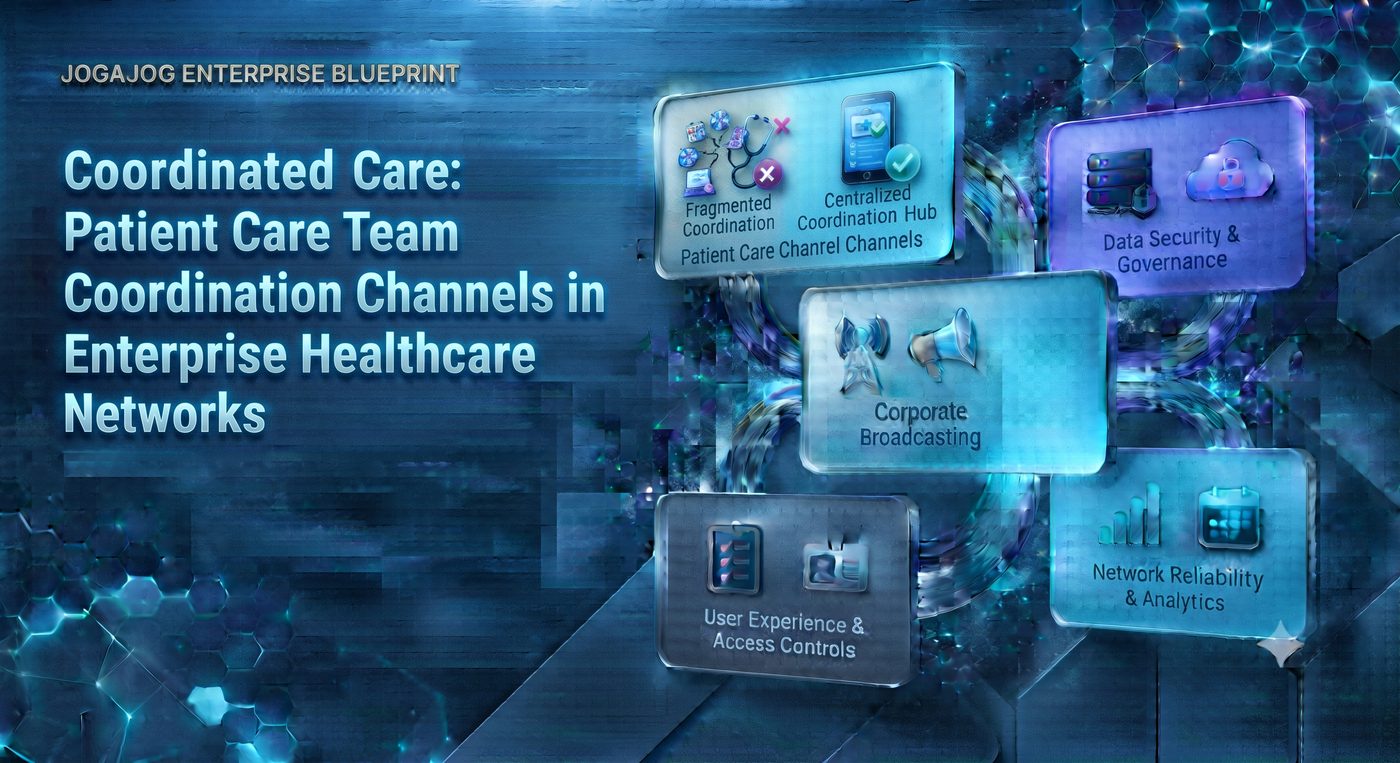
In the demanding clinical environment of modern hospitals, multi-specialty medical centers, and comprehensive healthcare campuses—such as managing multidisciplinary patient treatment groups across Dhaka, Chittagong, and regional medical facilities—delivering exceptional care relies on seamless communication among care team members. When doctors, nurses, pharmacists, and specialists rely on uncoordinated messaging apps, fragmented phone calls, or unmonitored communication channels to discuss patient cases, care gaps emerge, leading to treatment delays and increased medical risks. The definitive key to elevating patient safety and care continuity is implementing centralized, secure patient care team coordination channels within an enterprise healthcare network.
The Challenge
How can hospital chief medical officers, nursing directors, and clinical operations managers design and deploy a centralized, secure collaboration hub that connects multi-disciplinary care teams instantly while maintaining strict HIPAA compliance and protecting sensitive health data?
The Problem with Fragmented Care Team Communication
Attempting to manage patient-centric care teams using legacy or consumer-grade communication tools creates severe clinical vulnerabilities:
* Information Silos and Care Gaps: When critical clinical updates, medication notes, and shift handover details are scattered across disparate messaging tools, team members remain misaligned, increasing the likelihood of medical errors.
* Communication Friction During Shift Handoffs: Nurses and physicians struggling to pass patient status updates through informal channels experience severe delays in clinical response times during shift transitions.
* Security Vulnerabilities and Privacy Risks: Using unencrypted consumer apps to share patient care notes and treatment instructions exposes the institution to data breaches and severe regulatory penalties.
The Solution: Centralized Care Channels and Secure Multidisciplinary Hubs
Transitioning to an advanced, enterprise-grade communication and directory platform—like Jogajog—replaces clinical coordination friction with a secure, highly structured multidisciplinary ecosystem. By centralizing patient care team coordination channels, healthcare institutions ensure:
* Dedicated Patient and Ward Channels: Establish secure, encrypted collaboration spaces tailored for specific patient care groups, surgical teams, and medical wards to discuss treatment plans in real time.
* Structured Directory Integration: Enable care team members to instantly locate and connect with active physicians, consulting specialists, and support staff using a comprehensive, searchable enterprise directory.
* Centralized Leadership Oversight: Empower medical directors with complete administrative visibility into care team workflows, ensuring accountability, rapid response times, and total alignment across departments.
Frequently Asked Questions
Q: How do secure enterprise platforms protect patient confidentiality within care team channels?
A: Modern enterprise platforms feature end-to-end encryption, strict role-based access controls, and data partitioning, ensuring that all clinical discussions and patient care notes remain strictly confidential and compliant with medical privacy standards.
Q: Can external specialists or temporary consultants be added to a patient care team channel securely?
A: Yes. Administrators can provision restricted, sandboxed guest accounts or temporary channel permissions, allowing external specialists to collaborate on a specific patient case without compromising the core security of the hospital network.
See this feature with your own data.
Free branded demo, built from your spreadsheet, this week.
Get your free demo