Cultural Alignment: Localization Strategies for Dual-Language Directories in Secure Enterprise Networks
July 28, 2026 · Jogajog team · 3 min read

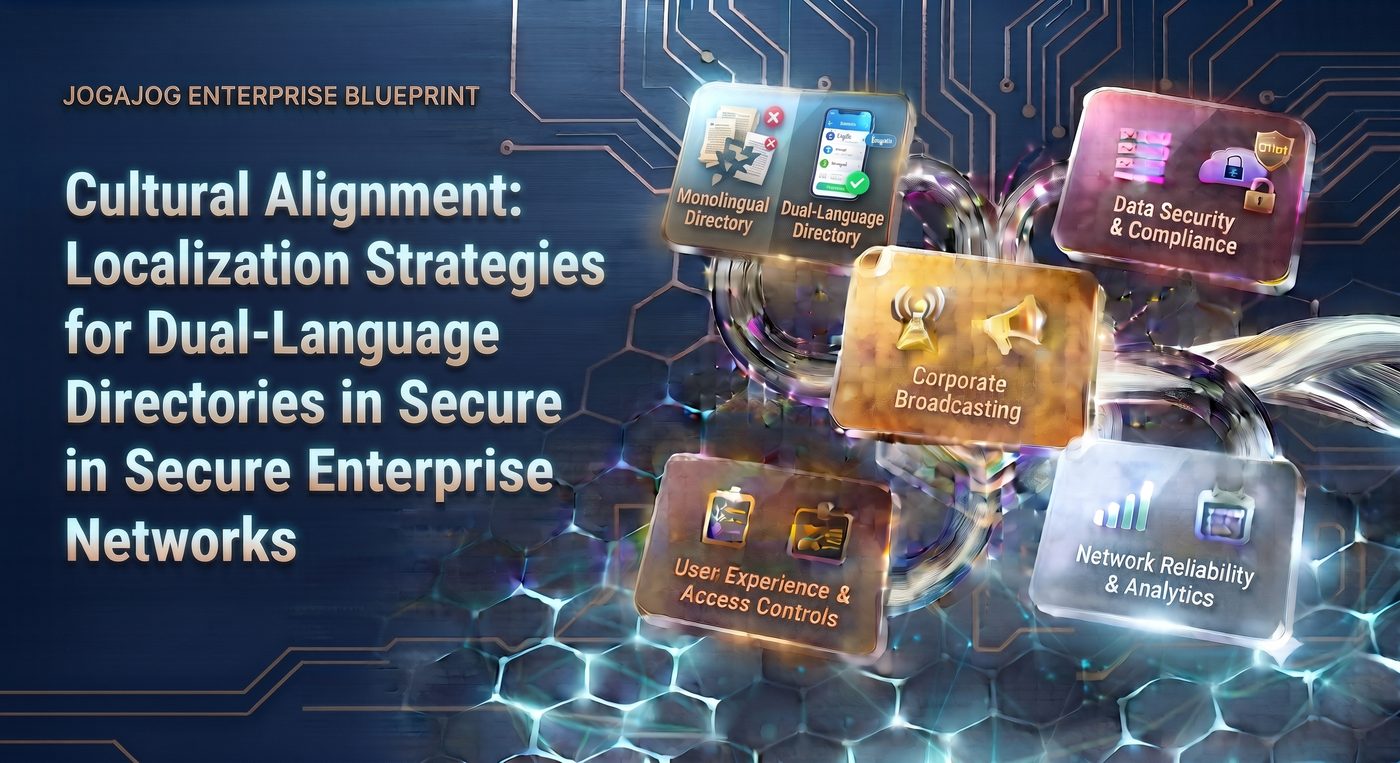
In the diverse and multi-lingual environment of modern corporations, multinational enterprises, and regional institutions—such as coordinating chief operating officers, human resources directors, regional compliance leads, and administrative heads across headquarters in Dhaka, commercial hubs, and international branches—maintaining seamless cross-lingual communication is vital for organizational cohesion. When organizations rely on single-language employee directories, untranslated contact records, or disjointed localization tools that fail to support bilingual workforces, it results in critical communication barriers, administrative friction, and severe operational delays. The definitive key to elevating workforce inclusion and cross-border agility is implementing robust localization strategies for dual-language directories within a unified enterprise communication network.
The Challenge
How can enterprise directors, localization leads, and IT architects design and deploy a centralized, mobile-accessible directory and communication framework that seamlessly supports dual-language display (such as English and Bengali), ensures accurate nomenclature translation, and empowers diverse teams without compromising system performance or data security?
The Problem with Monolingual Limitations and Fragmented Translation Silos
Attempting to manage personnel directories across multi-lingual workforces using rigid, monolingual systems introduces critical vulnerabilities:
* Communication Friction and Misinterpretation: Restricting employee directories to a single language creates severe barriers for regional staff, leading to miscommunication and delayed administrative coordination.
* Decentralized and Inconsistent Translation Efforts: Relying on uncoordinated spreadsheets or local notes to translate department titles and names results in conflicting records across regional branches.
* Exclusion of Frontline and Regional Talent: Monolingual tools alienate native-speaking personnel, lowering engagement and reducing the overall effectiveness of enterprise-wide collaboration platforms.
The Solution: Native Dual-Language Support and Encrypted Collaboration Hubs
Transitioning to an advanced, enterprise-grade communication and directory platform—like Jogajog—replaces language barriers with an inclusive, synchronized, and secure ecosystem. By prioritizing dual-language directory localization, enterprises ensure:
* Seamless Dual-Language Interface Switching: Enable real-time, one-tap switching between languages (such as English and Bengali) across all employee profiles, search fields, and organizational charts.
* Encrypted Enterprise Nomenclature Vaults: Establish secure, end-to-end encrypted storage for localized metadata, ensuring standardized job titles, department names, and contact details remain accurate and protected across all branches.
* Granular Role-Based Access Controls (RBAC): Grant staff, managers, and regional administrators access only to the directory views, localization settings, and communication channels relevant to their specific corporate roles and linguistic regions.
Frequently Asked Questions
Q: Why do traditional monolingual directories create operational friction in multi-lingual enterprises?
A: Monolingual directories fail to accommodate the linguistic needs of regional and multi-cultural workforces, leading to communication breakdowns, lookup delays, and reduced engagement among non-primary language speakers.
Q: How do secure enterprise platforms handle dual-language directory localization effectively?
A: Modern enterprise platforms integrate native dual-language support—such as English and Bengali—directly into the user interface and search engine. This allows employees to look up colleagues and navigate organizational structures effortlessly in their preferred language while maintaining centralized security and data integrity.
See this feature with your own data.
Free branded demo, built from your spreadsheet, this week.
Get your free demo