Empowering Student Leadership: Student Council Organization Systems in Secure Enterprise Educational Networks
July 28, 2026 · Jogajog team · 3 min read

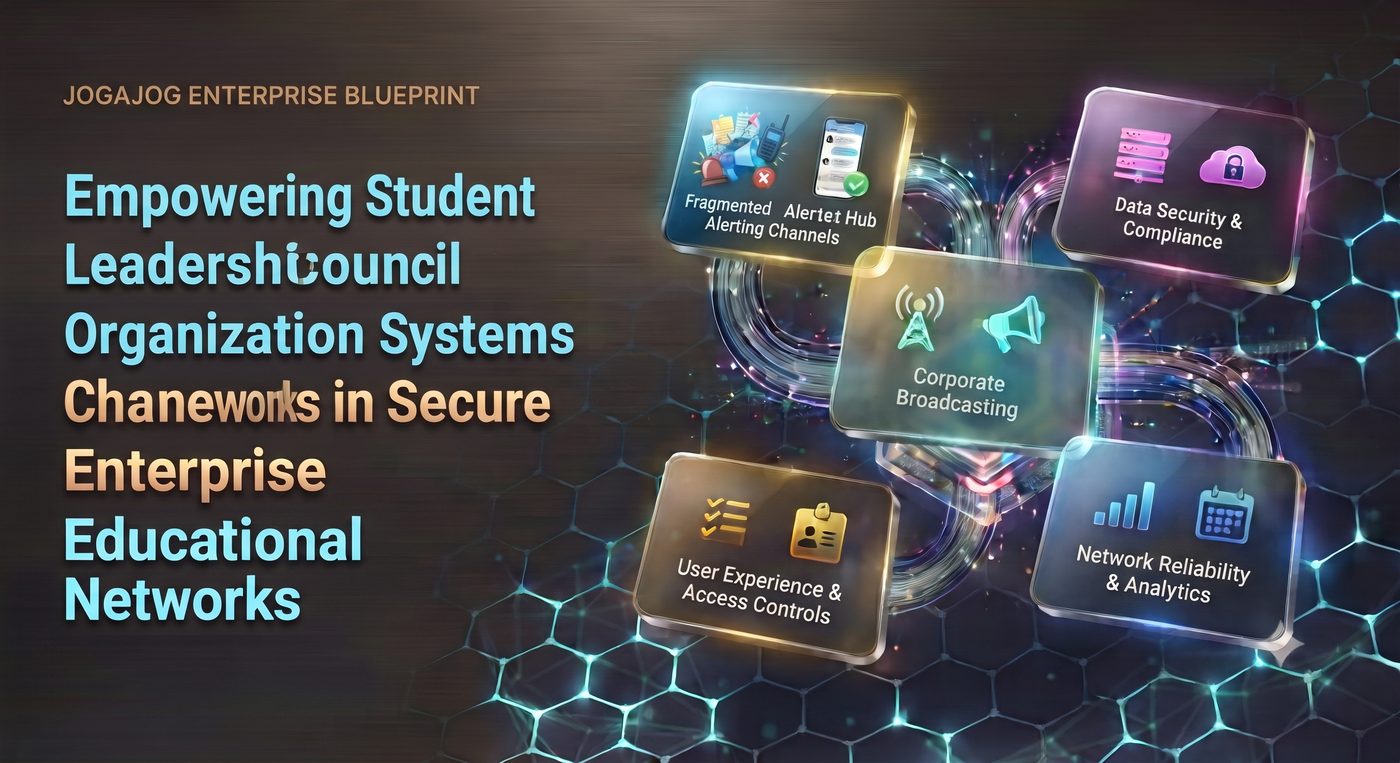
In the dynamic student leadership environment of modern high schools, colleges, and educational institutions—such as coordinating student government associations, class councils, and campus activity committees across Dhaka, Chittagong, and regional networks—fostering organized leadership is essential for vibrant campus life. When student councils rely on unmonitored consumer group chats, fragmented social apps, or insecure shared documents to plan events and manage student initiatives, it leads to coordination breakdowns, missed deadlines, and compromised institutional privacy standards. The definitive key to seamless student governance and secure collaboration is implementing centralized student council organization systems within a secure enterprise educational network.
The Challenge
How can school advisors, student council presidents, and institutional administrators design and deploy a centralized, mobile-accessible communication and organization framework that empowers student leaders to manage projects and coordinate events without violating student data privacy or losing institutional oversight?
The Problem with Unsecured Student Government Tools and Public Chats
Attempting to manage student council operations using consumer messaging apps or legacy tools introduces critical operational vulnerabilities:
* Coordination Chaos and Missed Events: When student leaders rely on scattered social chats and unorganized threads, event planning timelines slip, resulting in mismanaged school festivals and fragmented activities.
* Privacy Exposure and Personal Contact Risks: Using public networks exposes student representatives’ private phone numbers to spam and external harassment, compromising their personal security.
* Lack of Institutional Oversight: Unmonitored student group chats prevent faculty advisors from maintaining appropriate governance, leading to compliance risks and unverified announcements.
The Solution: Centralized Collaboration Hubs and Monitored In-App Groups
Transitioning to an advanced, enterprise-grade communication and directory platform—like Jogajog—replaces administrative uncertainty with a secure, highly structured educational ecosystem. By centralizing student council organization systems, institutions ensure:
* Masked In-App Collaboration Channels: Enable student council members to coordinate projects, discuss initiatives, and manage campus events through secure channels that completely protect personal mobile numbers.
* Faculty-Moderated Governance Spaces: Provide faculty advisors with administrative oversight tools to monitor student government discussions, ensuring institutional compliance and safe peer collaboration.
* Verified Institutional Broadcasts: Empower student leadership to distribute approved event schedules, club updates, and school-wide announcements directly to targeted student devices via secure push alerts.
Frequently Asked Questions
Q: How do secure educational platforms protect student council members from external harassment during public campaigns?
A: Enterprise communication tools utilize internal routing and masked profiles, allowing student leaders to run campaigns and coordinate school-wide events without exposing their personal phone numbers or private contact information.
Q: Can faculty advisors monitor student council project channels without disrupting student autonomy?
A: Yes. Advanced enterprise directory structures feature role-based permissions and supervisory access levels, allowing faculty advisors to maintain safety and compliance oversight while giving students the autonomy to run their councils effectively.
See this feature with your own data.
Free branded demo, built from your spreadsheet, this week.
Get your free demo