Fabric Flow: Garment & Textile Factory Management in Secure Enterprise Networks
July 28, 2026 · Jogajog team · 2 min read

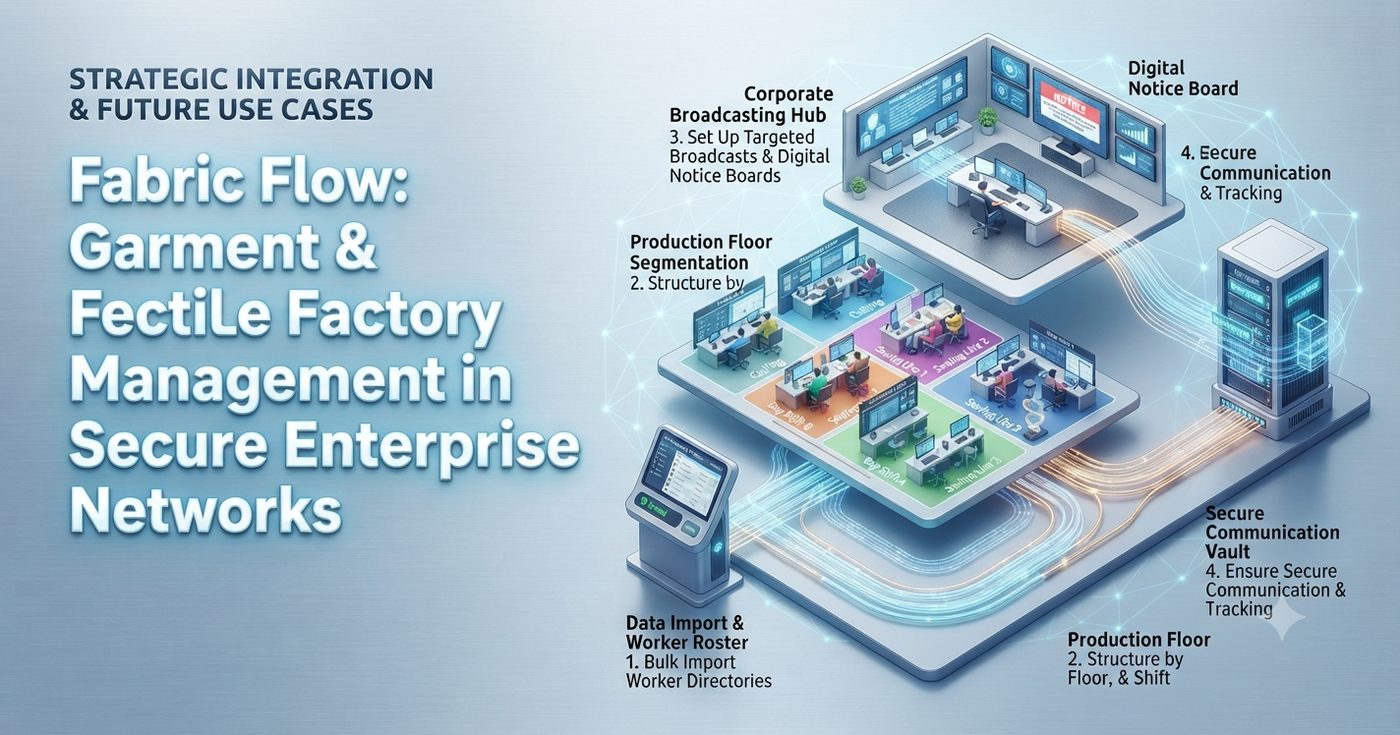
Managing thousands of production workers, line supervisors, and quality control personnel in a garment or textile factory requires structured, real-time communication. Traditional methods like paper rosters or unstructured messaging lead to severe administrative overhead and production delays.
Using Jogajog, factory managers can systematically streamline operations through a step-by-step approach.
Step 1: Bulk Import Worker Directories
- Centralized Data Gathering: Compile all employee details—including sewing line assignments, cutting section roles, and contact numbers—into a single database.
- Instant Onboarding: Use bulk import features to populate the enterprise platform instantly without manual data entry errors.
Step 2: Structure by Floor, Line, and Shift
- Granular Segmentation: Organize the directory by physical location, production line, and operational shifts (e.g., day and night rotations).
- Role-Based Access Control (RBAC): Restrict communication permissions so that line supervisors only access contacts and groups relevant to their specific floor.
Step 3: Set Up Targeted Broadcasts and Digital Notice Boards
- Instant Announcements: Deploy targeted broadcast channels to push shift changes, overtime notices, or safety updates directly to specific production lines.
- Eliminate Paper Clutter: Replace physical notice boards with mobile notifications to ensure all workers receive urgent updates instantly.
Step 4: Ensure Secure Communication and Tracking
- Encrypted Vaults: Protect proprietary production schedules and internal communication using end-to-end encryption.
- Read-Receipt Tracking: Confirm that critical operational notices have been received and reviewed by targeted personnel.
Frequently Asked Questions
Q: Why do traditional manual rosters fail in large garment factories?
A: Static spreadsheets and paper rosters cannot keep pace with dynamic shift rotations and large workforces, resulting in severe communication gaps and production bottlenecks.
Q: How does Jogajog improve factory floor coordination?
A: By providing centralized mobile directories, granular role-based access controls, and instant broadcast capabilities tailored to specific production lines and shifts.
See this feature with your own data.
Free branded demo, built from your spreadsheet, this week.
Get your free demo