Mapping Complexity: Multi-Level Deep Organizational Hierarchy Design in Secure Enterprise Networks
July 28, 2026 · Jogajog team · 3 min read

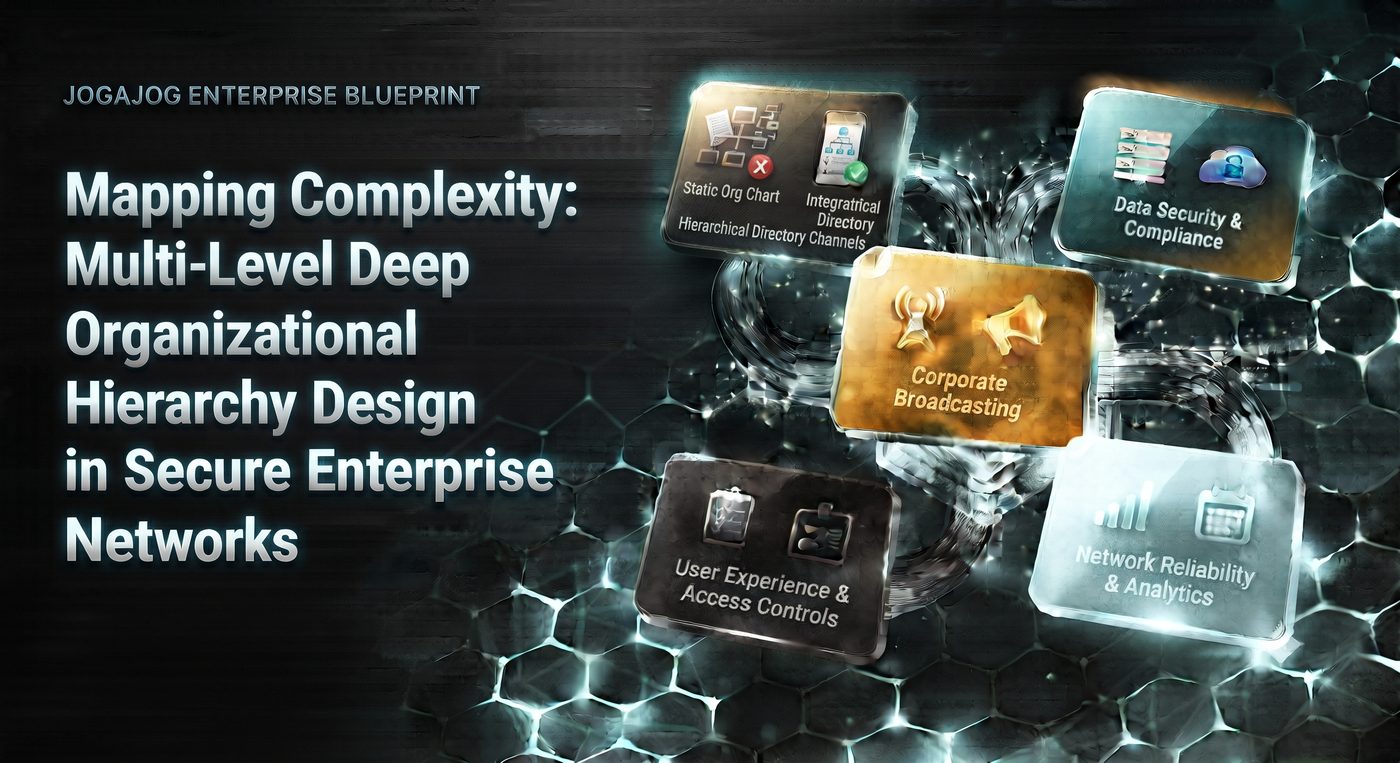
In the intricate and structured environment of large corporations, multi-national conglomerates, and complex government ministries—such as coordinating divisional heads, departmental directors, project leads, and staff members across regional headquarters in Dhaka, operational hubs, and international branch offices—maintaining a clear and accessible map of reporting relationships is vital for effective management. When organizations rely on static organization charts, outdated HR spreadsheets, or fragmented messaging apps to manage and visualize deep organizational hierarchies, it results in critical communication delays, decision-making bottlenecks, and compromised organizational transparency. The definitive key to elevating structural visibility and operational agility is implementing structured multi-Level deep organizational hierarchy design within a unified enterprise communication network.
The Challenge
How can CHROs, CIOs, and organizational development managers design and deploy a centralized, mobile-accessible directory and communication framework that visualizes an organization’s entire multi-level structure instantly while protecting sensitive employee data, departmental KPIs, and internal succession plans from unauthorized exposure?
The Problem with Fragmented HR Tools and Static Org Charts
Attempting to manage complex deep organizational hierarchies using traditional tools introduces critical vulnerabilities:
* Structural Opacity and Slow Decision-Making: When employees cannot instantly identify decision-makers, stakeholders, or subject matter experts across deep reporting lines, urgent cross-functional collaborations and critical approvals stall.
* Data Inconsistencies and Version Control Chaos: Storing org charts in disconnected files, shared drives, or static PDFs leads to outdated information, causing confusion and operational friction.
* Lack of Centralized Administrative Oversight: Without unified control over directory data and user permissions, HR leadership cannot audit data access, enforce least-privilege principles, or instantly update structural changes when personnel transition.
The Solution: Centralized Hierarchical Directories and Encrypted Collaboration Hubs
Transitioning to an advanced, enterprise-grade communication and directory platform—like Jogajog—replaces structural friction with a secure, highly visible, and agile organizational ecosystem. By centralizing multi-level deep organizational hierarchy design, enterprises ensure:
* Searchable Multi-Tiered Hierarchical Directories: Enable executives, managers, and staff to visualize and navigate the entire corporate structure instantly, from the C-suite down to individual contributors, via a secure mobile interface.
* Encrypted Departmental and Project Channels: Establish isolated, end-to-end encrypted communication spaces for specific departments, regional task forces, and confidential management committees, ensuring all strategic discussions remain fully protected.
* Granular Role-Based Access Controls (RBAC): Grant executives, HR administrators, and general staff access only to the directory listings, organizational charts, and communication channels relevant to their specific role and security clearance level.
Frequently Asked Questions
Q: How do secure enterprise platforms protect sensitive organizational hierarchy data while providing full visibility to authorized personnel?
A: Modern enterprise platforms utilize end-to-end encryption, strict role-based access controls (RBAC), and secure data partitioning, ensuring that detailed organizational charts and employee data are only accessible to vetted executives and HR personnel, while still providing a functional view for the wider organization.
Q: Can enterprise administrators instantly update the entire organizational hierarchy design following corporate restructuring, acquisitions, or internal re-orgs?
A: Yes. Administrators can use a centralized administrative console to import or update the entire hierarchical structure, which instantly propagates the changes across the secure mobile directory, ensuring all employees have real-time access to the current reporting lines.
See this feature with your own data.
Free branded demo, built from your spreadsheet, this week.
Get your free demo