Navigating the Matrix: Mastering Multi-Level Deep Organizational Hierarchy Design for Enterprise Networks
July 28, 2026 · Jogajog team · 3 min read

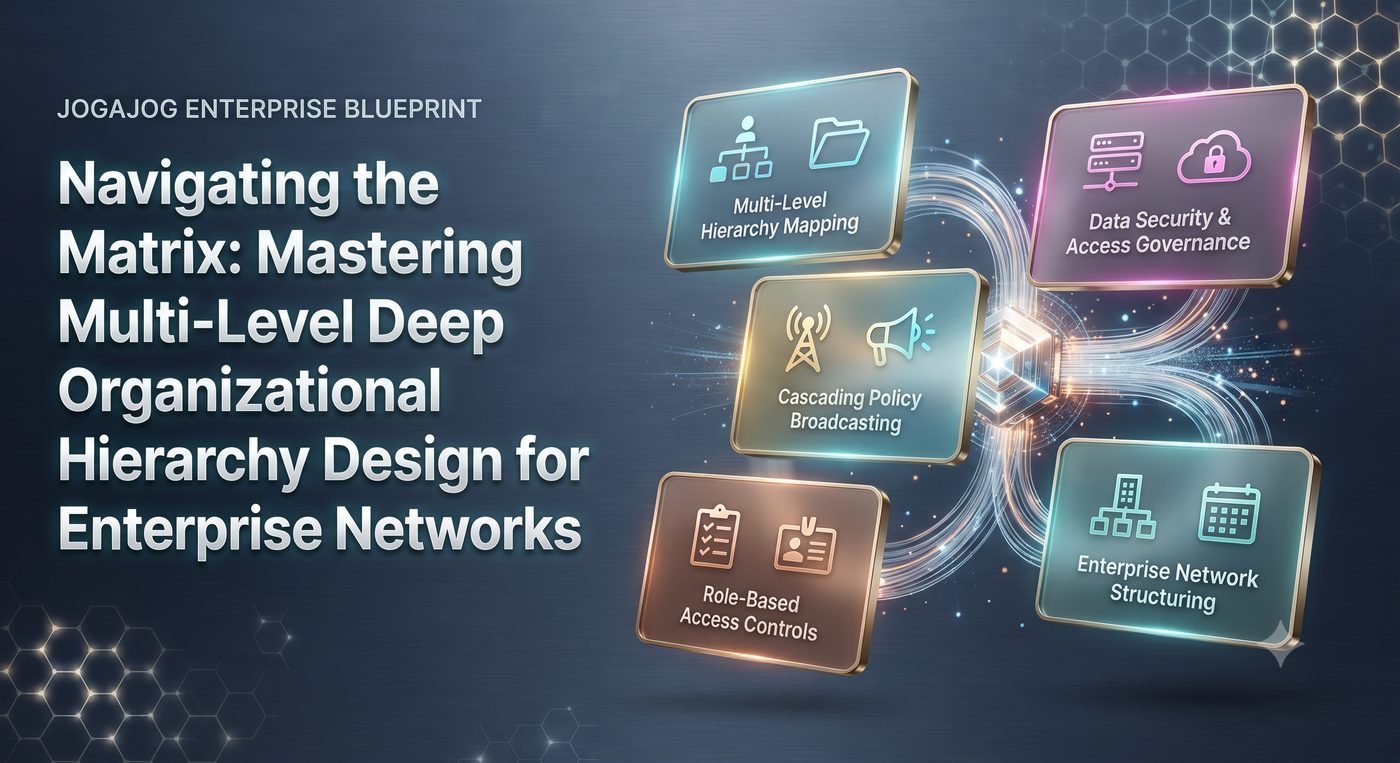
In the complex and rapidly expanding environment of large-scale enterprises, multinational corporations, multi-tiered federations, and government agencies, maintaining a clear operational structure is vital. As organizations grow across diverse geographical regions, multi-layered departments, and functional divisions, flat communication models collapse. From mapping multi-level reporting lines and structuring regional sub-branches to securing confidential communication pathways between executive boards and field units, today’s complex organizations require a sophisticated hierarchical directory architecture that is scalable, transparent, and strictly governed.
The Challenge
How can enterprise architects, operations directors, and human resource leaders effectively design and manage a deep, multi-level organizational hierarchy—across complex department trees, regional subsidiaries, and shifting reporting lines—to ensure absolute command clarity, rapid information flow, and uncompromised data security?
The Problem with Traditional Hierarchy Management
Organizations managing deep multi-level structures frequently encounter severe operational bottlenecks and administrative friction due to outdated tools:
* Rigid and Obsolete Org Charts: Relying on static graphic diagrams or outdated spreadsheets means that as soon as a department restructures or a manager transitions, the directory becomes inaccurate, leading to misrouted communications.
* Siloed Departmental Communication: Deep organizational tiers often create communication barriers between upper executive leadership and front-line field operatives, causing critical operational delays and misaligned execution.
* Loss of Granular Access Governance: Without a structured multi-level permission framework, sensitive corporate data or restricted executive channels risk exposure to unauthorized tiers within the broader enterprise network.
The Solution: Centralized, Multi-Tiered Command Architectures
Transitioning to a private, enterprise-grade communication platform—like Jogajog—creates a secure, multi-level “digital nerve center” tailored for deep organizational hierarchies. By implementing structured structural trees and robust administrative controls, enterprises ensure:
* Dynamic Multi-Level Directory Mapping: Building clear, searchable organizational trees that reflect complex reporting structures across headquarters, regional branches, and functional departments down to the individual team level.
* Targeted Cascading Broadcasting: Establishing priority-routed, multi-tiered broadcast channels that allow leadership to disseminate policy changes, strategic updates, or urgent directives down specific branch hierarchies without information leakage.
* Strict Role-Based Access and Governance: Providing a unified, encrypted environment with granular permission controls, ensuring that administrative authority, directory visibility, and secure channel access align perfectly with each user’s official position in the organizational tree.
Frequently Asked Questions
Q: Can this platform handle deep multi-level organizational structures with numerous reporting tiers?
A: Yes. The platform is engineered to support complex, multi-tiered directory architectures, allowing enterprises to mirror their exact corporate or institutional reporting trees seamlessly.
Q: Does multi-level structuring improve internal security and data privacy across different departments?
A: Yes. Granular role-based access controls ensure that sensitive internal communications and directory visibility remain strictly restricted to authorized tiers within the organizational hierarchy.
See this feature with your own data.
Free branded demo, built from your spreadsheet, this week.
Get your free demo