On-Call Precision: Doctor-on-Call Directory Management in Secure Enterprise Healthcare Networks
July 28, 2026 · Jogajog team · 3 min read

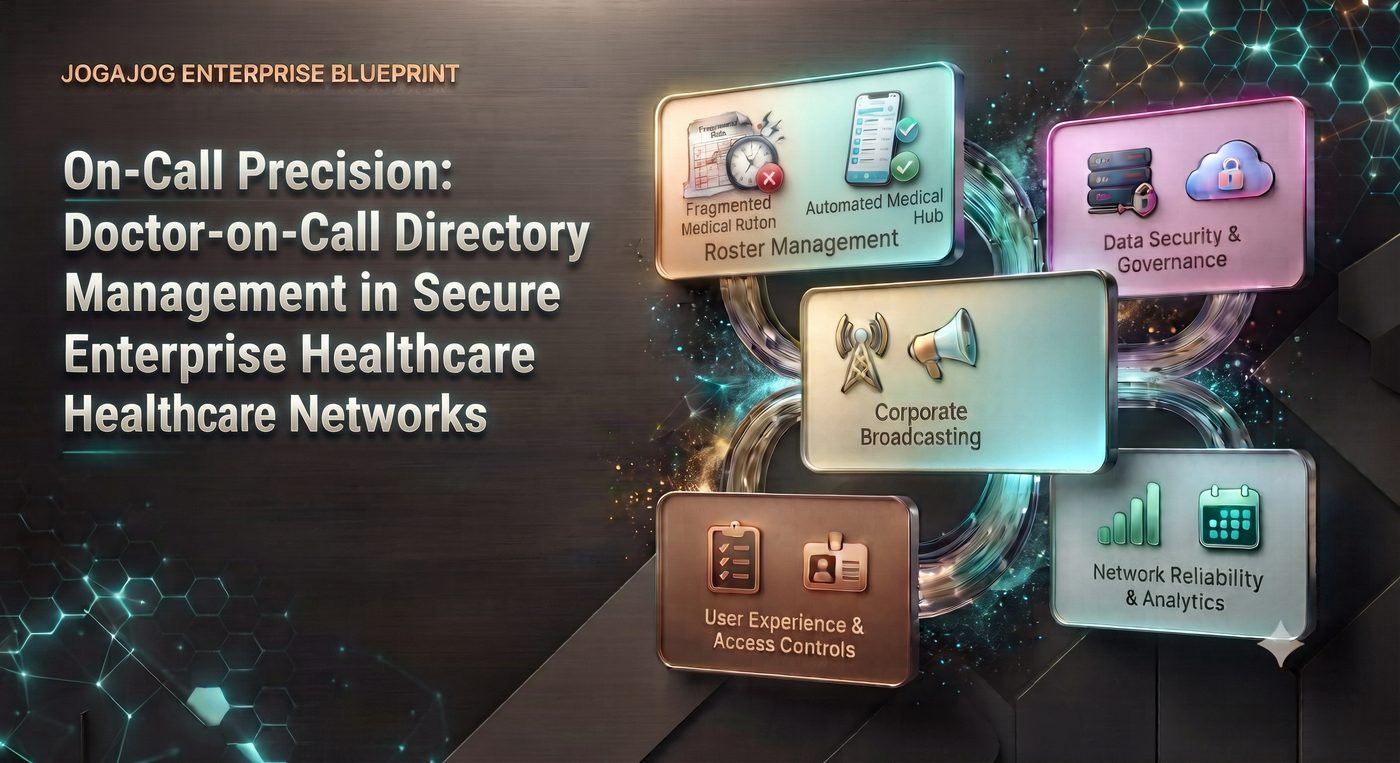
In the fast-paced environment of modern hospitals, multi-specialty medical centers, and regional clinics—such as coordinating urgent specialist availability across Dhaka, Chittagong, and healthcare facilities nationwide—managing dynamic doctor-on-call schedules is a critical operational challenge. When medical groups rely on outdated whiteboards, uncoordinated messaging apps, or static PDF rosters, locating the correct on-call specialist during an emergency becomes a frustrating and time-consuming bottleneck. Delayed communication directly impacts patient care outcomes and hospital efficiency. The definitive key to seamless clinical responsiveness is implementing centralized, automated doctor-on-call directory management within a secure enterprise healthcare network.
The Challenge
How can hospital administrators, medical directors, and clinical operations managers design and deploy a centralized, real-time directory system that tracks rotational on-call status, protects physician privacy, and accelerates emergency consultations without risking compliance or data security?
The Problem with Traditional On-Call Tracking
Attempting to manage 24/7 medical rotas with legacy or consumer-grade communication tools creates severe clinical vulnerabilities:
* Communication Delays During Emergencies: When medical staff must search through outdated paper rotas or fragmented group chats to find the active on-call specialist, critical minutes are lost during urgent patient interventions.
* Privacy Compromise and Personal Disturbance: Exposing physicians’ personal mobile numbers on unmanaged public directories leaves doctors vulnerable to inappropriate after-hours interruptions and burnout.
* Roster Discrepancies and Shift Confusion: Last-minute shift swaps or emergency coverages are frequently missed when updates are communicated informally, leading to unassigned wards and unaccounted-for specialists.
The Solution: Centralized Clinical Directories and Dynamic Routing
Transitioning to an advanced, enterprise-grade communication and directory platform—like Jogajog—replaces clinical coordination friction with a secure, highly structured digital ecosystem. By centralizing doctor-on-call directory management, healthcare institutions ensure:
* Real-Time On-Call Synchronization: Automatically update and broadcast rotational shift schedules, ensuring nursing staff and administrative desks instantly view which specialist is actively on duty.
* Masked Direct Dialing and Privacy Protection: Allow authorized staff to connect with the active on-call physician instantly through secure in-app voice or messaging channels without ever exposing the doctor’s private phone number.
* Granular Departmental and Ward Segmentation: Structure medical directories by clinical specialty, medical ward, and shift status, enabling effortless navigation across multi-disciplinary healthcare teams.
Frequently Asked Questions
Q: How does a secure directory platform handle last-minute shift swaps for doctors-on-call?
A: Centralized enterprise platforms allow administrators or physicians to update on-call rosters instantly within the app, pushing real-time schedule modifications to all relevant hospital departments simultaneously.
Q: Can medical directories restrict access to on-call schedules based on staff roles?
A: Yes. Granular role-based access controls ensure that only authorized clinical and administrative personnel can view sensitive on-call schedules, directory details, and confidential internal extensions.
See this feature with your own data.
Free branded demo, built from your spreadsheet, this week.
Get your free demo