Precision Profiles: Custom Metadata Schema Development (Blood Group, Batch ID) in Secure Enterprise Networks
July 28, 2026 · Jogajog team · 3 min read

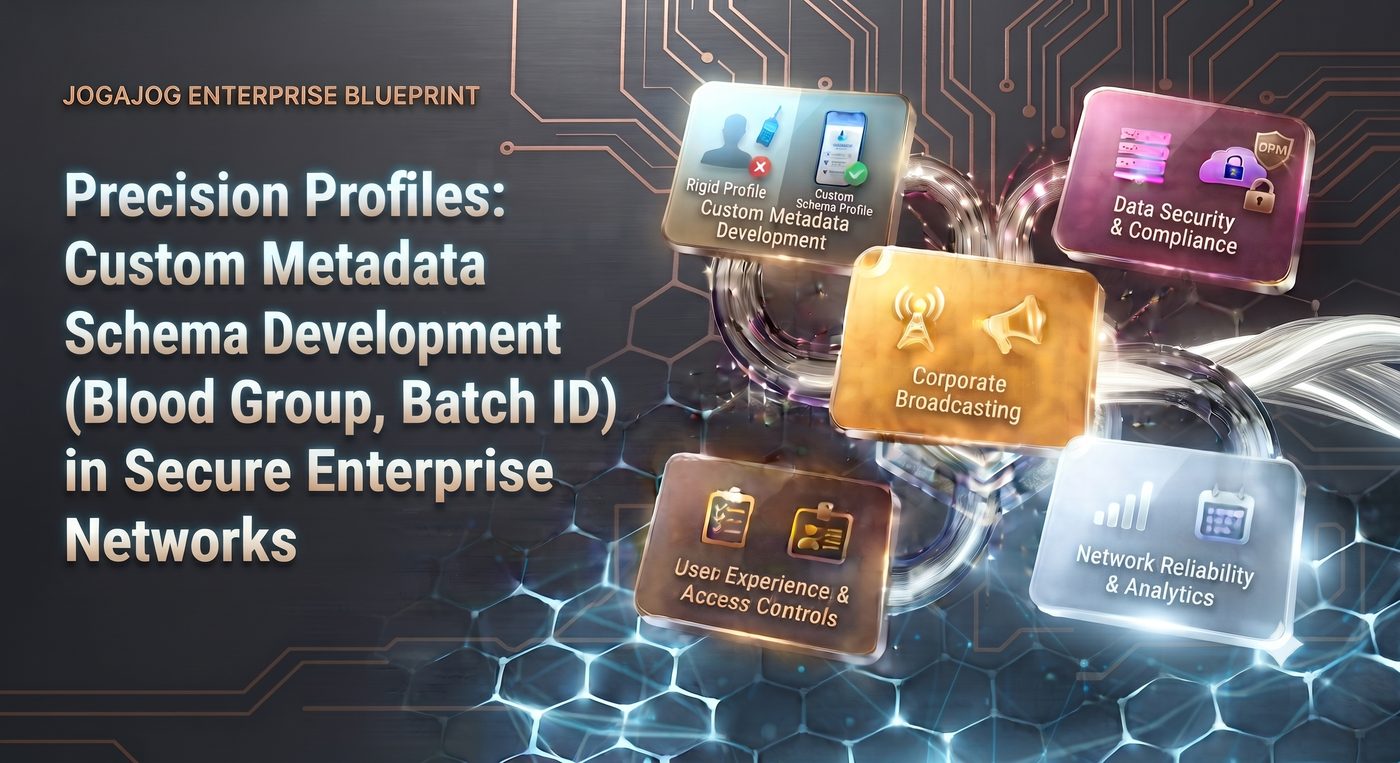
In the complex and high-compliance environment of modern corporations, healthcare institutions, and large-scale enterprises—such as coordinating chief HR officers, database architects, operational managers, and administrative leads across regional headquarters in Dhaka, commercial centers, and international branches—maintaining detailed and tailored employee profiles is vital for accurate workforce management and emergency response. When organizations rely on rigid, one-size-fits-all directory templates that lack customizable fields for specialized identifiers like blood groups, employee batch IDs, or regional certifications, it results in critical operational blind spots, delayed emergency reactions, and severe administrative inefficiencies. The definitive key to elevating workforce visibility and profile adaptability is implementing structured custom metadata schema development within a unified enterprise communication network.
The Challenge
How can enterprise HR directors, system administrators, and database leads design and deploy a centralized, mobile-accessible directory and communication framework that customizes user profile schemas with specialized organizational data fields—such as emergency medical markers and internal batch classifications—while protecting sensitive employee records from unauthorized exposure?
The Problem with Rigid Directory Templates and Generic User Profiles
Attempting to manage enterprise workforce data using legacy tools or unadaptable software introduces critical vulnerabilities:
* Emergency Response Delays: In critical medical situations, lacking immediate access to vital employee data like blood groups within the corporate directory severely hinders emergency coordination.
* Administrative Inefficiencies: Standard directories that cannot accommodate custom batch IDs, internal project codes, or specialized credentials force departments to maintain fragmented, unsecure side spreadsheets.
* Lack of Profile Governance: Without customizable schema controls, IT teams cannot enforce standardized data entry across multi-branch enterprises, leading to inconsistent records and compliance risks.
The Solution: Centralized Custom Schemas and Encrypted Collaboration Hubs
Transitioning to an advanced, enterprise-grade communication and directory platform—like Jogajog—replaces rigid templates with a flexible, highly customized, and secure ecosystem. By centralizing custom metadata schema development, enterprises ensure:
* Tailored Profile Fields and Specialized Identifiers: Enable administrators to build custom metadata schemas incorporating vital fields such as blood groups, emergency contacts, batch IDs, and department-specific credentials.
* Encrypted Enterprise Directory Channels: Establish isolated, end-to-end encrypted repositories for personnel data, ensuring all sensitive employee records remain fully protected against unauthorized access.
* Granular Role-Based Access Controls (RBAC): Grant staff, managers, and HR personnel access only to the specific profile fields and directory views relevant to their corporate role and clearance level.
Frequently Asked Questions
Q: How do secure enterprise platforms protect sensitive custom metadata fields like blood groups and personal identification numbers?
A: Modern enterprise platforms combine custom schema builders with strict role-based access controls (RBAC) and field-level encryption, ensuring that sensitive medical or personal metadata can only be viewed by authorized medical response leads or verified HR personnel.
Q: Can enterprise administrators add new custom data fields to user profiles as organizational requirements evolve?
A: Yes. Administrators can update and expand metadata schemas dynamically through the centralized management console, allowing the enterprise directory to adapt instantly to new operational tracking needs without requiring app redeployment.
See this feature with your own data.
Free branded demo, built from your spreadsheet, this week.
Get your free demo