Privacy First: HIPAA-Compliant Data Isolation for Staff in Secure Enterprise Healthcare Networks
July 28, 2026 · Jogajog team · 3 min read

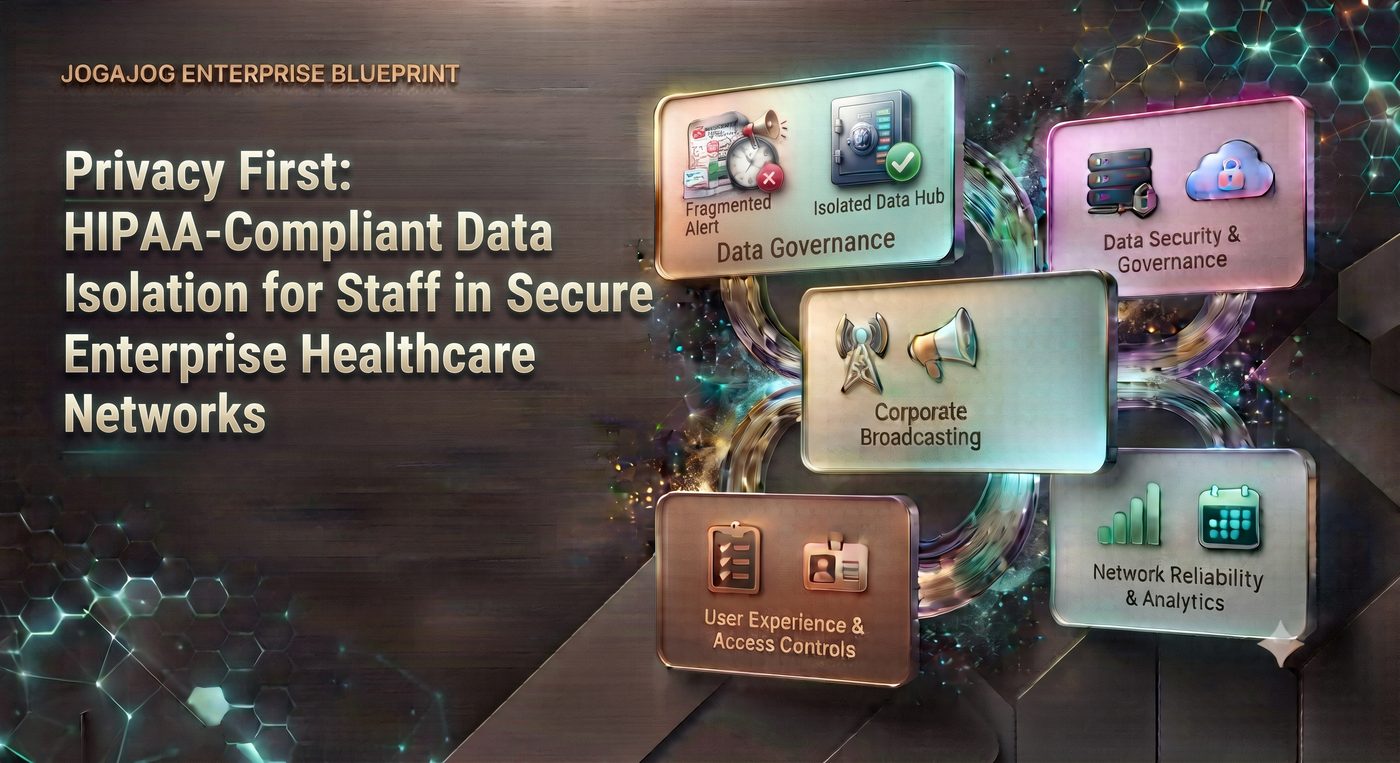
In the highly regulated environment of modern hospitals, medical centers, and specialized healthcare institutions—such as managing sensitive patient files, internal medical logs, and administrative records across Dhaka, Chittagong, and regional medical facilities—ensuring strict data protection is a non-negotiable legal and ethical mandate. When healthcare facilities rely on legacy systems, unencrypted storage, or poorly partitioned communication platforms, they face devastating risks of data breaches, non-compliance penalties, and compromised patient confidentiality. The definitive key to safeguarding institutional credibility and patient trust is implementing HIPAA-compliant data isolation for all staff within a secure enterprise healthcare network.
The Challenge
How can hospital chief information security officers, compliance directors, and healthcare administrators design and deploy a centralized, segmented communication architecture that enforces rigorous data isolation between staff tiers, clinical wards, and external partners without hindering daily operational workflows?
The Problem with Fragmented Networks and Non-Compliant Storage
Attempting to manage healthcare communication and staff records using standard or unpartitioned tools creates critical vulnerabilities:
* Data Intermingling and Access Leakage: When administrative data, patient communications, and general staff directories reside in shared, unisolated environments, unauthorized personnel can inadvertently access sensitive medical records.
* Regulatory Non-Compliance and Penalties: Failing to enforce strict data isolation protocols directly violates healthcare privacy regulations like HIPAA, exposing the institution to severe legal consequences and financial fines.
* Insider Threats and Unsecured Endpoints: Allowing unmanaged devices or open-access group chats to handle sensitive medical data increases the risk of accidental leaks, data exfiltration, and malicious interception.
The Solution: Strict Data Segregation and Role-Based Isolation
Transitioning to an advanced, enterprise-grade communication and directory platform—like Jogajog—replaces compliance anxiety with a robust, cryptographically secure data governance framework. By centralizing healthcare operations with built-in data isolation, institutions ensure:
* Granular Role-Based Access Controls (RBAC): Restrict staff access to information strictly based on verified medical roles, ensuring that nurses, doctors, and administrators only view data relevant to their specific duties.
* Encrypted Data Partitioning: Implement strict structural boundaries between departments, clinical wards, and external vendor channels, ensuring that internal medical communications and staff directories remain completely isolated.
* Comprehensive Audit Trails and Monitoring: Empower compliance officers with automated logging and real-time visibility into data access patterns, ensuring total transparency and adherence to healthcare privacy mandates.
Frequently Asked Questions
Q: How does data isolation protect healthcare institutions from HIPAA violations?
A: Data isolation ensures that sensitive patient-related data and restricted internal communications are strictly compartmentalized and encrypted, preventing unauthorized access by staff members who lack the necessary medical clearance.
Q: Can external vendors or contractors be granted access to the enterprise healthcare network without compromising data isolation?
A: Yes. Modern enterprise platforms allow administrators to create highly restricted, sandboxed guest channels or partner portals that provide limited access to specific projects while keeping core medical databases and internal staff directories fully isolated.
See this feature with your own data.
Free branded demo, built from your spreadsheet, this week.
Get your free demo