Rapid Resilience: Mastering Disaster Relief Field Team Networks & Emergency Response Directories
July 28, 2026 · Jogajog team · 3 min read

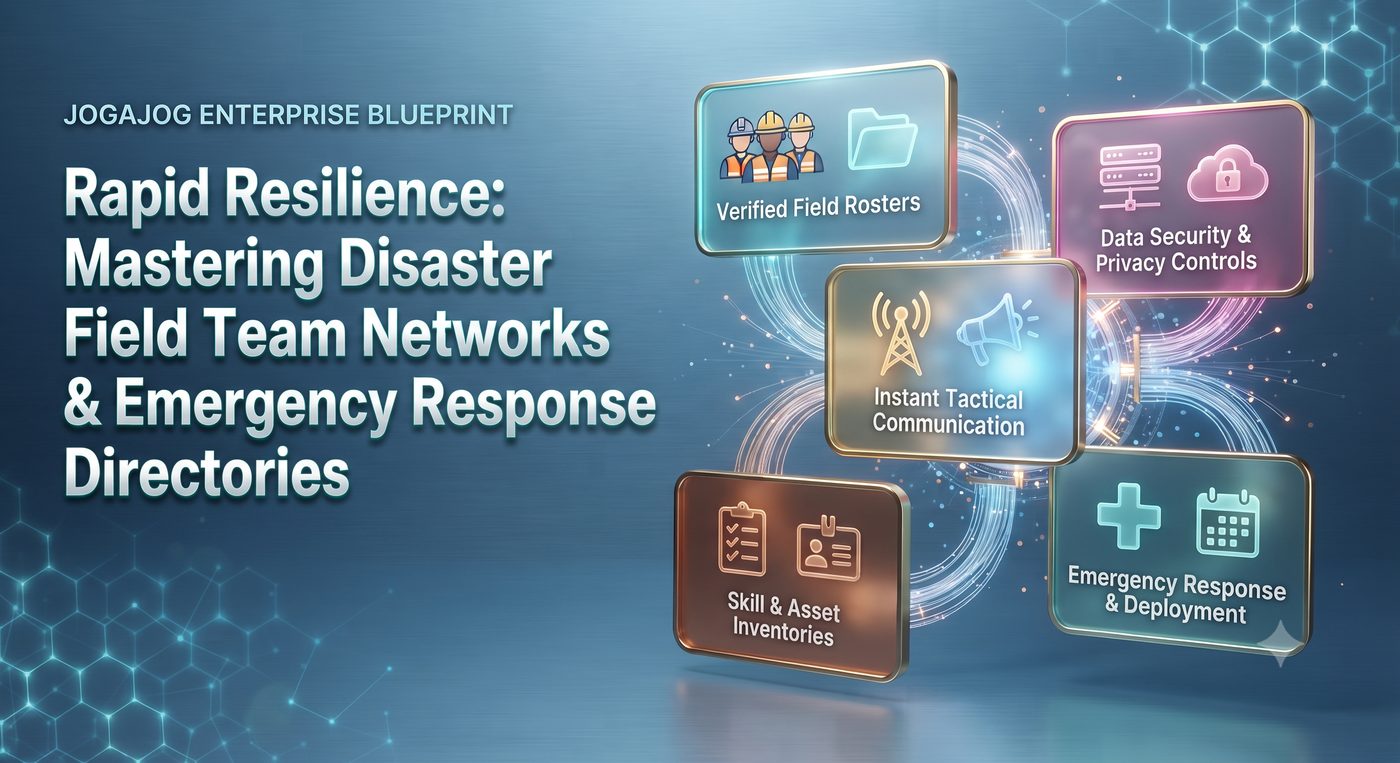
In the high-stakes, time-sensitive environment of disaster relief operations, emergency response agencies, humanitarian task forces, and civil defense units, coordinating distributed field teams, managing verified responder rosters, and securing communication channels between incident commanders, logistics leads, and front-line volunteers are essential for saving lives. From maintaining searchable responder skill inventories and distributing urgent evacuation alerts to securing private tactical networks, today’s disaster response organizations require a communication infrastructure that is instantaneous, resilient, and meticulously organized.
The Challenge
How can incident commanders, disaster coordinators, and emergency directors effectively synchronize their entire operational network—across diverse disaster zones, varying rescue units, and shifting field camps—to ensure immediate availability of verified personnel directories, strict data security, and uncompromised crisis coordination?
The Problem with Traditional Disaster Communication
Emergency response groups and humanitarian teams frequently face severe operational friction and critical communication breakdowns due to outdated or unmanaged tools:
* Fragmented and Slow Field Communication: Relying on unorganized social media groups, public chat apps, or manual phone trees leads to delayed rescue deployments, missed status updates, and communication chaos during active disasters.
* Outdated and Inaccessible Responder Rosters: Utilizing static spreadsheets, printed lists, or basic chat directories makes it impossible to filter emergency personnel by specific attributes (e.g., medical certification, search-and-rescue specialty, equipment inventory, or deployment district) or update contact details rapidly in real-time.
* Loss of Administrative Control and Accountability: When volunteers rotate out or operational phases conclude, unmanaged external tools leave sensitive responder contact lists exposed and prevent organizations from maintaining proper command governance.
The Solution: Centralized, Secure Disaster Command Centers
Transitioning to a private, enterprise-grade communication platform—like Jogajog—creates a secure “digital nerve center” for disaster relief field team networks and emergency response directories. By digitizing directory systems and implementing robust administrative controls, response organizations ensure:
* Instantaneous Emergency and Tactical Broadcasting: Establishing direct, priority-routed broadcast channels to instantly distribute urgent hazard warnings, evacuation notices, and shift deployment rosters across the entire field team without incurring massive SMS expenses.
* Searchable and Segmented Responder Directories: Building dynamic digital directories that allow commanders to instantly sort and filter personnel by critical attributes such as medical training, equipment specialization, or operational district, ensuring rapid and accurate deployment.
* Strict Administrative Governance and Security: Providing a unified, encrypted environment with role-based access controls, ensuring full administrative authority to update or revoke access instantly as emergency shifts rotate and personnel deploy into the field.
Frequently Asked Questions
Q: Can this platform be used to coordinate disaster relief field team networks and secure emergency communication?
A: Yes. The platform provides secure, role-based directory access, high-speed push notification broadcasting, and encrypted group management, enabling emergency response agencies and humanitarian groups to build centralized, searchable, and resilient communication hubs.
Q: Does this replace existing GIS mapping software, satellite tracking devices, or incident management software?
A: No. It acts as the essential human-to-human and team-to-team communication layer that complements your existing operational toolchains, ensuring your incident commanders, field leads, and rescue workers remain aligned on daily tactical execution and crisis governance.
See this feature with your own data.
Free branded demo, built from your spreadsheet, this week.
Get your free demo