Responding Instantly: Mastering Real-Time Crisis Broadcast Protocols & Emergency Communication
July 28, 2026 · Jogajog team · 3 min read

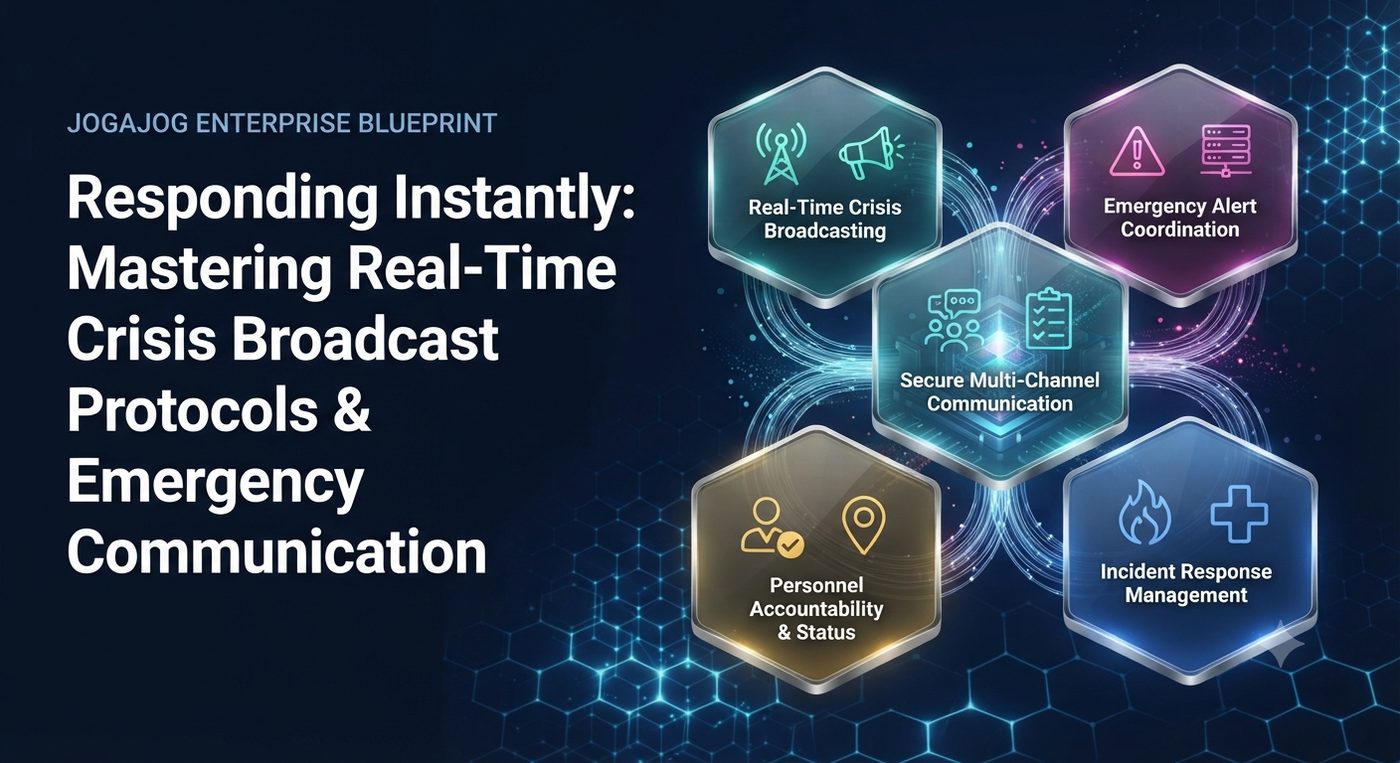
In high-stakes emergency situations and critical business disruptions, rapid crisis broadcasting, real-time alert coordination, and secure multi-channel communication are essential for safeguarding personnel, minimizing asset damage, and maintaining business continuity. From managing emergency command centers and regional response teams to ensuring secure communication between safety officers, executive leadership, and local authorities, modern enterprises require a communication infrastructure that is instantaneous, reliable, and capable of real-time operational integration.
The Challenge
How can corporations, institutional organizations, and enterprise operations synchronize their dispersed workforce—across corporate headquarters, remote field sites, regional offices, and mobile units—to ensure immediate distribution of safety directives, rapid accountability of personnel, and effective crisis management?
The Problem with Traditional Crisis Communication
Organizations often face critical operational failures during emergencies due to outdated, disconnected communication methods:
* Fragmented Emergency Silos: When safety officers, facility managers, and regional directors rely on disparate, disconnected messaging tools, it leads to communication delays, conflicting alert messages, and critical blind spots in personnel safety tracking.
* Lack of Real-Time Operational Visibility: Without a unified platform, crisis leaders struggle to monitor live emergency response milestones, verify employee safety statuses, and manage critical information flow in real-time, impacting overall disaster response outcomes.
* Inefficient Multi-Channel Broadcasting: Ineffective communication infrastructure during sudden natural disasters, security breaches, or facility hazards leads to delayed evacuations, severe compliance liabilities, and heightened safety risks.
The Solution: Centralized, Secure Crisis Command Centers
Transitioning to a private, enterprise-grade communication platform—like Jogajog—creates a resilient “digital nerve center” for emergency management and crisis response. By digitizing the organizational directory and emergency notification workflows, enterprises ensure:
* Real-Time Safety and Response Coordination: Creating secure, immediate broadcast channels between safety management, executive leadership, and regional teams, ensuring that emergency protocols and evacuation notices are delivered instantly.
* Enhanced Efficiency in Personnel Accountability: Providing a unified communication environment that links all emergency touchpoints, allowing teams to quickly track staff safety check-ins and resolve response bottlenecks.
* Agility in High-Pressure Disaster Environments: Streamlining team communication allows organizations to efficiently execute crisis protocols, maintaining strict safety standards and rapid responsiveness when seconds matter most.
Frequently Asked Questions
Q: Can this platform be used to broadcast emergency alerts and track employee safety check-ins during a crisis?
A: Yes. The platform provides a secure, reliable, and high-speed communication layer that is essential for broadcasting instant emergency alerts and coordinating response teams during active crisis scenarios.
Q: Does this replace existing physical security systems or mass notification emergency software (ENS)?
A: No. It acts as the essential human-to-human and team-to-team communication layer that complements your existing physical security and ENS tools, ensuring that your safety personnel and employees remain aligned during critical incidents.
See this feature with your own data.
Free branded demo, built from your spreadsheet, this week.
Get your free demo