Securing the Mission: NGO Field Worker Safety Directories in Secure Enterprise Networks
July 28, 2026 · Jogajog team · 3 min read

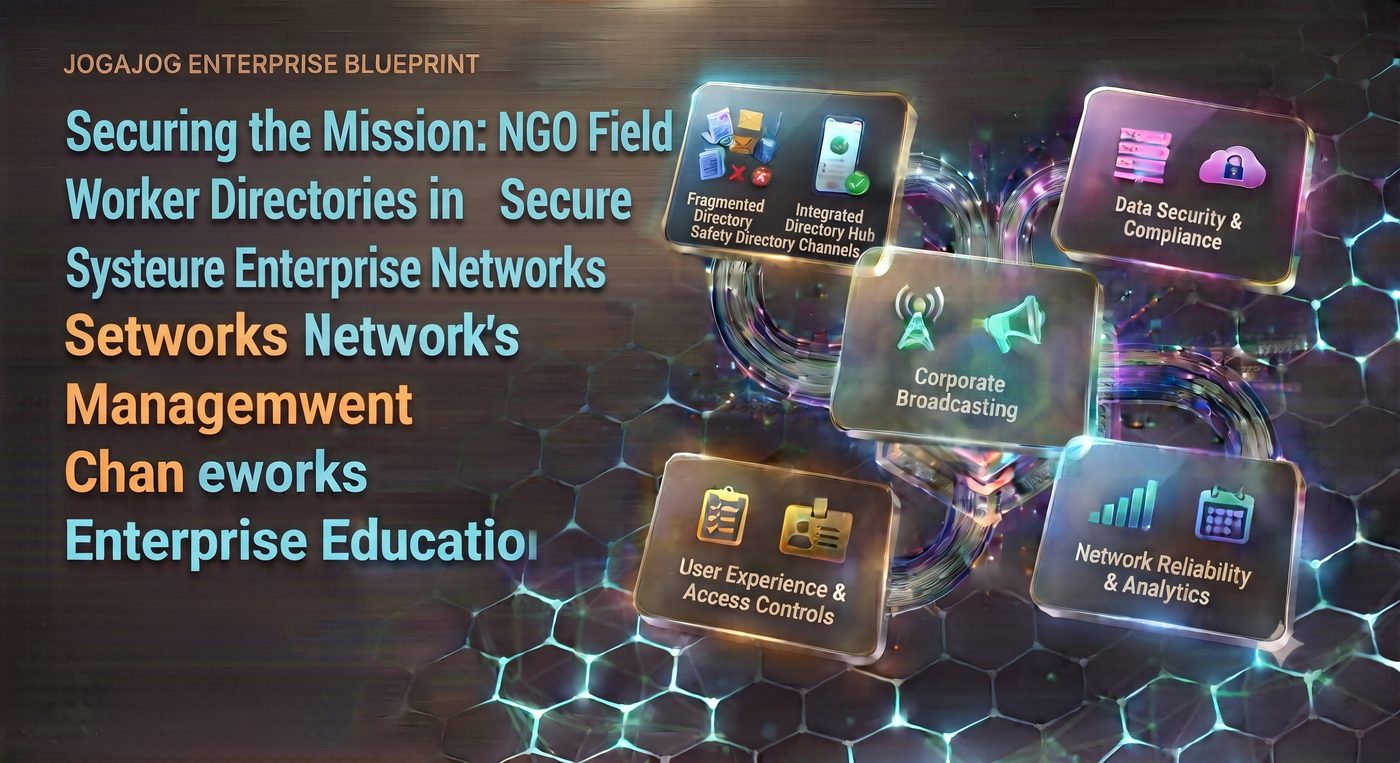
In the high-risk, dynamic environments where Non-Governmental Organizations (NGOs), humanitarian aid agencies, and civil society groups operate—such as coordinating field teams, medical personnel, logistics coordinators, and local volunteers across complex operational zones in Cox’s Bazar, the Chittagong Hill Tracts, and remote districts—ensuring real-time personnel visibility and safety is paramount. When NGO leadership relies on fragmented consumer messaging apps, unmonitored radio checks, or outdated spreadsheet rosters to track field workers and manage emergency evacuations, it results in critical communication gaps, severe security vulnerabilities, and catastrophic response delays during critical incidents. The definitive key to elevating field worker safety and operational accountability is implementing centralized, secure NGO field worker safety directories within a unified enterprise communication network.
The Challenge
How can NGO country directors, security focal points, and logistics managers design and deploy a centralized, mobile-accessible directory and communication framework that protects the identities and locations of field staff while enabling instant, verified emergency response coordination and security alerts across volatile regions?
The Problem with Fragmented Field Rosters and Public Messaging Apps
Attempting to manage dispersed humanitarian operations using consumer-grade tools or legacy systems introduces critical vulnerabilities:
* Compromised Security and Privacy Risks: Storing sensitive staff rosters, movement logs, and emergency contact details on unencrypted public platforms or consumer apps risks severe data breaches, potentially endangering the lives of field workers and local partners.
* Communication Silos and Delayed Emergency Response: When field teams, drivers, and base camp coordinators use disconnected communication channels, urgent security alerts, route deviation warnings, and evacuation orders fail to reach the right personnel instantly.
* Lack of Centralized Safety Oversight: Without unified control over communication channels, NGO headquarters cannot audit data access, verify staff check-ins in real-time, or rapidly deploy security assets during a rapidly evolving crisis.
The Solution: Centralized Safety Directories and Encrypted Broadcast Channels
Transitioning to an advanced, enterprise-grade communication and directory platform—like Jogajog—replaces operational uncertainty with a secure, highly organized humanitarian ecosystem. By centralizing NGO field worker safety directories, organizations ensure:
* Secure Personnel Visibility and Location Masking: Enable authorized security focal points to view, verify, and connect with specific field teams and local volunteers instantly via a secure mobile directory, while implementing data masking to protect identities from unauthorized access.
* Instant Encrypted Security Alerts and Broadcasts: Establish isolated, end-to-end encrypted channels for high-priority security notifications, instantly overriding standard app activity to broadcast emergency directives, incident reports, and evacuation protocols to all authenticated field devices.
* Granular Role-Based Access Controls (RBAC): Grant field coordinators, medical staff, and logistics leads access only to the directory listings, communication groups, and emergency protocols relevant to their specific operational zone and security clearance.
Frequently Asked Questions
Q: How do secure enterprise platforms protect the identities and locations of field workers while still providing necessary visibility for safety?
A: Modern enterprise platforms utilize a combination of end-to-end encryption, granular Role-Based Access Controls (RBAC), and Privacy-by-Design directory architectures. This ensures that only designated security personnel can access real-time location data, while standard directory users see only essential operational roles and contact methods, thus protecting vulnerable staff.
Q: Can NGO security focal points send targeted emergency alerts to specific field teams operating in a designated high-risk area?
A: Yes. Advanced directory architectures feature dynamic zoning and role-based filtering. Security officers can instantly broadcast geo-targeted alerts or initiate lockdown protocols exclusively to field workers, drivers, and medical units located within a specific security perimeter, without causing unnecessary panic or notification clutter across the entire organization.
See this feature with your own data.
Free branded demo, built from your spreadsheet, this week.
Get your free demo