Streamlining Government Administration: Public Sector Departmental Directories in Secure Enterprise Networks
July 28, 2026 · Jogajog team · 3 min read

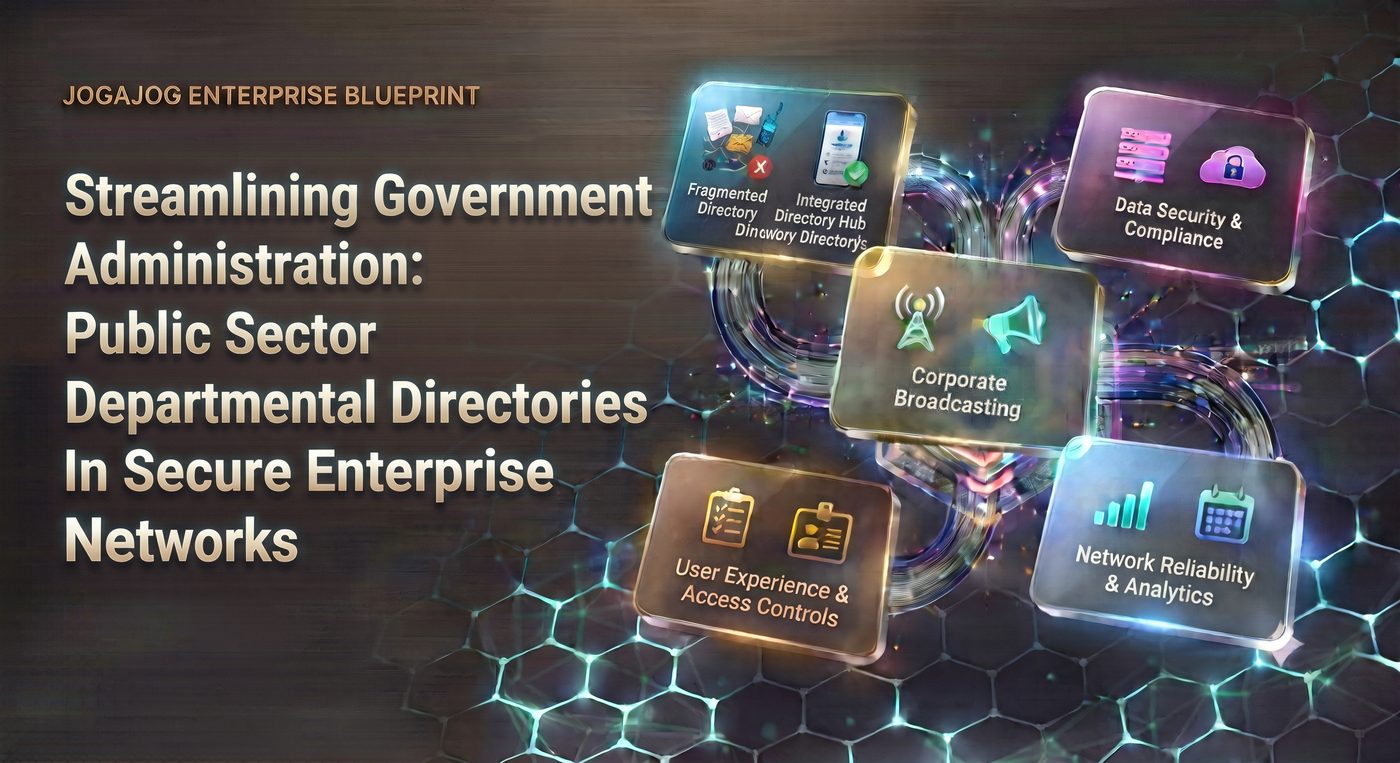
In the structured and accountability-driven environment of government agencies, municipal corporations, and public sector directorates—such as coordinating department heads, administrative officers, field inspectors, and civil servants across regional headquarters in Dhaka, divisional secretariats, and local government offices—maintaining accurate and secure internal communication channels is vital for public service delivery. When government departments rely on fragmented consumer messaging apps, unmonitored public social media groups, or outdated physical phone directories to coordinate inter-agency operations, it results in critical security vulnerabilities, communication delays, and compromised administrative transparency. The definitive key to elevating public sector operational efficiency and data security is implementing structured public sector departmental directories within a unified enterprise communication network.
The Challenge
How can ministry directors, administrative secretaries, and bureau chiefs design and deploy a centralized, mobile-accessible directory and communication framework that connects multi-tiered government personnel instantly while protecting sensitive citizen records, policy drafts, and internal administrative memos from unauthorized interception?
The Problem with Fragmented Public Sector Tools and Public Messaging Apps
Attempting to manage government departmental operations using consumer messaging tools or legacy static files introduces critical vulnerabilities:
* Security Breaches and Data Privacy Risks: Storing confidential citizen data, policy briefs, and inter-departmental communications on unsecured public apps exposes sensitive government records to severe cybersecurity threats and unauthorized leaks.
* Communication Silos and Administrative Delays: When field inspectors, policy analysts, and regional directors use disconnected communication channels, urgent directive rollouts, public safety alerts, and inter-agency coordination meetings suffer from severe friction.
* Lack of Centralized Administrative Oversight: Without unified control over departmental communication channels, government leadership cannot audit data access, verify official credentials, or instantly revoke system permissions when civil servants transfer or retire.
The Solution: Centralized Departmental Directories and Encrypted Collaboration Hubs
Transitioning to an advanced, enterprise-grade communication and directory platform—like Jogajog—replaces bureaucratic friction with a secure, highly organized public sector ecosystem. By centralizing public sector departmental directories, enterprises ensure:
* Searchable Multi-Tiered Government Directories: Enable administrative heads and authorized officials to search, verify, and connect with specific department officers, regional delegates, and policy leads instantly via a secure mobile directory.
* Encrypted Inter-Agency Collaboration Channels: Establish isolated, end-to-end encrypted communication spaces for confidential policy discussions, emergency response committees, and administrative audits, ensuring all sensitive state communications remain fully protected.
* Granular Role-Based Access Controls (RBAC): Grant civil servants, department heads, and administrative staff access only to the directory listings, document repositories, and communication channels relevant to their specific ministry role and security clearance level.
Frequently Asked Questions
Q: How do secure enterprise platforms protect sensitive citizen records and government policy documents from external cybersecurity threats?
A: Modern enterprise platforms utilize end-to-end encryption, strict role-based access controls (RBAC), and secure data partitioning, ensuring that confidential citizen files, internal memos, and state policy drafts are only accessible to authorized government personnel and vetted officials.
Q: Can public sector administrators grant temporary directory access to visiting international delegates, external consultants, or temporary project contractors?
A: Yes. Administrators can provision sandboxed, temporary guest accounts with restricted permissions, allowing external experts to collaborate on specific departmental projects or public initiatives while keeping the core enterprise government database completely secure.
See this feature with your own data.
Free branded demo, built from your spreadsheet, this week.
Get your free demo