Streamlining Movement: Mastering Supply Chain & Logistics Coordination Communication
July 28, 2026 · Jogajog team · 3 min read

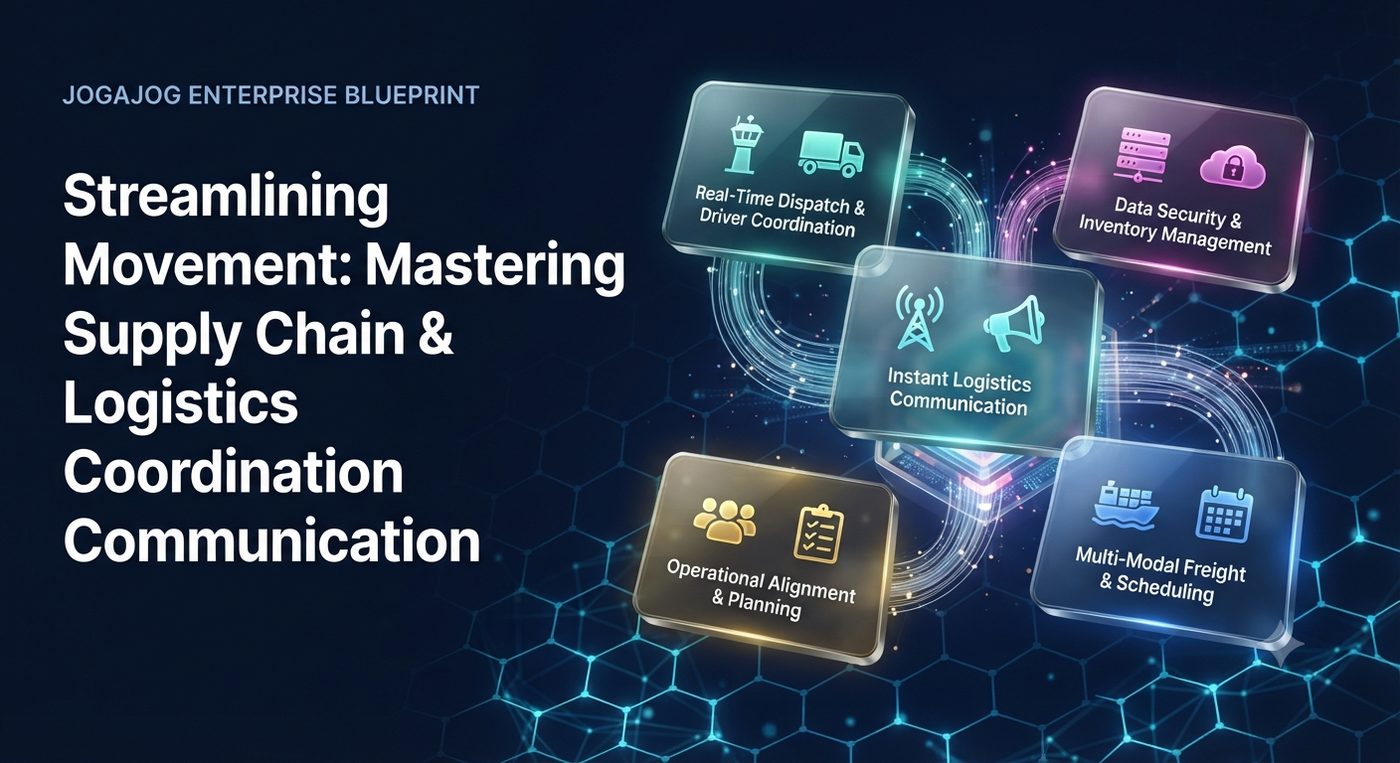
In the fast-paced global supply chain and logistics sector, rapid inventory tracking, real-time shipment coordination, and seamless communication between dispatchers, warehouse operators, and transport drivers are essential for meeting delivery deadlines, reducing operational delays, and maximizing fleet efficiency. From managing multi-modal freight operations and distribution centers to ensuring secure communication between supply chain managers, freight forwarders, and corporate leadership, modern logistics enterprises require a communication infrastructure that is instantaneous, reliable, and capable of real-time operational integration.
The Challenge
How can freight forwarders, logistics providers, shipping fleets, and supply chain enterprises synchronize their dispersed workforce—across port facilities, cargo warehouses, long-haul transport vehicles, and regional hubs—to ensure shipment visibility, timely cargo delivery, and rapid response to supply chain disruptions?
The Problem with Traditional Logistics Communication
Logistics and supply chain organizations often face critical operational hurdles due to outdated, disconnected communication methods:
* Fragmented Operational Silos: When warehouse pickers, dispatchers, and truck drivers rely on disparate, disconnected messaging tools, it leads to communication delays, critical shipment discrepancies, and inefficiencies in routing freight.
* Lack of Real-Real-Time Operational Visibility: Without a unified platform, logistics leaders struggle to monitor live transit milestones, track cargo inventory movement across checkpoints, and manage last-mile delivery coordination in real-time, impacting overall client satisfaction.
* Inefficient Disruption and Delay Response: Ineffective communication during sudden weather delays, customs bottlenecks, or route blockages leads to extended transit times and financial losses.
The Solution: Centralized, Secure Logistics Command Centers
Transitioning to a private, enterprise-grade communication platform—like Jogajog—creates a “digital nerve center” for supply chain operations. By digitizing the organizational directory and operational logistics workflows, enterprises ensure:
* Real-Time Dispatch and Driver Coordination: Creating secure, immediate channels between logistics managers, dispatchers, and drivers, ensuring that route updates, delivery schedules, and cargo instructions are shared instantly.
* Enhanced Efficiency in Inventory and Fleet Management: Providing a unified communication environment that links all critical logistics touchpoints, allowing teams to quickly identify and resolve bottlenecks before they impact delivery timelines.
* Agility in Dynamic Transport Environments: Streamlining team communication allows logistics networks to efficiently manage peak shipping seasons and unexpected transit disruptions, maintaining strict delivery standards and rapid responsiveness across every route.
Frequently Asked Questions
Q: Can this platform be used to coordinate urgent route updates and real-time shipment status changes with drivers?
A: Yes. The platform provides a secure, reliable, and high-speed communication layer that is essential for broadcasting urgent route changes, delivery instructions, and dispatch updates directly to transport personnel.
Q: Does this replace existing Transportation Management Systems (TMS) or Warehouse Management Systems (WMS)?
A: No. It acts as the essential human-to-human and team-to-team communication layer that complements your existing TMS and WMS tools, ensuring that your logistics staff and drivers remain aligned on critical operational tasks.
See this feature with your own data.
Free branded demo, built from your spreadsheet, this week.
Get your free demo