The Connected Chain: Supply Chain Directory Synchronization in Secure Enterprise Networks
July 28, 2026 · Jogajog team · 3 min read

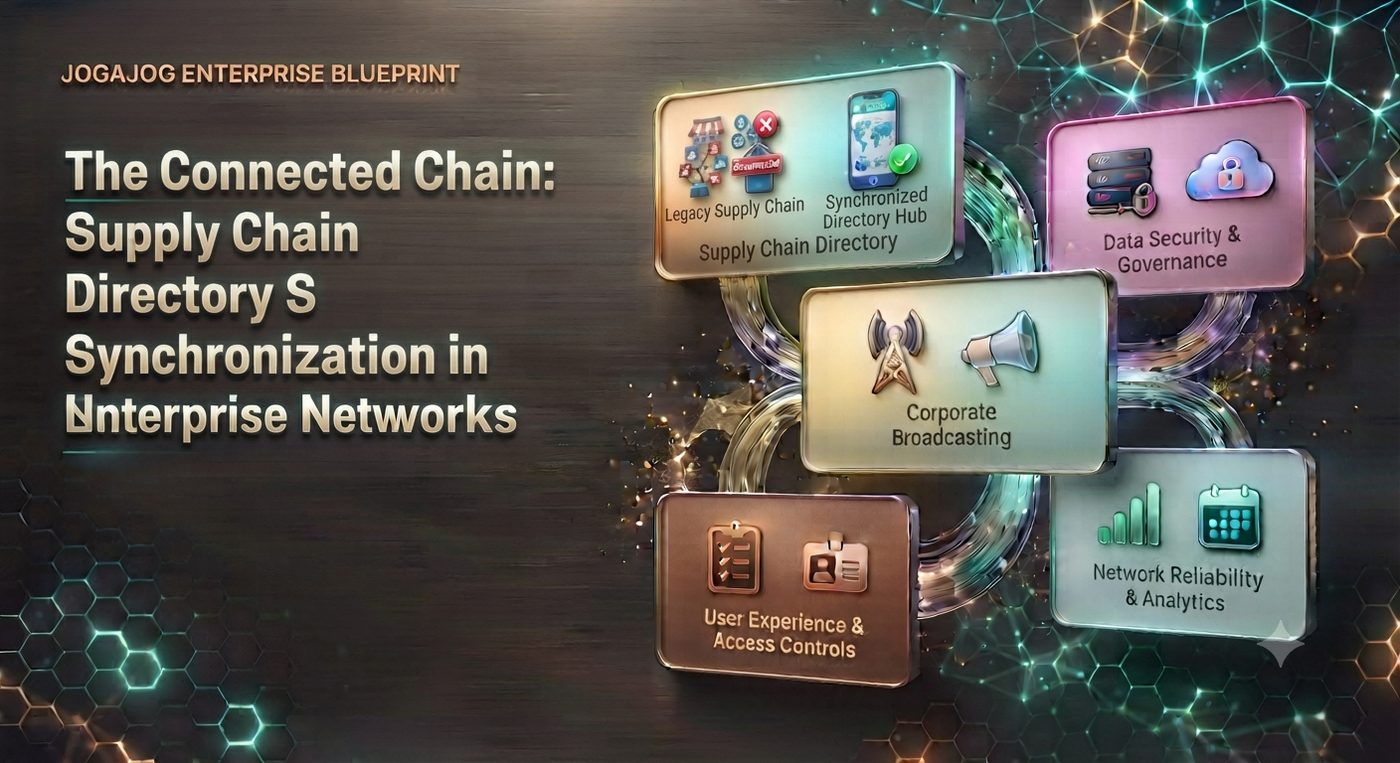
In the modern industrial, manufacturing, and logistics landscape, a company’s operational strength is directly tied to its supply chain agility. Yet, coordinating complex vendor ecosystems—such as managing hundreds of suppliers, logistics partners, and distributors across Dhaka, Chittagong, and international hubs—becomes nearly impossible when directories operate in silos. When purchasing managers, warehouse supervisors, and procurement teams cannot instantly verify a vendor’s contact, access real-time compliance certifications, or communicate securely with logistics partners, the entire supply chain grinds to a halt. The definitive key to supply chain resilience is establishing a unified, securely synchronized directory architecture across the entire enterprise network.
The Challenge
How can enterprise procurement officers, supply chain directors, and logistics managers design and deploy a centralized, secure, and dynamically updated directory system that integrates internal teams with external partners instantly without risking proprietary data or compromising network security?
The Problem with Fragmented Vendor and Partner Directories
Managing a multi-tiered supply chain with legacy, uncoordinated tools introduces severe operational friction and vulnerabilities:
* Vendor Communication Breakdowns: When contact information for a critical supplier is scattered across outdated spreadsheets, unmanaged emails, or individual employee devices, urgent communications regarding a material shortage or shipment delay fail to reach the right personnel instantly.
* Compliance and Vetting Delays: Procuring teams have no centralized way to verify whether a vendor’s safety certifications, ISO compliance, or insurance documents are current, leading to costly procurement bottlenecks and regulatory risks.
* Security Risks in Partner Access: Granting external supply chain partners access to internal network resources via unmanaged guest accounts or unsecured portals exposes the enterprise to significant data breaches and intellectual property theft.
The Solution: Centralized Directory Architecture and Secure Partner Sync
Transitioning to an advanced, enterprise-grade communication and directory platform—like Jogajog—replaces supply chain chaos with a streamlined, interconnected ecosystem. By centralizing directory management, institutions ensure:
* Dynamic Vendor Directory Synchronization: Maintain a single, auto-syncing source of truth for all supplier, logistics, and distribution partner contacts, ensuring every team member has instant access to verified, real-time vendor information.
* Secure Partner Onboarding and Access Controls: Utilize dedicated, segmented directory containers for external partners, granting granular, role-based access to specific communication channels and resources without compromising internal network security.
* Integrated Compliance and Certification Tracking: Link vendor directory profiles directly to their compliance documentation, allowing procurement teams to view real-time certification status and receive automated alerts for expiring credentials.
Frequently Asked Questions
Q: How do we ensure that sensitive vendor data remains secure when directories are synchronized across multiple partners?
A: Modern enterprise platforms feature strict granular access controls and data encryption. Vendor profiles are segmented, meaning partners only view their own authorized connections, and internal procurement data remains shielded from external visibility.
Q: Can supply chain directories integrate with existing ERP and procurement software?
A: Yes. Advanced communication platforms provide robust APIs that allow for seamless, automated synchronization with core enterprise resource planning (ERP) and supply chain management (SCM) systems, ensuring directory data is always live and accurate.
See this feature with your own data.
Free branded demo, built from your spreadsheet, this week.
Get your free demo