Uninterrupted Reach: SMS Backup Failover Architecture in Secure Enterprise Networks
July 28, 2026 · Jogajog team · 3 min read

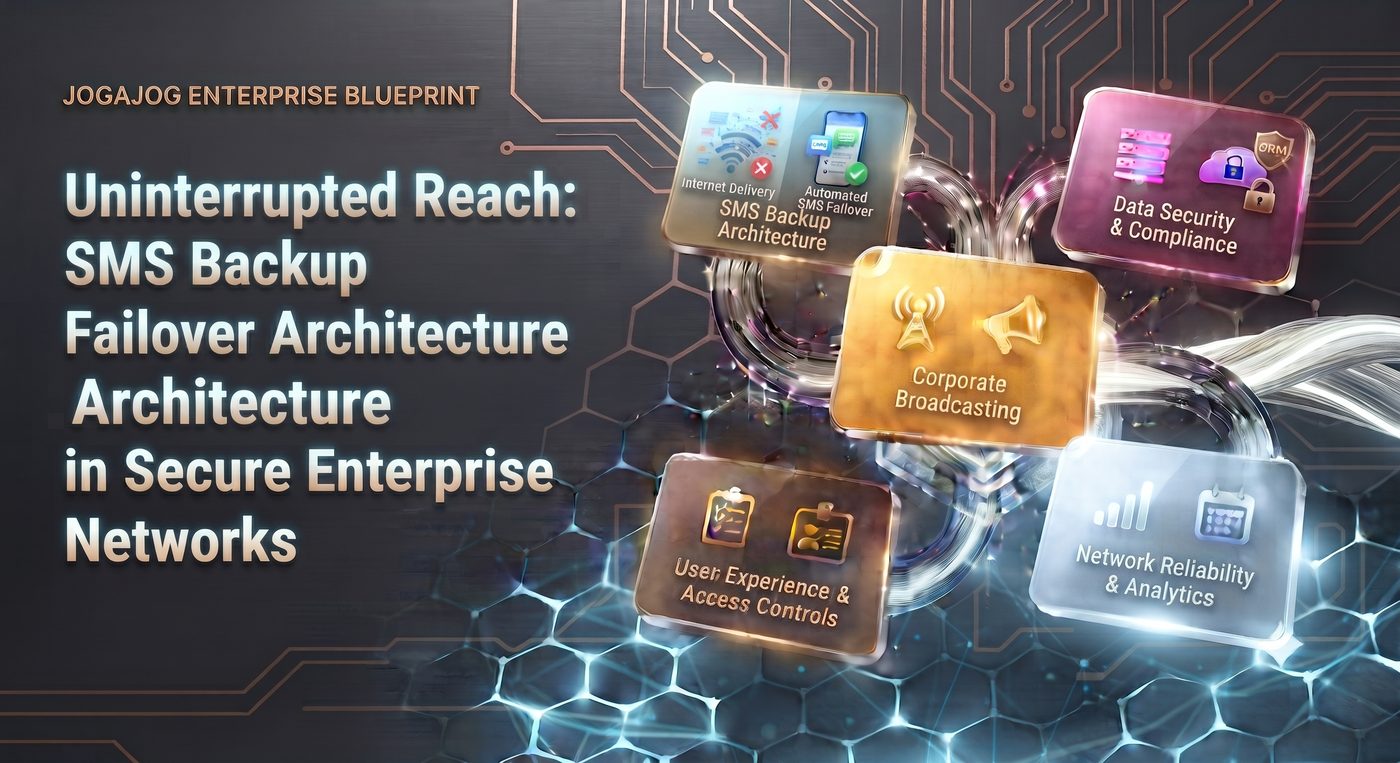
In the mission-critical and high-availability environment of modern corporations, emergency response units, and expanding enterprises—such as coordinating chief technology officers, IT operations leads, communications directors, and administrative heads across regional headquarters in Dhaka, commercial hubs, and international branches—maintaining reliable message delivery is vital for operational continuity. When organizations rely entirely on internet-dependent push notifications or single-channel messaging apps to transmit urgent alerts, it results in critical communication dropouts during network outages, missed emergency broadcasts, and severe operational vulnerabilities. The definitive key to elevating delivery reliability and messaging resilience is implementing structured SMS backup failover architecture within a unified enterprise communication network.
The Challenge
How can enterprise IT directors, system architects, and communications leads design and deploy a centralized, resilient directory and messaging framework that automatically switches to secure SMS routing when internet connectivity fails, ensuring that critical emergency alerts reach all personnel instantly without compromising data security?
The Problem with Internet-Dependent Messaging and Single-Channel Vulnerabilities
Attempting to manage enterprise communications using purely data-driven channels introduces critical risks:
* Communication Blackouts During Network Failures: When internet connectivity drops at remote sites or regional branches, push notifications fail completely, leaving staff isolated from urgent directives.
* Delayed Emergency Responses: Without an automated backup mechanism, critical safety alerts and operational pivots are delayed until network connections are restored.
* Lack of Unified Delivery Assurance: Relying on uncoordinated secondary messaging tools creates fragmented delivery logs and administrative blind spots.
The Solution: Automated SMS Failover and Encrypted Collaboration Hubs
Transitioning to an advanced, enterprise-grade communication and directory platform—like Jogajog—replaces delivery uncertainty with a robust, redundant, and highly secure ecosystem. By centralizing SMS backup failover architecture, enterprises ensure:
* Automated Cross-Channel Message Fallback: Enable the system to instantly detect internet delivery failures and automatically reroute critical alerts via secure SMS channels to ensure 100% reachability across mobile devices.
* Encrypted Enterprise Redundancy Channels: Establish secure, multi-layered message queuing that maintains end-to-end data integrity whether messages travel via data packets or SMS gateways.
* Granular Role-Based Access Controls (RBAC): Grant staff, managers, and emergency response teams access only to the communication channels and delivery metrics relevant to their specific corporate role and clearance level.
Frequently Asked Questions
Q: How does the SMS backup failover architecture trigger automatically during a network outage?
A: Modern enterprise platforms continuously monitor push notification delivery status; the moment an internet-based delivery failure is detected for an urgent broadcast, the system seamlessly triggers an automated switch to secure SMS gateways to dispatch the message without manual intervention.
Q: Are sensitive corporate details or confidential directory data exposed when messages are routed through SMS backup channels?
A: No. High-security enterprise platforms utilize smart message truncation and secure reference links for SMS failovers, ensuring that while the delivery notification or urgent summary reaches the recipient’s phone, sensitive internal data remains encrypted within the secure application environment.
See this feature with your own data.
Free branded demo, built from your spreadsheet, this week.
Get your free demo