Universal Access: Mastering Cross-Device Progressive Web App (PWA) Architecture for Enterprise Directories
July 28, 2026 · Jogajog team · 3 min read

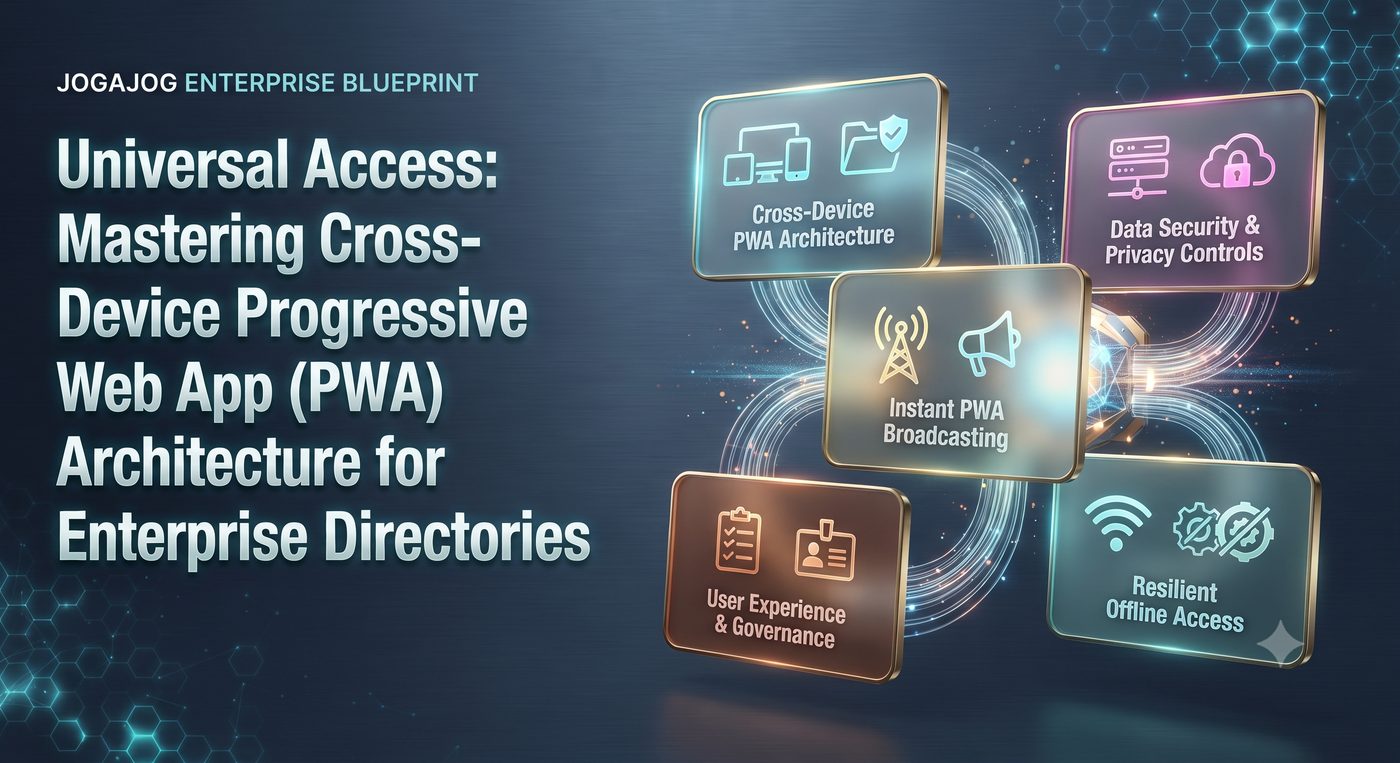
In the modern enterprise, association, or large-scale institution, the ability for members, employees, and field operatives to access the organizational directory is paramount. However, the diversity of devices—from desktop workstations and rugged tablets in the field to personal mobile phones—creates significant fragmentation. Legacy solutions require managing separate native apps for iOS and Android, alongside a distinct web portal, leading to inconsistent user experiences, synchronization delays, and skyrocketing maintenance costs. Modern organizations require a unified, resilient, and universally accessible directory architecture.
The Challenge
How can enterprise architects, IT directors, and project managers design and deploy a comprehensive directory application that runs seamlessly across all devices, platforms, and network conditions—delivering a native-like experience without the friction of app store installations and multi-platform development?
The Problem with Traditional Multi-Platform Directories
Relying on siloed native applications and a separate web interface introduces severe operational overhead and critical communication breakdowns:
* Fragmented Development & Maintenance: Building and maintaining three separate codebases (iOS, Android, Web) doubles and triples development effort, leading to feature disparity and inconsistent user experiences across devices.
* Installation Friction and Update Delays: Forcing users to download or update directories from app stores creates adoption barriers. Critical contact information may be unavailable to field staff until they complete a manual update.
* Lack of Offline Resilience: Native apps are often functional offline, but traditional web directories fail completely without a network connection, leaving field personnel without access to vital contact data during emergencies or in low-connectivity zones.
The Solution: Progressive Web App (PWA) Architecture
Transitioning to a Cross-Device Progressive Web App (PWA) architecture for your enterprise directory—especially when built on a robust platform like Jogajog—solves these challenges by unifying access into a single, powerful codebase. By leveraging modern web technologies, organizations ensure:
* Universal Codebase, Native Experience: A single PWA serves every device—desktop, tablet, and mobile. Users enjoy a fast, responsive, app-like interface that adapts to any screen size and can even be “installed” directly to the device home screen without app stores.
* Instant Deployment and Updates: Directory updates are deployed instantly across the entire enterprise network. No app store reviews, no manual user updates—everyone always has access to the latest, real-time contact data.
* Resilient Offline Functionality: Advanced PWA capabilities, including service workers and local caching, allow users to access and search the entire directory even when completely offline. Data synchronizes automatically in the background once connectivity is re-established.
Frequently Asked Questions
Q: Can a PWA truly replace native iOS and Android apps for directory access?
A: Yes. Modern PWAs offer near-native performance, push notifications, offline access, and hardware integration (like camera access for scanning QR codes), making them a superior, unified solution for enterprise directory deployment.
Q: Does PWA architecture compromise data security compared to native apps?
A: No. PWAs operate over HTTPS, ensuring secure data transmission. They can integrate with existing enterprise authentication systems (SSO) and enforce the same granular data privacy controls as any secure native application.
See this feature with your own data.
Free branded demo, built from your spreadsheet, this week.
Get your free demo