Unlocking the Monolith: Modernizing Legacy ERP Rosters into Accessible Apps for Enterprise Networks
July 28, 2026 · Jogajog team · 3 min read

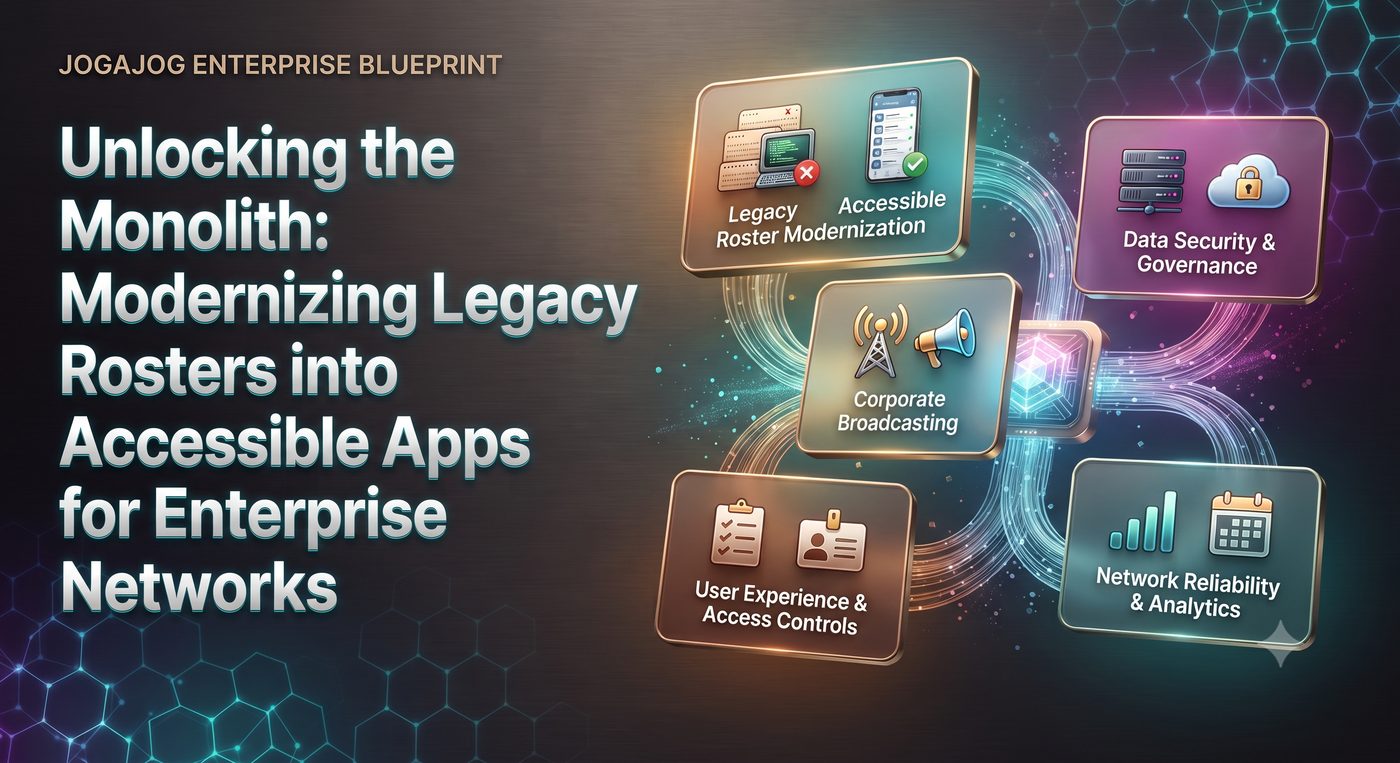
In the modern enterprise, professional association, or multi-tiered institution, enterprise resource planning (ERP) systems serve as the massive technological backbone storing core operational data. From employee records and department directories to organizational hierarchies, ERPs hold the ultimate source of truth. However, legacy ERP systems were built for back-office accountants and IT administrators, not for frontline workers or mobile collaboration. When vital staff directories are trapped behind clunky ERP interfaces, green-screen terminals, or rigid desktop portals, organizational agility grinds to a halt. Modernizing legacy ERP rosters into accessible, user-friendly mobile apps is no longer optional—it is a critical imperative for operational velocity.
The Challenge
How can enterprise IT directors, system architects, and operations managers extract, synchronize, and modernize legacy ERP rosters into sleek, accessible mobile applications without compromising data integrity or system security?
The Problem with Trapped Legacy ERP Directories
Relying on traditional ERP interfaces for daily contact retrieval and internal communication introduces severe operational friction:
* The Desktop and Terminal Bottleneck: Field workers, retail staff, and mobile managers cannot easily log into a heavy ERP client from a smartphone just to look up a colleague’s extension or department contact, leading to wasted time and delayed decisions.
* Cumbersome User Experience: Legacy ERP systems feature notoriously steep learning curves. Forcing non-technical staff to navigate complex menu structures to find basic contact information creates frustration and widespread software avoidance.
* Disconnected Communication Workflows: Even when employees successfully locate a record within an ERP roster, the system lacks integrated communication tools, forcing users to manually copy, paste, and switch apps to make a call or send a message.
The Solution: Seamless API Synchronization and Mobile Modernization
Transitioning to an advanced, enterprise-grade communication platform—like Jogajog—bridges the gap between legacy systems and modern user experience. By modernizing your ERP rosters, institutions ensure:
* Real-Time API Sync with Legacy Backends: Maintain your existing ERP as the secure master database while utilizing robust API connectors to synchronize and push clean, structured directory updates instantly to mobile and desktop apps.
* Intuitive Mobile Accessibility: Transform rigid ERP rosters into lightning-fast, searchable mobile directories featuring one-tap calling, direct messaging, and role-based filtering designed for modern professionals on the go.
* Enterprise-Grade Security and Governance: Ensure that all extracted and synchronized data remains fully protected with end-to-end encryption, role-based access controls, and compliance-ready audit logs, bridging legacy security standards with modern flexibility.
Frequently Asked Questions
Q: Do we need to replace our current legacy ERP system to implement a modern mobile directory?
A: No. Modern enterprise communication platforms are built to integrate seamlessly with existing infrastructure via secure APIs, allowing you to keep your core ERP intact while modernizing how users access and interact with directory data.
Q: How does real-time synchronization prevent data conflicts between the ERP and the mobile app?
A: Automated synchronization protocols update the mobile directory instantly whenever changes are made in the master ERP system, ensuring that employees always have access to a single, accurate source of truth without manual duplicate entry.
See this feature with your own data.
Free branded demo, built from your spreadsheet, this week.
Get your free demo